Karnak Temple Complex
The largest religious building ever constructed. The Hypostyle Hall of 134 massive columns is one of the most awe-inspiring spaces on Earth.
Ancient Thebes — the political, religious, and military capital of New Kingdom Egypt for 1,500 years. Home to Karnak, the Valley of the Kings, Hatshepsut Temple, and a third of the world's ancient monuments.
Luxor is a destination on Egypt's Nile cruise and tour routes, home to Karnak Temple Complex and Valley of the Kings. The best time to visit is October to April.
Luxor is built on the ruins of ancient Thebes — the spiritual and political capital of Egypt for 1,500 years during the New Kingdom (1550-1070 BCE). It’s said that Luxor contains roughly one-third of all the world’s antiquities, and it’s hard to argue otherwise. The temples are larger, the tombs more spectacular, and the historical density unmatched anywhere on Earth.
The city is divided by the Nile into two distinct halves. The East Bank — where the sun rises — represents life. This is where the living lived, and where the great temples of Karnak and Luxor stand. The West Bank — where the sun sets — represents death. This is the Theban Necropolis, home to the Valley of the Kings, the Valley of the Queens, and the Mortuary Temple of Hatshepsut.
Most Nile cruises start or end in Luxor. The 4-night cruise from Luxor to Aswan is our most balanced itinerary, while the 3-night Aswan to Luxor route ends here. Plan to spend at least 2-3 nights in Luxor beyond your cruise — there is simply too much to see in the time the cruise allows.
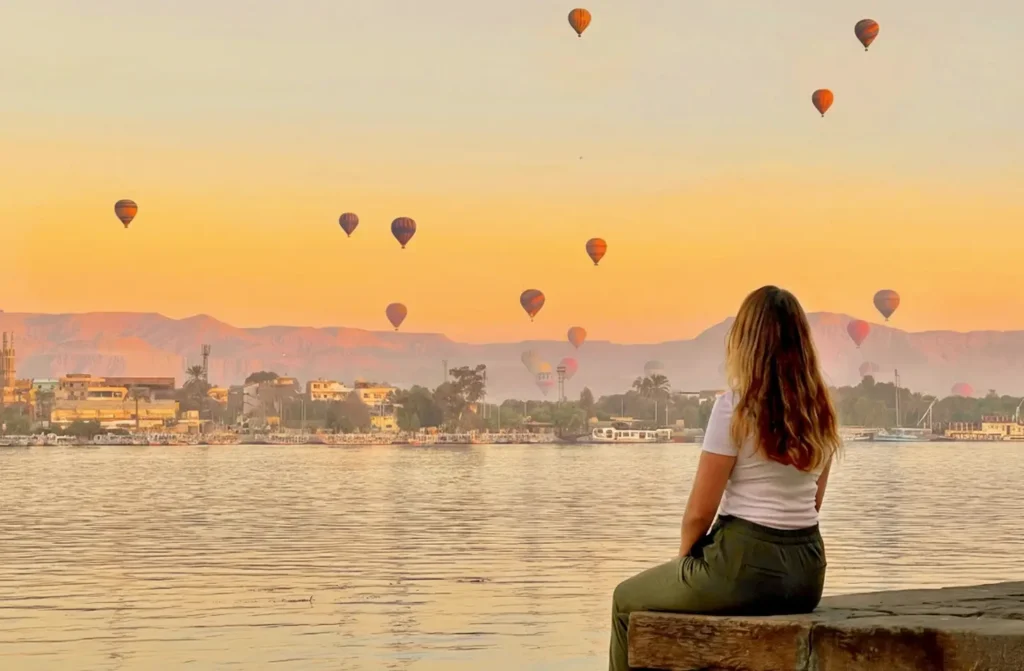
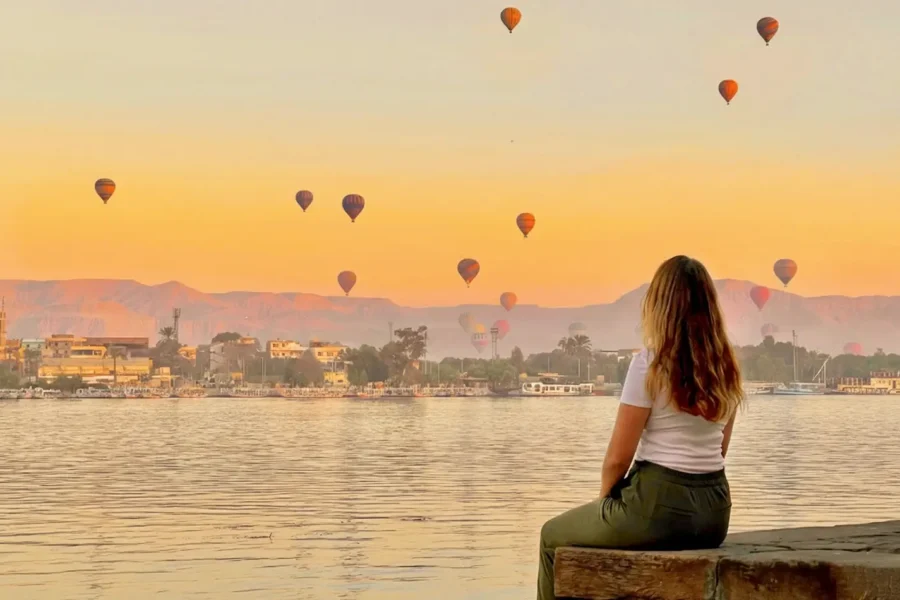
Luxor is famous for sunrise hot-air balloon rides over the West Bank. Rising silently above the Valley of the Kings as the sun illuminates the Theban hills is one of the most magical experiences in Egypt. Book this in advance — it’s the most popular optional excursion in Upper Egypt.

The largest religious building ever constructed. The Hypostyle Hall of 134 massive columns is one of the most awe-inspiring spaces on Earth.
The royal necropolis of the New Kingdom pharaohs — 63 tombs discovered so far, including Tutankhamun (KV62). Ticket covers 3 tombs; add-ons for Seti I and Nefertari.
Built primarily by Amenhotep III and Ramses II; connected to Karnak by the restored 2.7 km Avenue of Sphinxes. Best visited after sunset when fully illuminated.
The mortuary temple of Egypt's female pharaoh, rising in three terraces against the cliffs of Deir el-Bahari. Unparalleled Middle Kingdom architecture.
Burial site of royal wives and children. Tomb of Nefertari (QV66) is considered the most beautifully painted tomb in all Egypt (separate premium ticket).
Two 18-metre quartzite statues of Amenhotep III guarding what was once his mortuary temple. A brief photo stop on the way between valleys.
October to April
Mild dry winters (10–25°C), very hot summers (25–42°C). The combination of dry air + monumental shade means heat is tolerable even in summer if you start at dawn.
Float over the West Bank at dawn — Valley of the Kings, Hatshepsut Temple, and Nile valley all in one sweep. ~$120/person.
Traditional wooden sailboat down the Nile as the sun drops behind the west bank cliffs. ~$25/hour.
Evening walk-through of Karnak with narration and light play across the columns. Multiple language slots.
A calèche ride through Luxor town connecting the temples — best at dusk when the streets cool.
Small but excellent — the actual process, tools, and specimens. 45 min. On the Corniche, east bank.
Sofitel Winter Palace or Al-Sahaby Lane rooftop — sunset dining with a full Nile view.
Browse our handpicked Nile cruise itineraries that include Luxor — from short 3-night classics to immersive 7-night journeys.
View All Itineraries