Most of Egypt is comfortable from October to April, but the country holds four different climates. The Nile Valley is the tightest window and the hottest in summer; the Red Sea works every month of the year; the Western Desert is a winter trip only. November is the one month that suits all of them at once.
Most of Egypt is comfortable between October and April, and uncomfortable outside it — but that single line hides the thing that actually decides your dates. Egypt is not one climate. On the same February afternoon it can be 18°C and raining in Alexandria, 25°C and perfect in Luxor, and cold enough at night in the Western Desert to want a second blanket. The month that suits the Pyramids is not always the month that suits the Red Sea.
This guide goes region by region first, then month by month, so you can pick dates for the trip you are actually taking.
The short answer
October to April for the Nile Valley and Cairo. Year-round for the Red Sea, with summer better for diving than for walking. November to February for the Western Desert. April to June or September to October if you want the whole country at once without extreme heat at either end.
If you only remember one month: November. It is the one month that is close to ideal everywhere in the country simultaneously.
Egypt is not one climate
Four zones behave differently enough to change your itinerary:
Cairo and the Delta — hot summers, mild winters, and genuine haze. Winter mornings can be grey until ten.
The Nile Valley (Luxor to Aswan) — desert climate. The hottest part of the country in summer, and the driest all year. Rain is close to non-existent.
The Red Sea coast — hot but moderated by the sea, with warm water every month of the year.
The Western Desert and Sinai interior — the biggest swing between day and night in Egypt. Winter days are pleasant; winter nights approach freezing.
Alexandria and the Mediterranean coast are the exception to everything: they get real rain, mostly December to February, and a genuinely mild summer.
Month by month, across the country
Typical daytime highs. The Luxor and Aswan column is the figure our Nile cruise season guide works from.
Month
Cairo
Luxor & Aswan
Red Sea
Best for
January
19°C
23°C
21°C
Temples, deserts
February
21°C
25°C
22°C
Everything except the sea
March
24°C
30°C
25°C
Everything
April
28°C
35°C
28°C
Red Sea, Cairo
May
32°C
39°C
31°C
Red Sea
June
34°C
41°C
33°C
Diving
July
35°C
42°C
35°C
Diving
August
35°C
41°C
35°C
Diving
September
33°C
39°C
33°C
Red Sea, late-month temples
October
30°C
35°C
30°C
Everything
November
25°C
29°C
26°C
Everything
December
21°C
24°C
23°C
Temples, deserts
The best time to visit Cairo and the Pyramids
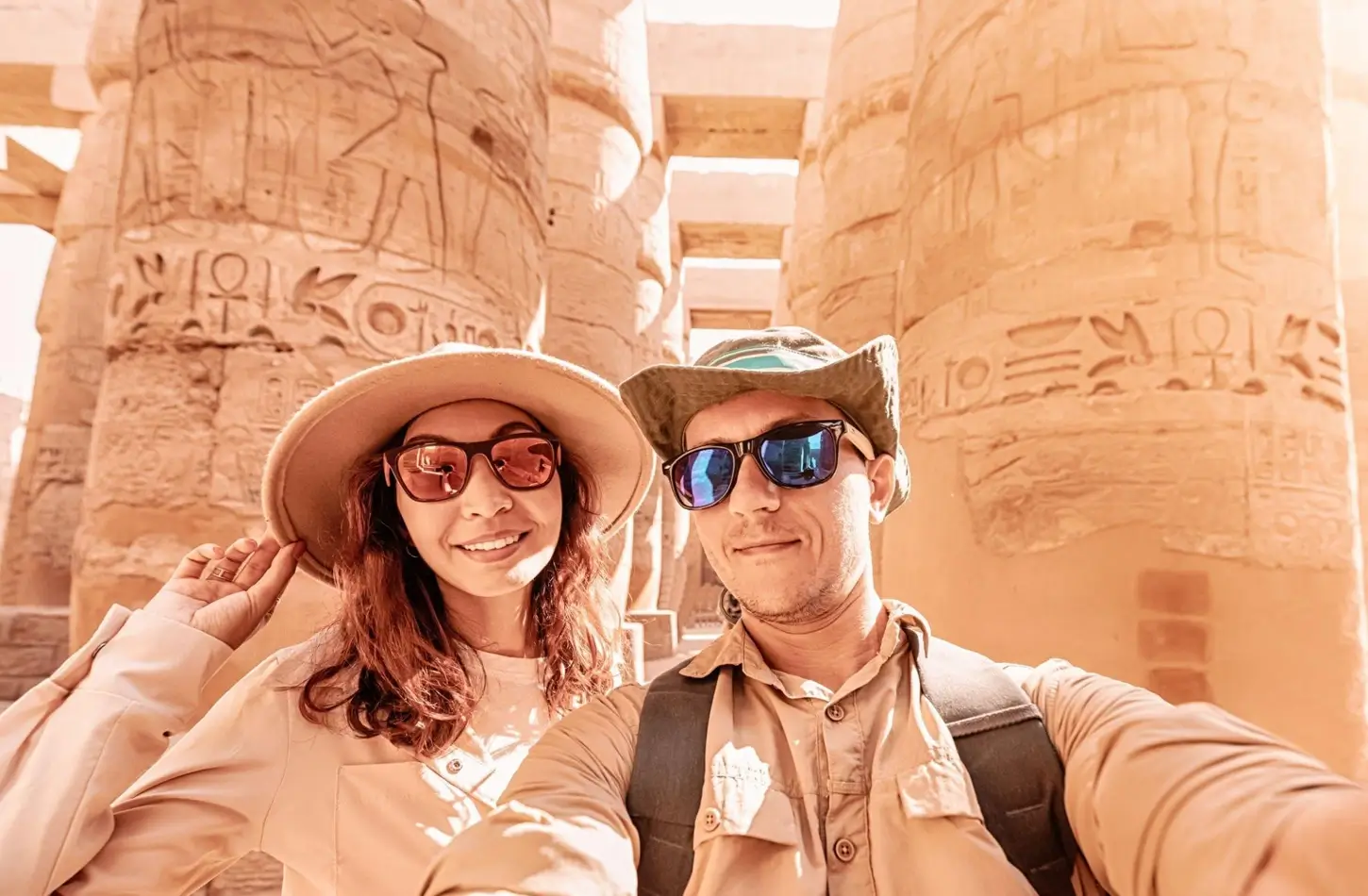
October to April. Giza is an exposed plateau with no shade, and the Grand Egyptian Museum is a long indoor walk that people underestimate — you will want energy left for it.
Two Cairo-specific notes. Winter mornings are often hazy until mid-morning, which matters if you are photographing the Pyramids; the light is usually better after eleven than at nine. And Cairo in high summer is not just hot but heavy — the humidity of the Delta sits on top of the heat in a way Luxor’s dry 42°C does not.
The best time to visit Luxor and Aswan
November to March. This is the narrowest window in the country, because the Nile Valley is the hottest part of it. November averages 29°C and January 23°C; by May it is 39°C and by July 42°C.
Heat here is manageable if you accept the local rhythm: excursions before nine, the middle of the day indoors, and the sites again from four. Every operator in Luxor works this way from May onwards, and it is why summer prices fall 30 to 40 percent.
The best time to visit the Red Sea
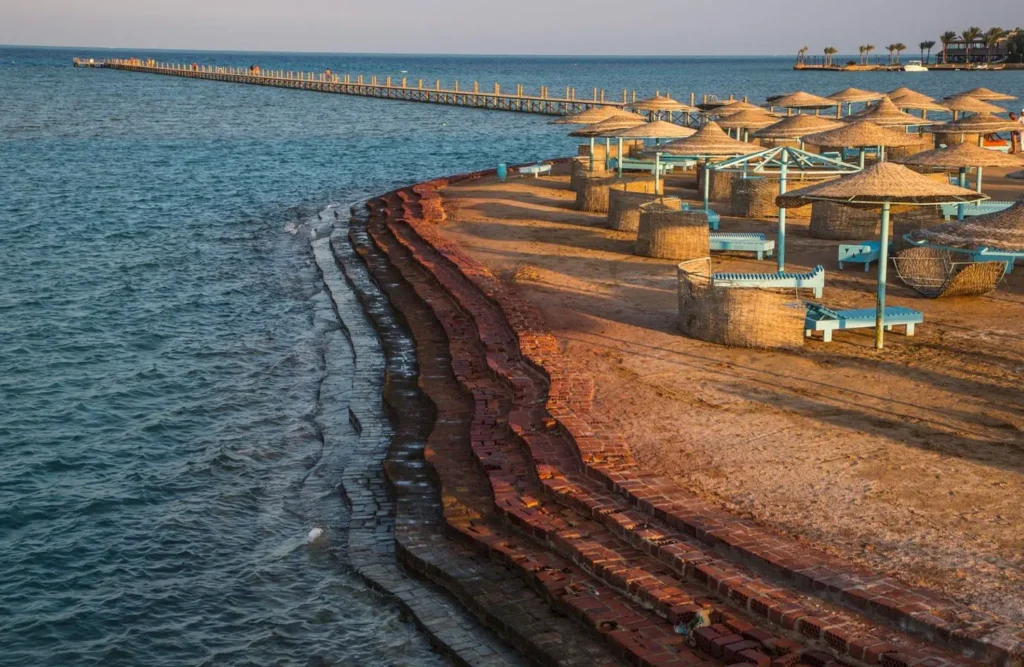
Any month. This is the one part of Egypt with no closed season. Water temperature runs about 22°C in winter and 28°C in summer, which means a shortie wetsuit in January and nothing at all in August.
The trade-off is what you do on land. In July and August the coast is for the water, the shade and the evening; walking a town at two in the afternoon is not a plan. Between November and March you can do both, but a windproof layer for the evening is worth packing — the coast gets breezy after dark, and Red Sea wind is what makes the kitesurfing good.
The best time to visit the Western Desert and Siwa
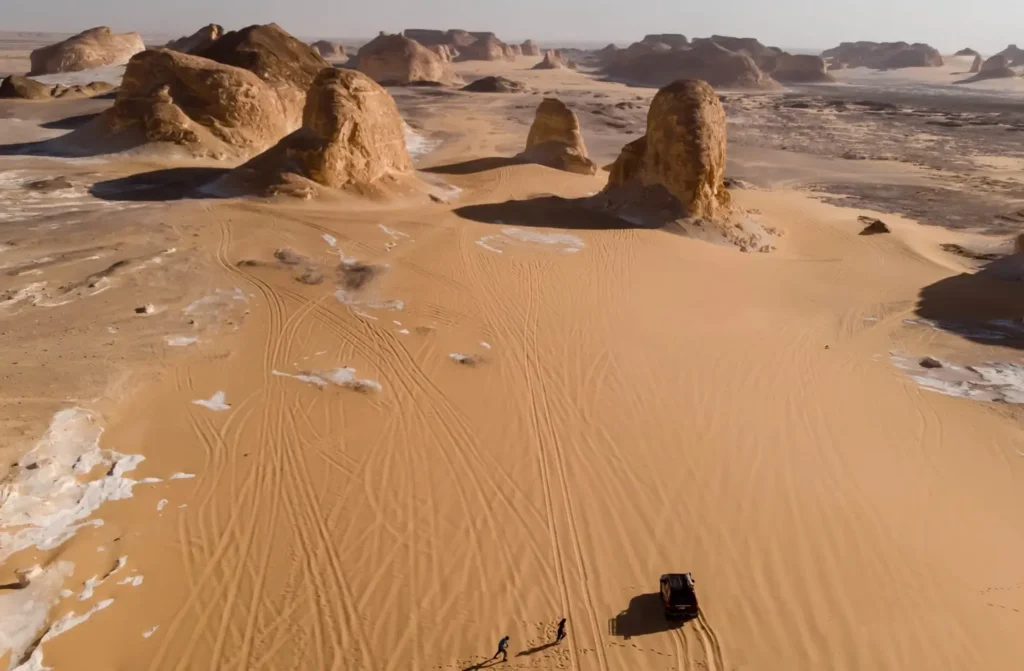
November to February, and nothing else. The White Desert, Bahariya and Siwa are a winter trip. Summer daytime temperatures pass 40°C with no shade and no water, and the overnight camping that makes the White Desert worth going to becomes unpleasant at both ends of the thermometer.
Pack for the swing rather than the average. A December day in the White Desert can be 24°C at noon and 3°C at four in the morning. People who bring one fleece regret it.
Alexandria and the Mediterranean coast
April to June, or September to October. Alexandria is the only part of Egypt where rain is a real consideration: December to February bring most of it, and a wet winter day on the Corniche is a different city from the one in the photographs. Summer is milder than Cairo’s and the sea is swimmable from June.
The Red Sea is the one part of Egypt with no closed season — the water sits near 22°C even in January.
If your trip includes a Nile cruise
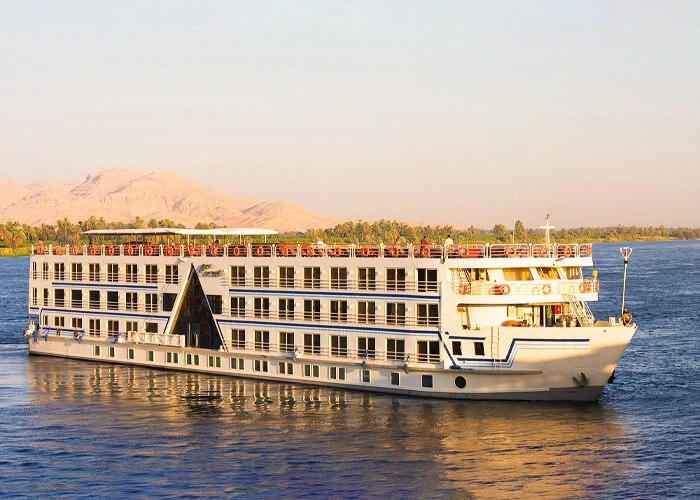
The cruise is the part of an Egypt trip with the tightest weather window and the widest price swing, so it usually decides the dates for everything else. Our month-by-month Nile cruise guide goes into what each month costs and how full the ships are; the summary is that November and March are the two best months, and that the same cabin costs roughly half as much in June as it does at Christmas.
Four periods change what a trip costs, and none of them are about weather:
20 December to 5 January. The most expensive fortnight of the year. Nile cruise rates run about 1.7 times low season, and the best ships sell out six to nine months ahead.
Easter week. A sharp European spike, shorter than Christmas but nearly as tight on availability.
Ramadan. Dates shift about eleven days earlier each year. Sites and cruises operate normally, but restaurant hours change and the evenings become the best part of the day in the cities.
May to September. The floor. Prices drop 30 to 50 percent, and the ships and hotels are half empty.
The two weeks most people should avoid
Late December through the first week of January, unless the festive atmosphere is specifically what you are buying. You pay peak rates for the same temples with the largest crowds of the year in them, and the flexibility to change anything disappears.
The other window worth swerving is the last week of April into early May in the Nile Valley, where the heat arrives faster than most itineraries are built for, without yet delivering the summer discount.
The White Desert is a winter trip only: no shade, no water, and 40°C-plus from June.
Our honest pick
November, then March. November is the only month where Cairo, the Nile Valley, the Red Sea and the desert are all comfortable at the same time, and it sits before the Christmas price rise. March is its mirror on the other side of winter, with slightly warmer water and slightly higher prices.
If your dates are fixed and they fall in summer, the trip still works — it just runs on a different clock, starts earlier, and costs a good deal less.
Frequently asked questions
What is the best month to visit Egypt?
November. It is the only month when the whole country is comfortable at once: about 25°C in Cairo, 29°C in Luxor and Aswan, and 26°C on the Red Sea, with prices still below the Christmas peak. March is the closest alternative.
Is Egypt too hot in summer?
In the Nile Valley, close to it — Luxor and Aswan average 41 to 42°C from June to August. Trips still run, but on a summer timetable: excursions before nine, the afternoon indoors, sites again after four. The Red Sea is the exception and works all year.
When is the cheapest time to visit Egypt?
May to September, when Nile cruise and hotel rates fall 30 to 50 percent below winter. June and July are the floor. The saving is real, and so is the heat — the two are the same fact.
Does it rain in Egypt?
Almost never in Luxor, Aswan or the deserts, where a year can pass without measurable rain. Cairo gets a handful of wet days in winter. Alexandria and the Mediterranean coast get genuine rainfall from December to February.
Should I avoid Egypt during Ramadan?
No. Temples, museums and Nile cruises run their normal schedules and ships serve meals as usual. Restaurant hours shift in the cities, alcohol is harder to find outside hotels, and the evenings after sunset are the most alive the streets get all year.
How far ahead should I book?
Six to nine months for Christmas, New Year and Easter, when the best ships and hotels sell out first. Three to four months for the rest of the October-to-April season. Inside a month is usually fine from May to September.
What is the best time to visit the Pyramids?
October to April for the season, and late morning for the light — Cairo’s winter haze often does not clear until around eleven. The plateau has no shade at any time of year, so summer visits are dawn or nothing.
Still choosing your month?
Send us your dates and a rough budget — a specialist replies with three ships across categories, live availability and a written price. No online payment.
Written byMagdy Fattouh38 guides published on this site
Magdy Fattouh is a Cairo University history graduate and the writer behind the guides on this site. Over 13 years he has researched and written about Egypt's history, its monuments and how to travel to them — from the pharaohs and the temples to month-by-month planning, ship comparisons and day-by-day itineraries. He speaks English and Arabic, and reviews every guide here for accuracy before it is published.
Read more by Magdy Fattouh →
Ten to seventeen hours depending on your coast, and a seven to ten hour time shift. Why twelve days beats seven, how to sequence Cairo, and what Thanksgiving…
Five hours direct from London with a one-hour time difference. What ATOL does and does not cover on a direct booking, sterling costs, and why February half term…
We use essential cookies to make this site work. With your permission we also use Google Analytics cookies to understand how the site is used, so we can improve it. We never use cookies for advertising. Cookie Policy
Strictly necessaryRemember your cookie choice and keep the site secure. Always on.
Always on
Google Analytics: which pages are visited and how people find us. No personal profile, no advertising.


 Planning