Start on the West Bank at 06:00 for the Valley of the Kings and Hatshepsut before the heat, cross at midday, then take Karnak in the late afternoon and Luxor Temple after dark. Skip Medinet Habu and the Ramesseum unless you have a second day. One day is enough for the headline sites and nothing more.
With one day in Luxor, do the West Bank in the morning — Valley of the Kings, Hatshepsut, the Colossi — and Karnak in the late afternoon. Start at 6:30 or 7. Skip Luxor Temple in daylight and see it floodlit after dark instead. That is the maximum a single day holds without becoming a forced march.
Luxor holds roughly a third of the world’s ancient monuments, so a day is not enough and never will be. The question is which third.
Key takeaways
Start on the West Bank at 06:00 — the Valley of the Kings before the heat.
Cross at midday, take Karnak late afternoon and Luxor Temple after dark.
Skip Medinet Habu and the Ramesseum unless you have a second day.
One day covers the headline sites and nothing more.
The two banks
Ancient Thebes was organised around the sun. The East Bank, where the sun rises, was for the living — Karnak and Luxor Temple, the working religious centre. The West Bank, where it sets, was for the dead — the Valley of the Kings, the mortuary temples, the tombs of the nobles.
Modern Luxor sits on the East Bank. Everything on the West is a ten-minute bridge crossing or a five-minute ferry.
Hatshepsut's temple faces east into the morning sun — which is exactly why you go at seven, not eleven.
The one-day plan
Time
Where
6:30
Cross to the West Bank
7:00 – 9:00
Valley of the Kings
9:15 – 10:15
Hatshepsut, Deir el-Bahari
10:30
Colossi of Memnon — 15 min stop
11:00 – 16:00
Back across. Lunch, rest, out of the sun
16:00 – 18:00
Karnak
After dark
Luxor Temple, floodlit
The five-hour gap in the middle is not wasted time — it is the difference between finishing the day and collapsing at three. Luxor reaches 35°C in October and 42°C in July, and the West Bank has almost no shade.
Valley of the Kings
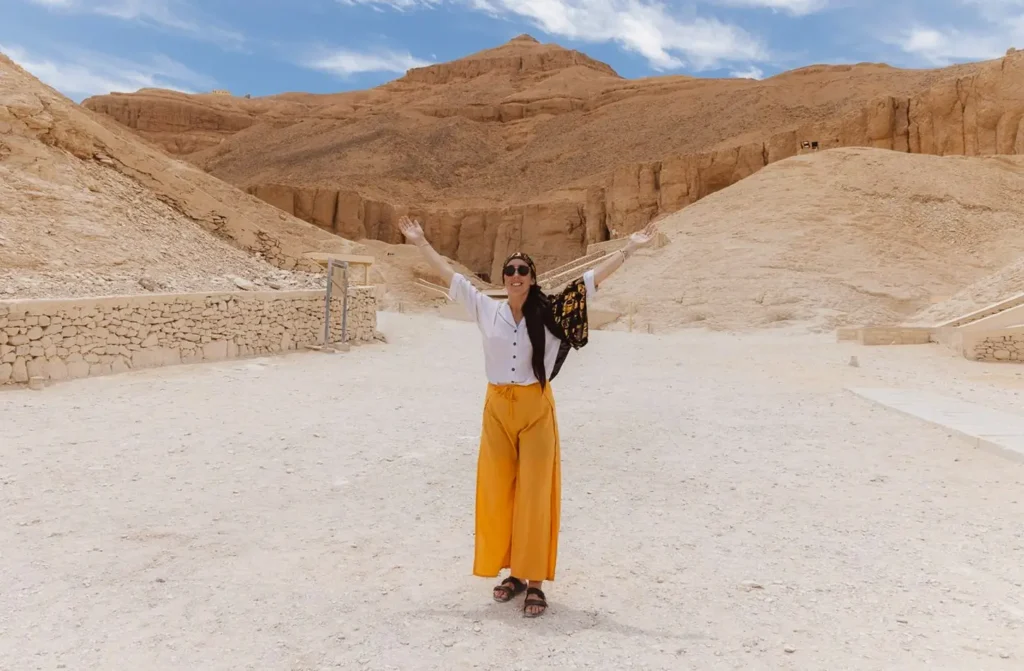
Sixty-three known tombs cut into a desert valley, with around ten open at any time on a rotating schedule to spread the wear.
Your standard ticket covers three tombs from whatever is open that week. A shuttle train runs from the car park to the tomb entrances.
Three tombs cost extra:
Seti I — the most expensive ticket in the valley and by a distance the best thing in it. 137 metres of decorated corridor with colour that looks recent. If you buy one extra, buy this.
Tutankhamun — famous, small, architecturally plain, and the treasures are in Cairo. The mummy is here, which is the draw.
Ramesses V and VI — a spectacular astronomical ceiling, and cheaper than Seti I.
Guides cannot lecture inside the tombs — Egyptian regulation. You are briefed outside and go in alone, which is why a good guide matters more here than anywhere else.
A photography permit is needed and flash is prohibited. Ramps are steep, dusty and 60 to 100 metres long in places, with inconsistent handrails.
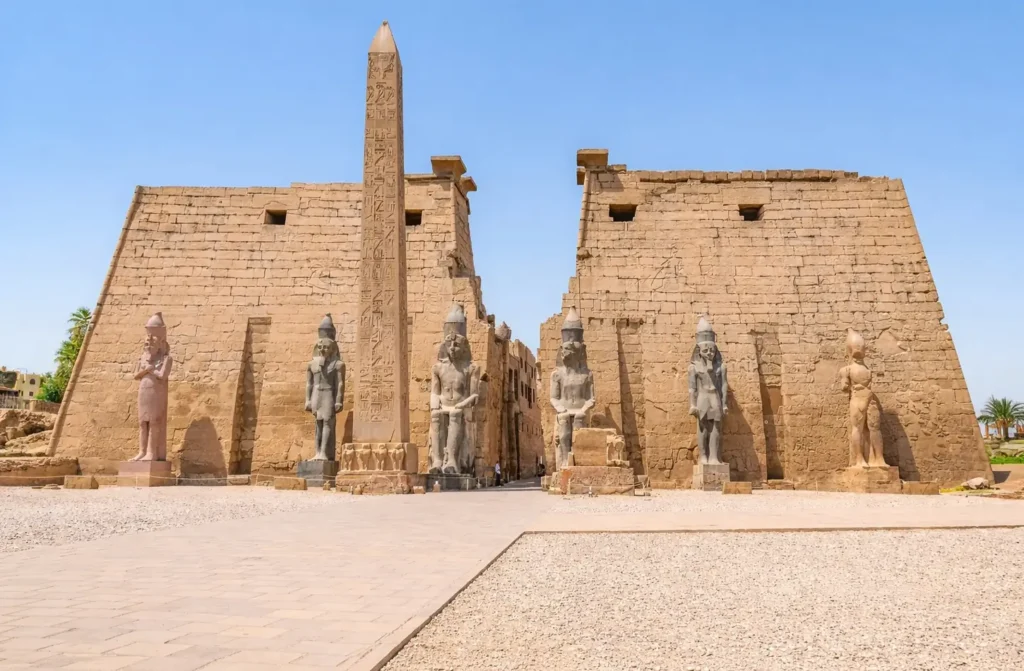
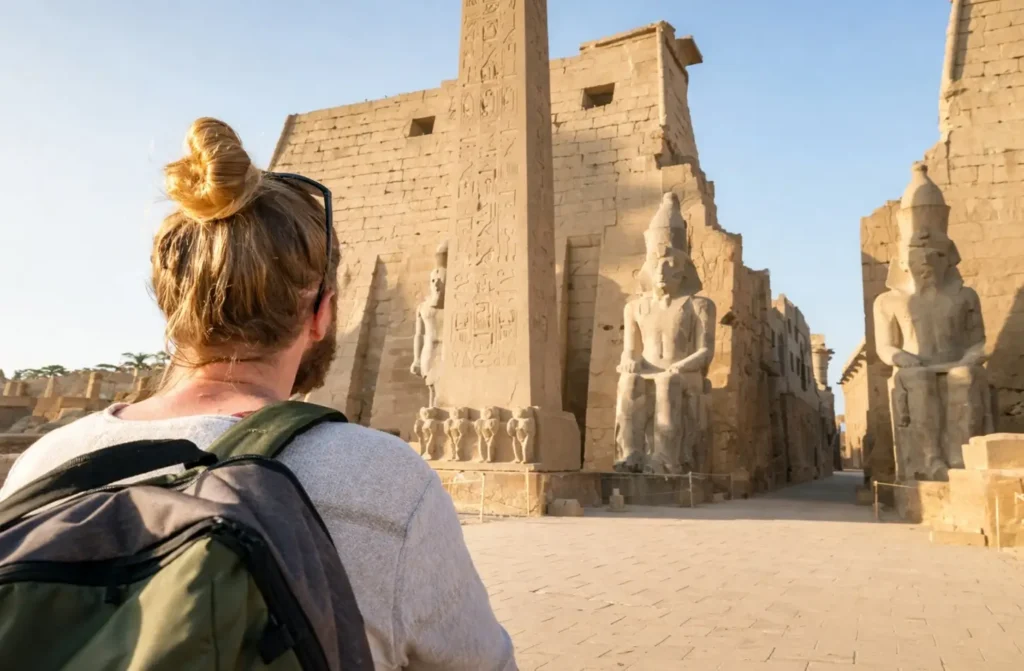
Luxor Temple is the one to save for the evening. It is lit after dark, it is a short walk from the corniche, and it is far quieter than at noon.
Hatshepsut and the Colossi
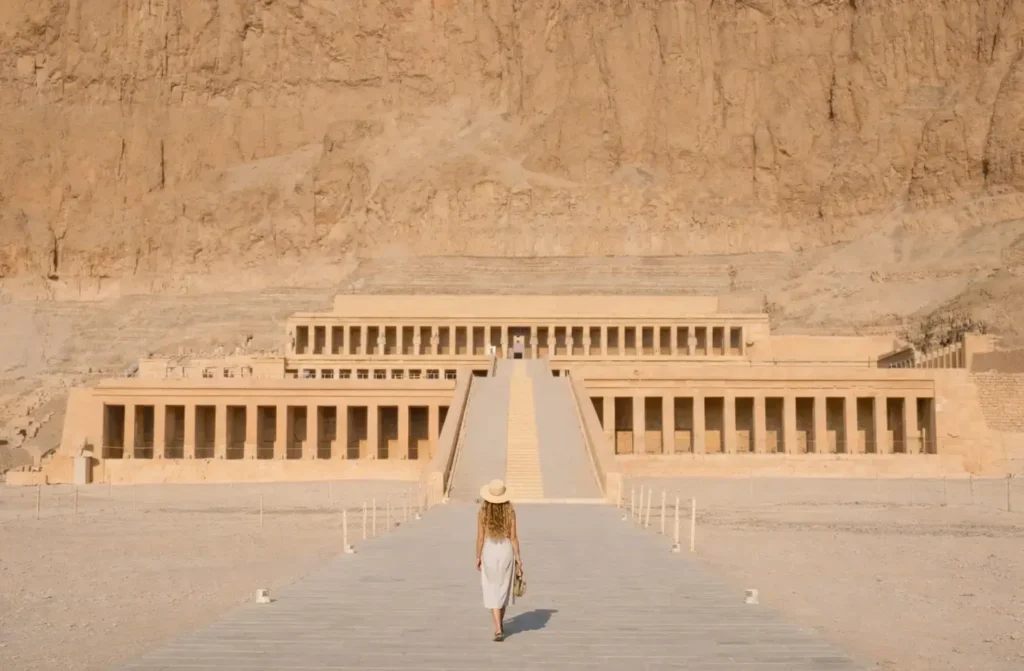
Deir el-Bahari is the mortuary temple of Hatshepsut, one of the few women to rule Egypt as pharaoh — three terraces built straight into a cliff. Extraordinary from a distance. Up close, the courtyard is a limestone bowl with no shade at all, so an hour is plenty.
Her stepson Thutmose III had her name and image chiselled out after her death, and you can see the erasures on the walls.
The Colossi of Memnon are a fifteen-minute stop at two 18-metre statues of Amenhotep III, all that survives of a mortuary temple that was once larger than Karnak.
Luxor Temple is the one to save for after dark; it is lit, and it is a short walk from the corniche.
Karnak
Two hundred acres, built and rebuilt across roughly 1,500 years by about thirty pharaohs. Less a temple than a city of temples.
The Great Hypostyle Hall is why people come — 134 columns in sixteen rows, the tallest 21 metres, carved from base to capital. It is the most photographed interior in Egypt and it still works.
Also worth finding, because most groups miss them: the Sacred Lake at the back, where hardly anyone goes; Hatshepsut’s obelisk at nearly 30 metres; and the avenue of ram-headed sphinxes at the entrance.
Two hours minimum. Late afternoon is best — cooler, emptier, and better light on the sandstone.
The sound and light show here we would skip. $20 to $25 for a dated production, and you have already seen the place properly.
Luxor Temple, after dark
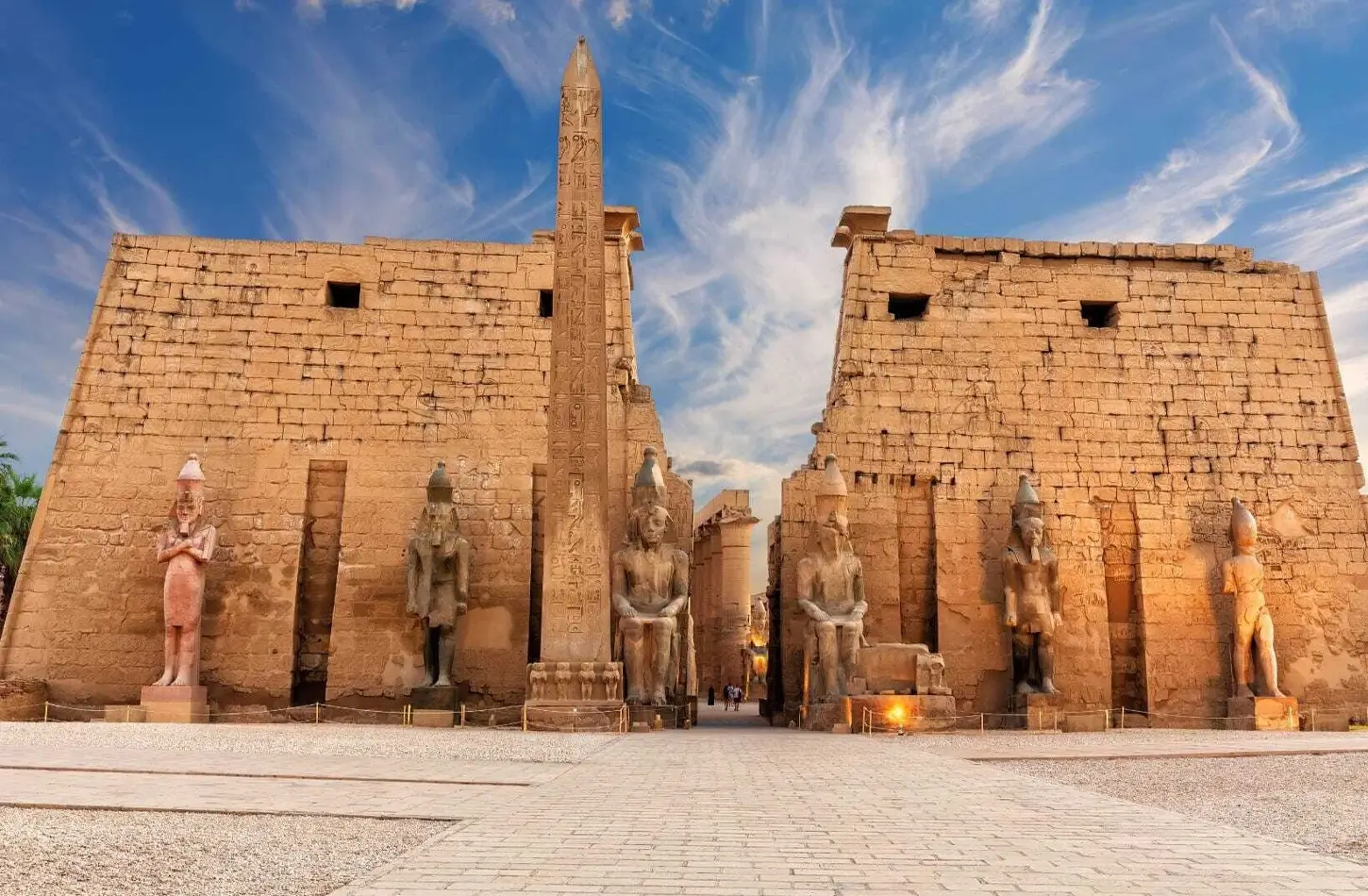
Smaller than Karnak and much easier to absorb, sitting in the middle of the modern town. The two were once connected by the Avenue of Sphinxes — nearly three kilometres of it, recently restored and walkable.
The detail nothing else in Egypt has: the Abu Haggag mosque, still in use, built into the temple’s upper level when the site was buried in silt and left in place after excavation. Its doorway hangs several metres above the ancient floor.
See it floodlit. It is genuinely better at night, it takes 45 minutes to an hour, and it fits after dinner.
If you have a second day
Medinet Habu — Ramesses III’s mortuary temple, with the best-preserved painted colour of any large temple in Egypt, and a fraction of the visitors. Several Egyptologists will tell you it is the better temple. Almost no cruise passenger sees it.
The Ramesseum — ruined, atmospheric, and the fallen colossus that inspired Shelley’s Ozymandias.
Valley of the Queens, for Nefertari’s tomb if it is open — the finest painted tomb in Egypt, with a separate and expensive ticket and strict visit limits.
Tombs of the Nobles — smaller, brighter, and about daily life rather than the afterlife. Farming, hunting, banquets. A useful counterweight to the royal tombs.
Dendera and Abydos — a long day north, about two hours each way. Dendera’s astronomical ceiling is arguably the finest painted surface in the country. On no standard cruise itinerary, which is one of the arguments in cruise versus land tour.
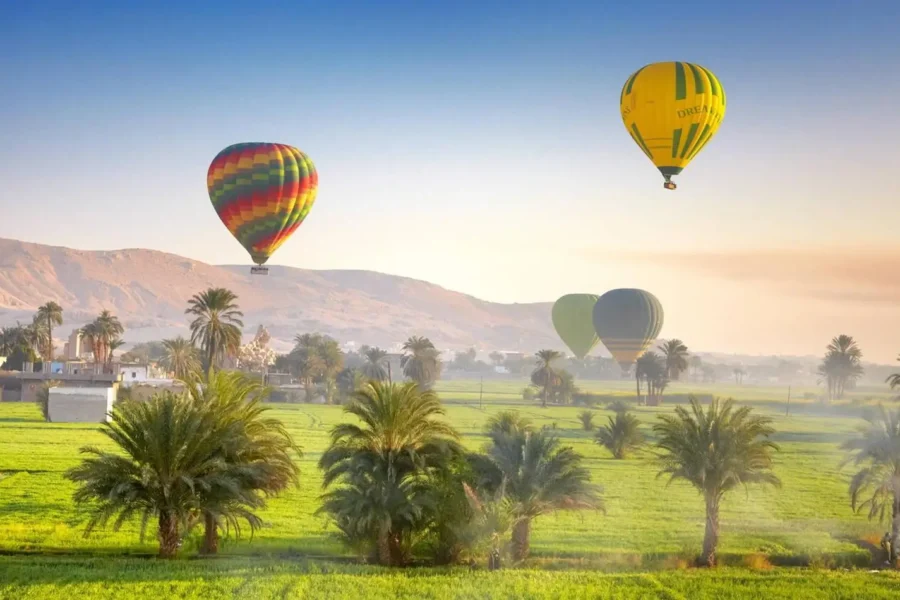
A hot air balloon at sunrise — $80 to $130, and the only way to understand the geography of Thebes. See hot air balloon in Luxor.
Luxor Temple is the one site you can do properly in an hour, which is why it works as the evening stop.
How much time each site actually needs
Site
Minimum
Comfortable
Valley of the Kings
1h 30m
2h 30m
Hatshepsut
45m
1h
Colossi of Memnon
10m
15m
Karnak
1h 30m
2h 30m
Luxor Temple
45m
1h 15m
Medinet Habu
1h
1h 30m
Ramesseum
30m
45m
Tombs of the Nobles
45m
1h 15m
The “minimum” column is what a cruise excursion gives you. The “comfortable” column is what the site is worth. That gap is the strongest argument for adding a land night in Luxor rather than relying on the cruise alone.
Where the crowds are, and when
Luxor’s visitor flow is predictable, which means it is avoidable.
Valley of the Kings peaks between 9 and 11am when the cruise coaches and the Hurghada day-trippers converge. Before 8 or after 2 is markedly quieter, and in winter the afternoon light in the valley is better anyway.
Karnak peaks mid-morning for the same reason. Late afternoon is both emptier and cooler, and the sandstone goes gold around an hour before sunset.
Hatshepsut is busiest 9 to 11 and it is the one site where crowding genuinely spoils the view, because everyone photographs the same terrace from the same spot.
Medinet Habu and the Ramesseum are quiet at any hour. That is the point of them.
The valley floor is exposed and there is no shade between tombs — this is the part of the day to do first.
Practical notes
Start early. Non-negotiable. By ten the West Bank is hot and full.
Closed shoes with grip. Tomb ramps are dusty and steep.
Carry more water than you think. There is little for sale on the West Bank.
Luxor’s vendors are more persistent than Aswan‘s. A firm la shukran without stopping works.
Uber and Careem operate, which removes taxi negotiation.
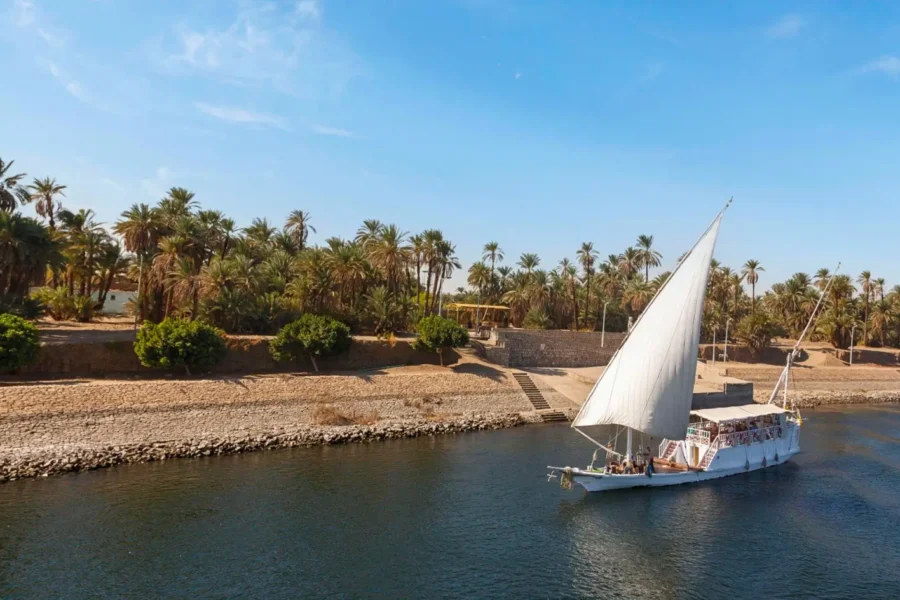
Most Luxor to Aswan cruises cover Karnak, Luxor Temple and the West Bank across the first two days. If Luxor is what draws you, add nights here rather than to the cruise — tell us and we will build it.
Frequently asked questions
What can you see in Luxor in one day?
The Valley of the Kings, Hatshepsut and the Colossi in the morning, then Karnak in the late afternoon and Luxor Temple floodlit after dark. Start by 6:30.
How many days do you need in Luxor?
Two as a minimum for the main sites without rushing. Three or four if you want Medinet Habu, the Ramesseum, the Tombs of the Nobles, or Dendera and Abydos.
Which is better, Karnak or Luxor Temple?
Karnak is far larger and more impressive; Luxor Temple is more manageable and better at night. See both — they are fifteen minutes apart.
Is the Valley of the Kings worth it?
Yes. Your ticket covers three tombs. Pay extra for Seti I if you buy only one upgrade — it is on a different level from the rest.
East Bank or West Bank first?
West Bank first, early, because it is hotter, more exposed and busier later. Karnak works well in the late afternoon.
Is Luxor Temple better at night?
Yes. It is floodlit and considerably more atmospheric after dark, and it fits neatly after dinner.
How do I cross to the West Bank?
By bridge, about ten minutes by road, or the local ferry in about five. Cruise excursions use the bridge with an air-conditioned coach.
What do most cruise passengers miss in Luxor?
Medinet Habu, the Ramesseum, the Tombs of the Nobles, and Dendera and Abydos — none of which are on standard cruise itineraries.
One day, or two? Ask a specialist
Send us your dates and a rough budget — a specialist replies with three ships across categories, live availability and a written price. No online payment.
Written byMagdy Fattouh38 guides published on this site
Magdy Fattouh is a Cairo University history graduate and the writer behind the guides on this site. Over 13 years he has researched and written about Egypt's history, its monuments and how to travel to them — from the pharaohs and the temples to month-by-month planning, ship comparisons and day-by-day itineraries. He speaks English and Arabic, and reviews every guide here for accuracy before it is published.
Read more by Magdy Fattouh →
Three to seven nights, $485 to $2,700 per person, eight temples across 210km of river. Length, direction, cost, season, ships and booking — the whole thing in one…
We use essential cookies to make this site work. With your permission we also use Google Analytics cookies to understand how the site is used, so we can improve it. We never use cookies for advertising. Cookie Policy
Strictly necessaryRemember your cookie choice and keep the site secure. Always on.
Always on
Google Analytics: which pages are visited and how people find us. No personal profile, no advertising.


 Cruises