A Luxor balloon flight costs from about $75 per person, takes off at first light and is 40 to 45 minutes in the air. Collection from the ship is around 04:00 and you are back for breakfast. Flights are regulated and grounded in wind; book through your ship or operator rather than at the dock.
A sunrise balloon flight over Luxor‘s West Bank costs $80 to $130 per person, lasts 45 to 60 minutes in the air, and involves a pickup around 4:00 to 4:30am. You float at up to 450 metres over the Valley of the Kings, Hatshepsut’s temple and the Ramesseum as the sun comes up behind the Theban hills. It is not included in any Nile cruise.
It is also the excursion people ask us the most nervous questions about, so the safety section below is longer than the sales section.
Key takeaways
Flights cost from about $75 per person and last 40 to 45 minutes in the air.
Collection from the ship is around 04:00; you are back for breakfast.
Flights are grounded in wind — a cancelled flight is a refunded one.
Book through your ship or operator, not at the dock.
What the flight is
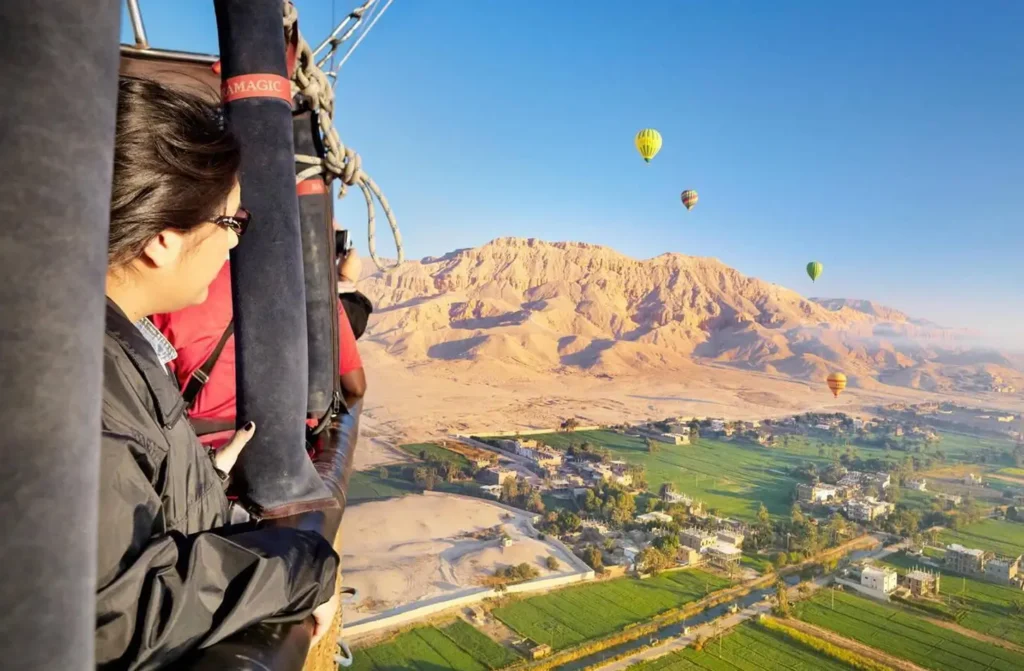
Balloons launch from the West Bank at first light, when the air is coolest and stillest. You share a wicker basket with roughly twelve to twenty other people, divided into compartments, with the pilot and burners in the centre.
The route is not steered in any precise sense — balloons go where the wind goes, and the pilot controls altitude to find a favourable layer. On a normal morning that carries you north or south along the edge of the cultivation, over the mortuary temples and the desert margin where the tombs are.
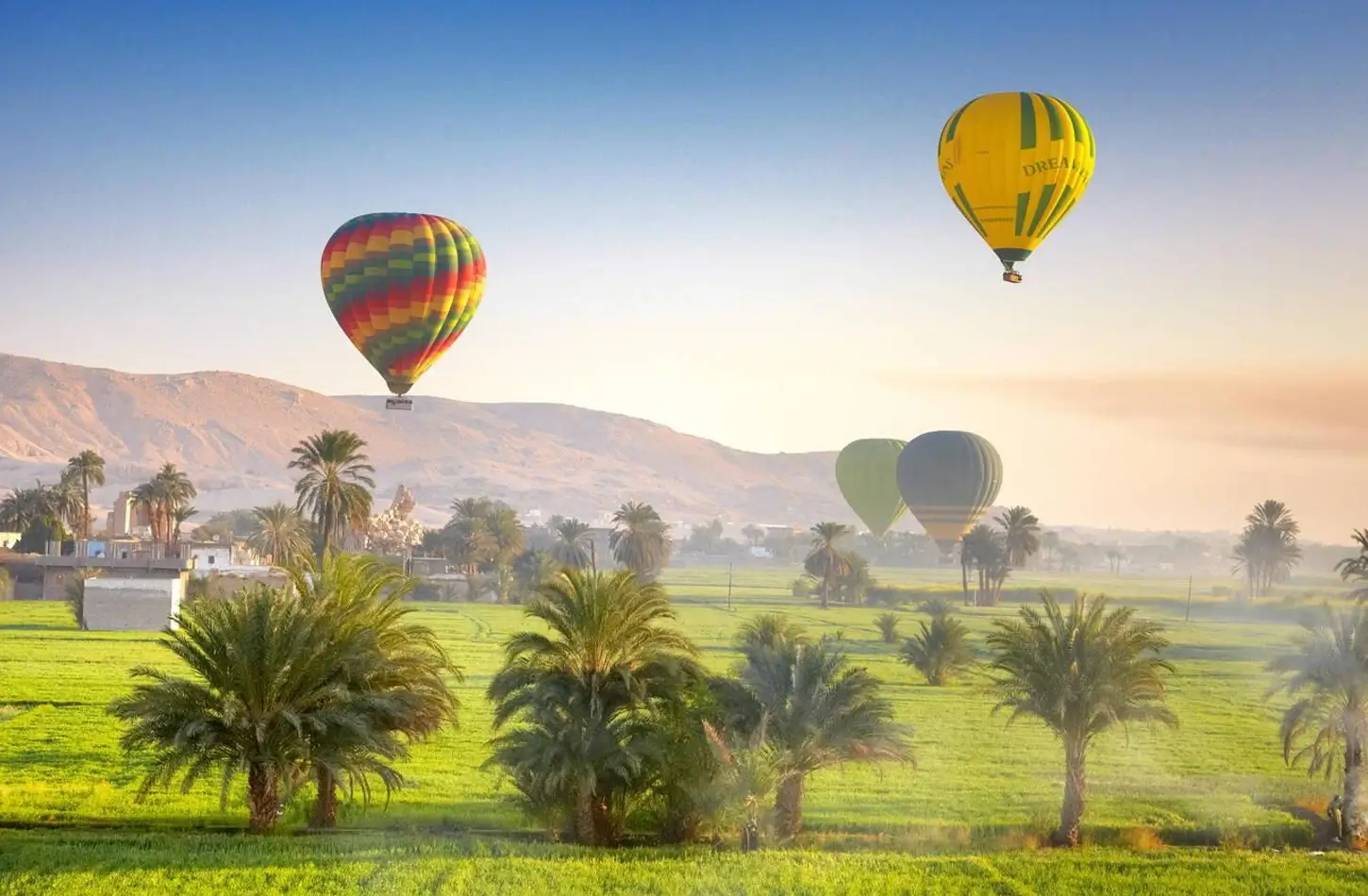
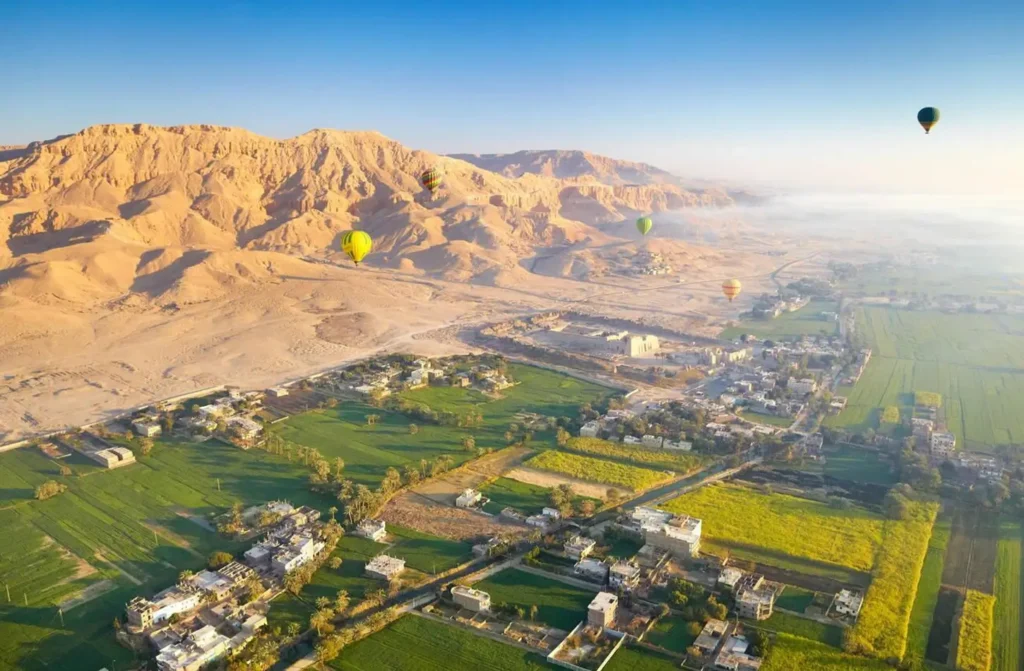
What you actually see is the thing photographs do not convey: the line where the green stops. Irrigated fields end and desert begins in the space of a few metres, and the entire logic of ancient Egypt — the living on one side, the dead on the other — becomes obvious in a way no guide can explain from the ground.
Baskets hold 8 to 20 people depending on the operator — worth asking before you book.
Cost and what is included
Item
Typical
Standard shared flight
$80 – $130 per person
Peak season (Dec–Feb)
Toward the top of the range
Low season (Jun–Aug)
Toward the bottom
Private or VIP basket
$200 – $400 per person
Hotel or ship pickup
Included
Nile crossing by motorboat
Included
Light refreshment
Usually included
Tip for ground crew
$2 – $5, not included
You will see much lower prices advertised online. Those are usually either transport-only, a different operator’s standby list, or a genuinely cut-price company. This is not the excursion to buy at the bottom of the market.
Safety, honestly
Luxor ballooning had a serious accident in 2013 and the industry was grounded and restructured afterwards. Regulation, maintenance requirements and pilot licensing were all tightened, passenger numbers per basket were capped, and flights are now suspended entirely when wind conditions are marginal.
Since then the record has been good. It is not risk-free — no aviation is — but it is a regulated activity with a functioning oversight regime rather than an unregulated one.
What to check before booking:
Book through your cruise operator or hotel rather than a man on the street. Accountability matters more than the $15 you save.
Ask which company is flying you. The established operators in Luxor are well known and your operator will name them.
Confirm the passenger count per basket.
Check your travel insurance covers ballooning. A surprising number of standard policies exclude it, and this is the one activity on your trip most likely to fall outside cover.
Cancellations happen and are a good sign. Flights are called off for wind, fog or haze, sometimes at the launch site after you have arrived. An operator who flies in marginal conditions is the one to worry about. Ask what the refund policy is for a weather cancellation before you pay — reputable ones refund in full or rebook.
Ask how many people share the basket. Eight is a different experience from twenty, and the price difference is usually small.
The morning, hour by hour
4:00 – 4:30am. Pickup from your ship or hotel. If you are on a cruise moored at Luxor, they collect you at the gangway.
4:45. Short motorboat across the Nile to the West Bank. This is a lovely twenty minutes in itself — the river completely black and still.
5:15. Arrive at the launch field. Tea or coffee, and you watch the balloons inflate, which takes about twenty minutes and is genuinely a spectacle. Safety briefing, including the landing position: knees bent, hold the rope handles, face the direction of travel.
5:45 – 6:15. Launch, timed so you are airborne as the sun clears the hills. Flight is 45 to 60 minutes.
7:00 – 7:30. Landing, wherever the wind has put you — often a field, sometimes with a small crowd of local children arriving to watch. The chase vehicle collects you.
8:30. Back on board, in time for the day’s excursion. Most cruise itineraries build the balloon into the West Bank morning, so you do not miss anything — see the day-by-day itinerary.
The flight crosses the line where the fields stop and the Theban cliffs begin — the reason to go up at all.
Best season to fly
Balloons fly year-round in Luxor, and the season changes the experience more than the price does.
October to April is the main season. Air is stable, mornings are clear, and the low winter sun throws long shadows across the West Bank that make the terraces and tomb entrances stand out. It is also when cancellations for fog are most likely — cold nights over irrigated fields produce morning mist that burns off an hour after the flights should have gone.
May to September has more reliable flying weather and fewer cancellations, plus lower prices. The trade is that launch is even earlier as operators work ahead of the heat, and the light is flatter.
Wind, not temperature, is what grounds a flight. Luxor sits in a river valley with fairly predictable dawn conditions, which is why the industry works here at all. But a windy morning means no flying, and if you have one night in Luxor you have one chance.
The practical conclusion: build a buffer. If ballooning matters to you, book it for your first available morning rather than your last, so a weather cancellation can be rebooked the following day. On a Luxor to Aswan cruise that means the first morning aboard, not the day you sail south.
What to wear and bring
It is cold at 4am. December and January mornings in Luxor are 8 to 12°C, and you are standing in an open field before dawn.
Layers. You will shed them by seven. The burner also radiates real heat downward, so one side of you is warm and the other is not.
Closed shoes. Landing fields are rough and sometimes muddy at the edges.
Camera with a wrist strap. You are leaning over a basket edge at 400 metres.
You do not have to fly to get the picture — the launch is visible from the east bank and from most ship sun decks.
Who should skip it
We would rather tell you now than at 4am.
Serious fear of heights. There is no way out once you launch, and the basket wall is chest-height. That said, ballooning feels nothing like a plane or a cliff edge — there is no motion and no reference point, and a lot of people with mild height anxiety are fine.
Mobility difficulties. You climb into a basket over a wall about a metre high, and the landing can be a bump and a lean.
Back or neck problems. Landings are usually gentle, occasionally not.
Pregnancy. Most operators decline.
Young children. Minimum ages vary; under-sixes generally cannot see over the basket anyway.
Is it worth $80 to $130?
Our view: yes, and it is the second-best paid add-on on the trip after Abu Simbel.
If your budget stretches to one extra excursion, take Abu Simbel — it is a greater thing to see. If it stretches to two, this is the second. It costs less than a luxury cabin upgrade and you will talk about it more.
What we would drop first to afford it: the sound and light show at $20 to $25, which is a dated production most people find an anticlimax after seeing Karnak in daylight.
Balloons lift at first light and are usually down within the hour, so the whole excursion is over before breakfast.
Frequently asked questions
How much is a hot air balloon in Luxor?
$80 to $130 per person for a standard shared flight, including pickup and the Nile crossing. Private baskets run $200 to $400. Prices sit at the top of the range in December to February.
Is hot air ballooning in Luxor safe?
The industry was restructured and re-regulated after a 2013 accident, with tighter licensing, maintenance and passenger limits, and flights are grounded in marginal wind. The record since has been good. Check that your travel insurance covers ballooning — many policies exclude it.
What time does the balloon flight start?
Pickup is around 4:00 to 4:30am, launch between 5:45 and 6:15, and you are usually back on board by 8:30.
How long is the flight?
45 to 60 minutes in the air. The whole excursion takes about four hours door to door.
What will I see?
The Valley of the Kings, Hatshepsut’s temple, the Ramesseum, the Colossi of Memnon, and the line where irrigated farmland meets desert — which is the part people remember.
Is it included in a Nile cruise?
No. It is an optional excursion, booked separately through your operator or ship.
What happens if the flight is cancelled?
Weather cancellations are common and are a sign of a well-run operator. Reputable companies refund in full or rebook. Confirm the policy before paying.
Can I do it if I am scared of heights?
Often, yes. There is no motion, no vibration and no visual reference to the ground below your feet, so it feels very different from a cliff edge or a glass floor. If the fear is severe, skip it.
Adding the balloon to your cruise?
Send us your dates and a rough budget — a specialist replies with three ships across categories, live availability and a written price. No online payment.
Written byMagdy Fattouh38 guides published on this site
Magdy Fattouh is a Cairo University history graduate and the writer behind the guides on this site. Over 13 years he has researched and written about Egypt's history, its monuments and how to travel to them — from the pharaohs and the temples to month-by-month planning, ship comparisons and day-by-day itineraries. He speaks English and Arabic, and reviews every guide here for accuracy before it is published.
Read more by Magdy Fattouh →
Three to seven nights, $485 to $2,700 per person, eight temples across 210km of river. Length, direction, cost, season, ships and booking — the whole thing in one…
We use essential cookies to make this site work. With your permission we also use Google Analytics cookies to understand how the site is used, so we can improve it. We never use cookies for advertising. Cookie Policy
Strictly necessaryRemember your cookie choice and keep the site secure. Always on.
Always on
Google Analytics: which pages are visited and how people find us. No personal profile, no advertising.




 Cruises