With one day in Aswan: Philae in the morning, the High Dam and the Unfinished Obelisk after, and a felucca at sunset. With two, add a Nubian village on the west bank and the Nubian Museum. The best hour of the day is the last one, on the water between Elephantine and Kitchener's Island.
With one day in Aswan, do Philae temple in the morning, the Unfinished Obelisk and the High Dam before lunch, and a felucca around Elephantine Island at sunset. That covers the essentials without rushing. If you have two days, add Abu Simbel — it is a full day from here and not part of any cruise.
Aswan is the quieter of Egypt’s two great southern cities, and most cruise passengers get less than a day here. If you can add a night either side of your sailing, this is where to spend it.
Key takeaways
One day: Philae in the morning, the High Dam and the Obelisk after, a felucca at sunset.
Two days: add a Nubian village on the west bank and the Nubian Museum.
Abu Simbel is a separate day trip, not an Aswan afternoon.
The best hour is the last one, on the water.
Why Aswan is different
The river changes character here. It widens, granite islands break the surface, and the desert comes right down to the water on the west bank. The pace drops noticeably — fewer touts than Luxor, less traffic, and a genuinely different atmosphere.
It is also the Nubian city. Nubian culture, language and music are distinct from the rest of Egypt, and Aswan is where you encounter them. Much of Nubia was flooded by Lake Nasser in the 1960s and the population resettled, which is a living piece of recent history rather than a museum topic.
The Nubian villages on the west bank are a half day, and the reason to give Aswan a second one.
The essential half day
Philae Temple
The one to prioritise. A temple to Isis on an island, reached by motorboat — about ten minutes across the water, and the approach is half the pleasure.
Philae was the last place in Egypt where the old religion was still practised, into the sixth century AD, long after the country had turned Christian. You can see where early Christians carved crosses over the reliefs.
Like Abu Simbel, it was moved. The original island flooded when the High Dam was built, and between 1972 and 1980 the whole temple was cut into 40,000 blocks and rebuilt on higher ground at Agilkia. Most visitors never notice the joins.
Allow 90 minutes including the boat. Go early or at sunset; the granite turns orange in low light.
The Unfinished Obelisk
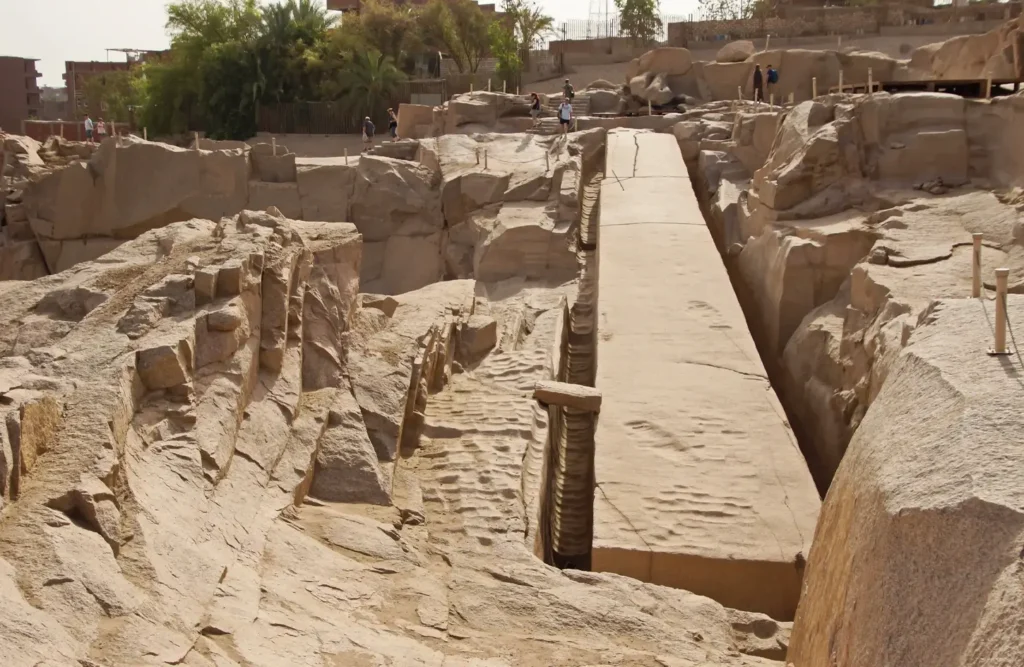
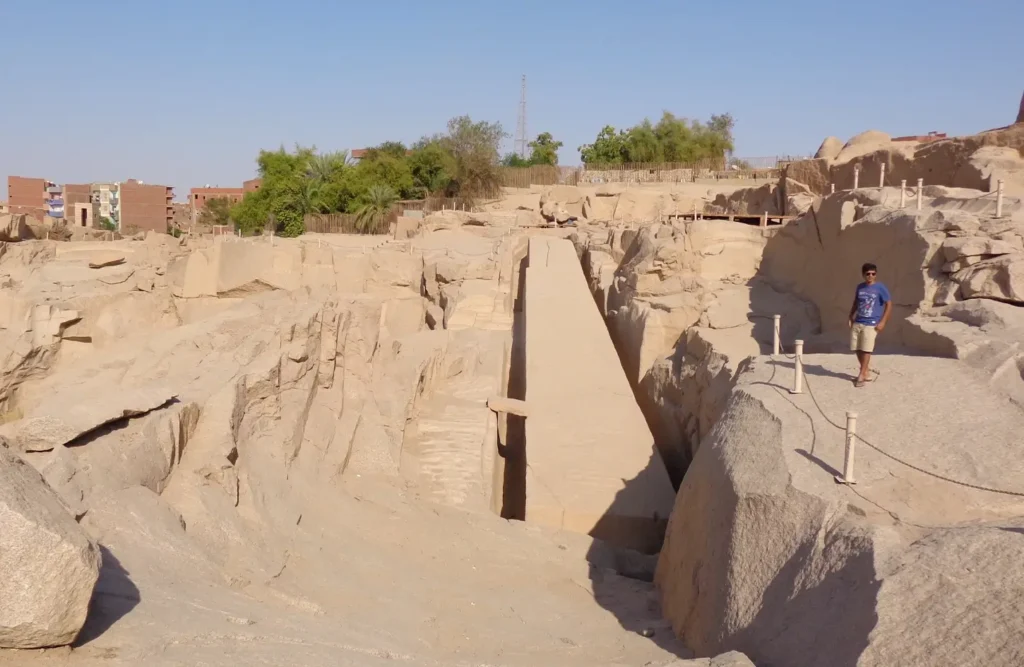
A 1,200-tonne block of granite still attached to the bedrock, abandoned three thousand years ago when a crack appeared. Had it been raised it would have been the largest obelisk ever erected.
Thirty minutes, and it tells you more about how these things were actually made than any museum display — you can see the tool marks and the trenches cut by hand around the sides.
The High Dam
Twenty to thirty minutes and largely a photo stop. It matters as context rather than spectacle: this is the structure that created Lake Nasser, ended the annual flood, generates a large share of Egypt’s electricity, and displaced the Nubian population. Understanding it explains why Philae and Abu Simbel had to move.
The afternoon: a felucca
If you do one thing in Aswan that is not a monument, do this.
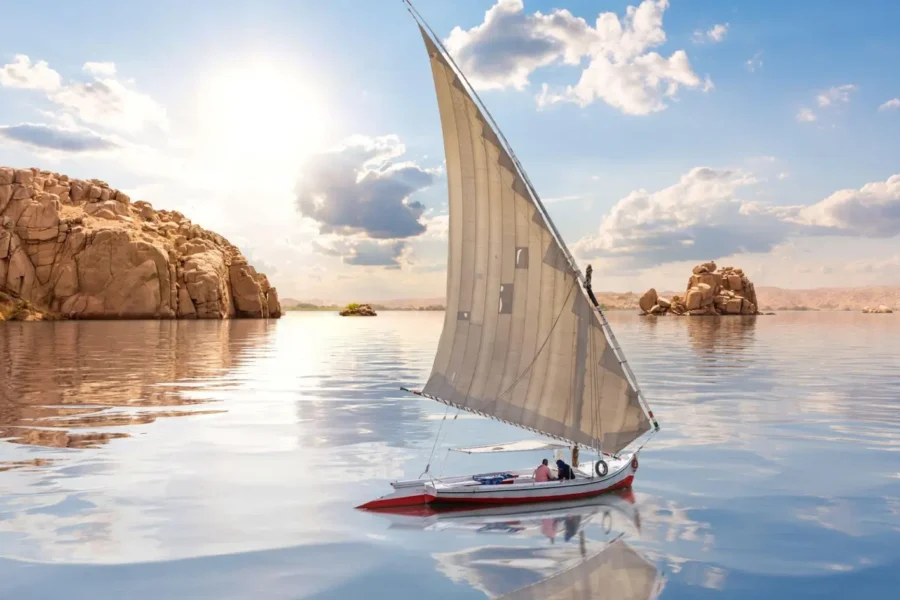
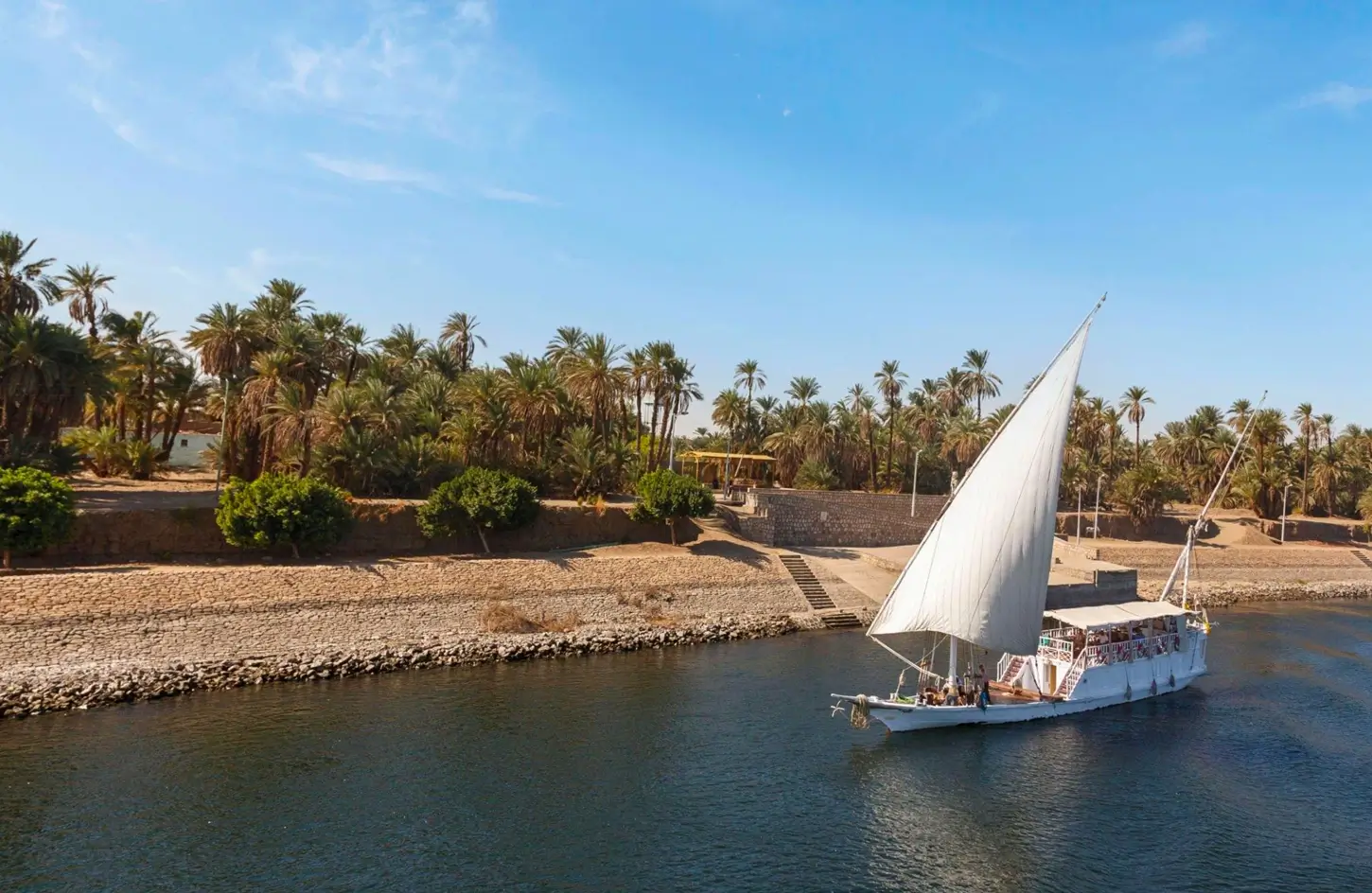
A felucca is a small lateen-rigged sailing boat with a crew of one or two. An hour or two around Elephantine Island, past the Botanical Garden on Kitchener’s Island, with the Aga Khan Mausoleum on the west bank and the desert behind it. No engine, almost no sound.
Expect to pay roughly 300 to 600 EGP for the boat for an hour or two, depending on your negotiating and the season — agree the price and the duration before you get in. Sunset is the time.
This is consistently the thing travellers mention afterwards, and it costs less than a round of drinks on the ship.
The Unfinished Obelisk takes twenty minutes and explains how every other monument you have seen was actually cut. Do not skip it because it is small.
If you have longer
Abu Simbel — a full day, 3 hours 40 minutes each way by road, $85 to $160. Not on any cruise itinerary. If you have a spare day in Aswan, this is what it is for. Full detail in Abu Simbel from Aswan.
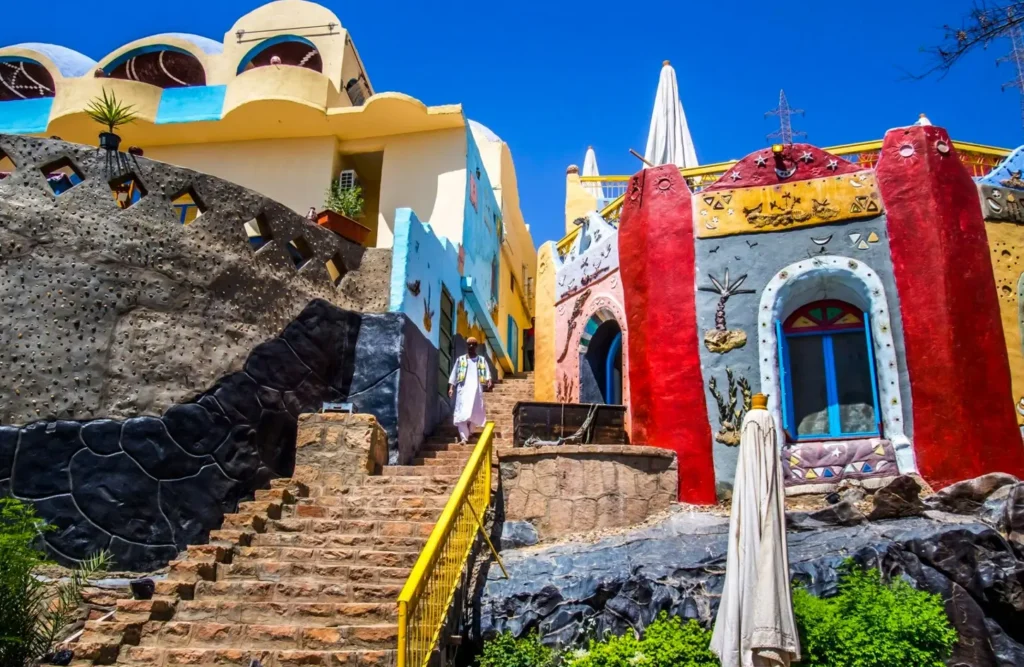
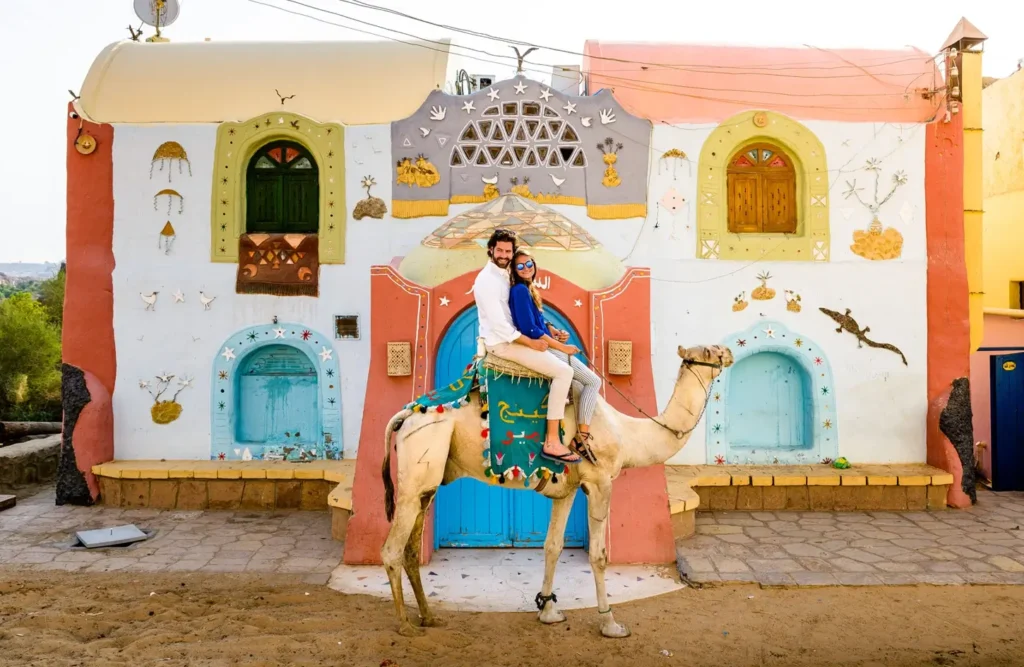
A Nubian village on the west bank or Elephantine Island — bright painted houses, a very different food culture, and usually a family serving tea. Some versions of this are touristic and some are not; ask your operator which they use.
The Nubian Museum — genuinely good, air-conditioned, and covers the flooding of Nubia and the rescue of the monuments. An hour and a half well spent, and the right thing to do in the heat of the afternoon.
Kalabsha Temple, near the dam — another relocated temple, and almost nobody goes. If you want a major site to yourself, this is it.
The souk on Sharia as-Souq — spices, hibiscus, Nubian textiles. Smaller and markedly less pushy than Luxor’s.
The Unfinished Obelisk takes twenty minutes and explains more about how the temples were built than any of them.
Fitting it around a cruise
Which itinerary you take decides how much Aswan you get.
On a 4-night Luxor to Aswan, you arrive on the final full day and usually get Philae plus a free afternoon — enough for the felucca. Then you disembark the next morning.
On a 3-night Aswan to Luxor, you board here, so Aswan is compressed into your embarkation day or the day before.
Our recommendation either way: add a night in Aswan. Disembarkation is 8 or 9am and nothing after breakfast is included, so if your flight is in the evening you have a gap to fill anyway — see the day-by-day itinerary. A hotel night converts that dead time into Abu Simbel or a proper afternoon.
Where to eat and where to stay
Since most people who add a night here have to solve both.
Eating. The Nubian restaurants on the west bank and Elephantine Island are the distinctive option — tagines, grilled fish from the river, hibiscus tea, and usually a family kitchen rather than a commercial one. The corniche restaurants are more conventional and perfectly good. For cheap and excellent, the koshari places in town cost almost nothing.
Staying. Aswan’s hotels split into three groups: a few historic hotels at the top end, a set of comfortable mid-range riverside hotels along the corniche, and Nubian guesthouses on Elephantine Island and the west bank. The guesthouses are the interesting choice — you cross by boat, they are family-run, and they cost a fraction of the corniche hotels.
Whatever you choose, ask for a river-facing room. It is the whole reason to be in Aswan.
The painted Nubian houses are a working village, not a display — go with a guide who knows which families welcome visitors.
The best hour in Aswan
If you take one thing from this page: be on the water at sunset.
The granite islands go orange, the desert on the west bank turns pink behind the Aga Khan mausoleum, feluccas come out in numbers, and the light lasts about forty minutes. It is the single most photographed view in Upper Egypt and it deserves to be.
You do not need to book anything or pay much. Walk down to the corniche around an hour before sunset, agree a price with a felucca captain, and go. Or, if your ship is moored, simply go up to the sun deck with a drink.
Practical notes
Aswan runs 1 to 2°C hotter than Luxor year-round. In summer it is the hottest place on your itinerary.
Everything is on the water. Getting to Philae, Elephantine, the Nubian villages and the west bank all involves a boat. Agree prices before boarding.
The souk is calmer than Luxor’s, but agree prices before anything changes hands.
Uber and Careem operate here, which solves the taxi negotiation entirely.
Aswan airport is about 25 minutes from the corniche.
Our Egypt packages build extra Aswan time in where it makes sense, and we would rather add a night here than compress the end of a trip. Tell us your dates.
Still attached to the bedrock on three sides: the obelisk cracked before it could be freed, and was abandoned where it lay.
Frequently asked questions
What are the top things to do in Aswan?
Philae temple, the Unfinished Obelisk, the High Dam, a felucca around Elephantine Island, and the Nubian Museum. Abu Simbel is a full separate day.
How long do you need in Aswan?
One day covers Philae, the obelisk, the dam and a felucca. Two days lets you add Abu Simbel. Most cruises give you less than one day, which is why an extra night is worth it.
Is Philae included in a Nile cruise?
Yes, on virtually every itinerary — it is the main Aswan site and the entrance fee is covered on a packaged cruise.
How much does a felucca cost in Aswan?
Roughly 300 to 600 EGP for the boat for an hour or two, depending on season and negotiation. Agree the price and the duration before you get in.
Is Aswan better than Luxor?
Different. Luxor has far more to see; Aswan is calmer, prettier and easier to spend unstructured time in. Most people prefer Luxor for sites and Aswan for atmosphere.
Can I visit Abu Simbel from Aswan in one day?
Yes — about ten hours by road with a 3:30am start, or six by air. It is not included in any cruise fare.
Is Aswan hot?
Hotter than Luxor by one to two degrees year-round, reaching 43°C in July. November to March is comfortable.
Should I add a night in Aswan?
If your cruise ends here, yes. You are off the ship by 9am with nothing included after breakfast, so an extra night turns dead time into Abu Simbel or a full afternoon.
How long have you got in Aswan?
Send us your dates and a rough budget — a specialist replies with three ships across categories, live availability and a written price. No online payment.
Written byMagdy Fattouh38 guides published on this site
Magdy Fattouh is a Cairo University history graduate and the writer behind the guides on this site. Over 13 years he has researched and written about Egypt's history, its monuments and how to travel to them — from the pharaohs and the temples to month-by-month planning, ship comparisons and day-by-day itineraries. He speaks English and Arabic, and reviews every guide here for accuracy before it is published.
Read more by Magdy Fattouh →
Three to seven nights, $485 to $2,700 per person, eight temples across 210km of river. Length, direction, cost, season, ships and booking — the whole thing in one…
We use essential cookies to make this site work. With your permission we also use Google Analytics cookies to understand how the site is used, so we can improve it. We never use cookies for advertising. Cookie Policy
Strictly necessaryRemember your cookie choice and keep the site secure. Always on.
Always on
Google Analytics: which pages are visited and how people find us. No personal profile, no advertising.


 Cruises