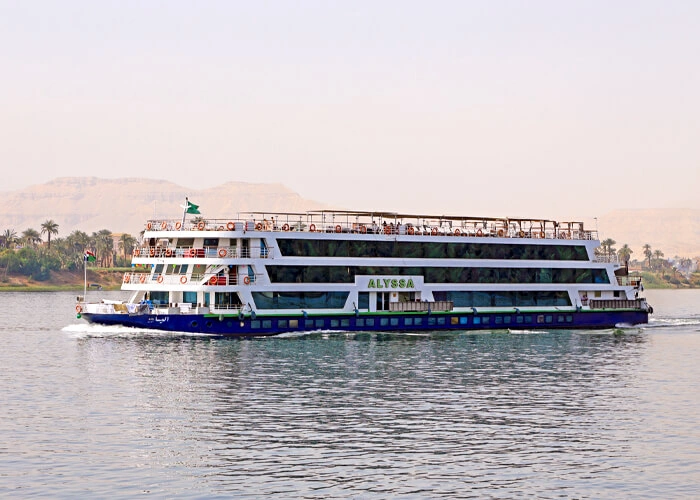
Day one is boarding in Luxor with Karnak and Luxor Temple. Day two is the West Bank at dawn, then sailing to Esna. Day three is Edfu by carriage and Kom Ombo at sunset. Day four is Aswan: Philae, the High Dam and a felucca. Excursions take three to four hours; the rest of each day is yours.
A 4-night Nile cruise follows a fixed rhythm: temple in the morning, sail through the middle of the day, a second site or free time in the afternoon, dinner and entertainment at night. You board at Luxor around noon on day one and step off at Aswan after breakfast on day five. Below is the whole thing, hour by hour.
Nobody publishes this properly, so people book four nights without knowing whether that means four full days of sightseeing (it does not) or how early the wake-up calls are (earlier than you think).
Key takeaways
Day one: board in Luxor, Karnak and Luxor Temple.
Day two: the West Bank at dawn, then sail to Esna.
Day three: Edfu by carriage, Kom Ombo at sunset.
Day four: Aswan — Philae, the High Dam and a felucca.
The shape of a cruise day
Time
Winter (Oct–Apr)
Summer (May–Sep)
Wake-up call
6:30 – 7:00
4:45 – 5:30
Breakfast
7:00 – 8:30
Early, or boxed
Morning excursion
8:00 – 11:30
5:30 – 9:30
Sailing + lunch
12:30 – 15:00
10:00 – 15:00
Afternoon site or free
15:30 – 18:00
Usually free — too hot
Dinner
19:30 – 21:00
19:30 – 21:00
Entertainment
21:30 onward
21:30 onward
The single biggest surprise for most first-timers is how much of the day is yours. This is not a coach tour. You get roughly four hours of guided sightseeing and eight hours of deck, pool, tea and watching the bank go past.
Day two starts before sunrise. It is the earliest morning of the cruise and the one nobody regrets.
Day 1 — Board at Luxor, then the East Bank
Noon. Boarding opens. Cabins are usually ready by two, though you can leave bags at reception and go up to the sun deck. Lunch is served on board if you arrive in time; if your flight lands late morning, ask whether lunch is included on your booking — it varies.
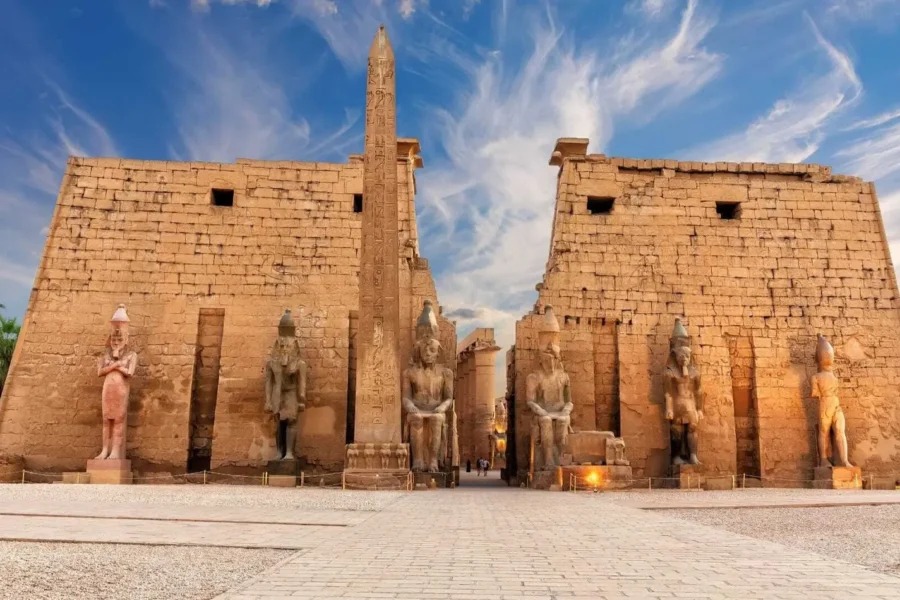
Mid-afternoon. Karnak Temple. This is the big one — 200 acres, built and rebuilt over 1,500 years, and the Hypostyle Hall with its 134 columns is the single most photographed interior in Egypt. Allow two hours. Wear the shoes you mean to walk in.
Late afternoon. Luxor Temple, a fifteen-minute drive. Smaller, more contained, and better in the late light than Karnak. Some itineraries do this after dark, when it is lit and genuinely striking.
Evening. Dinner on board, welcome drink, and the ship stays moored at Luxor overnight.
Day 2 — The West Bank, then sail to Edfu
Early. This is the biggest day and the earliest start. Across the river to the Theban necropolis.
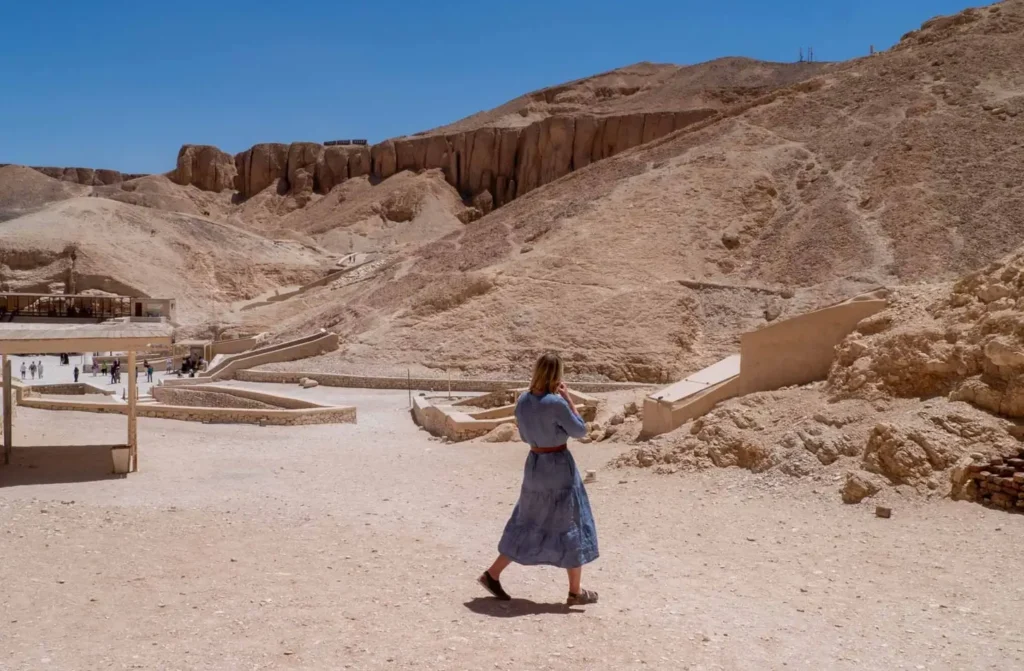
Valley of the Kings. Your standard ticket admits you to three tombs from a rotating list of about ten open at any time. Tutankhamun, Seti I and Ramesses V/VI carry separate tickets bought at the gate. If you take only one extra, take Seti I — it is on another level entirely and worth the money.
Hatshepsut’s temple at Deir el-Bahari. The terraced mortuary temple built into the cliff. Spectacular from a distance, and hot as an oven in the courtyard — there is almost no shade.
Colossi of Memnon. A ten-minute photo stop at two 18-metre statues that are all that remains of a vanished temple.
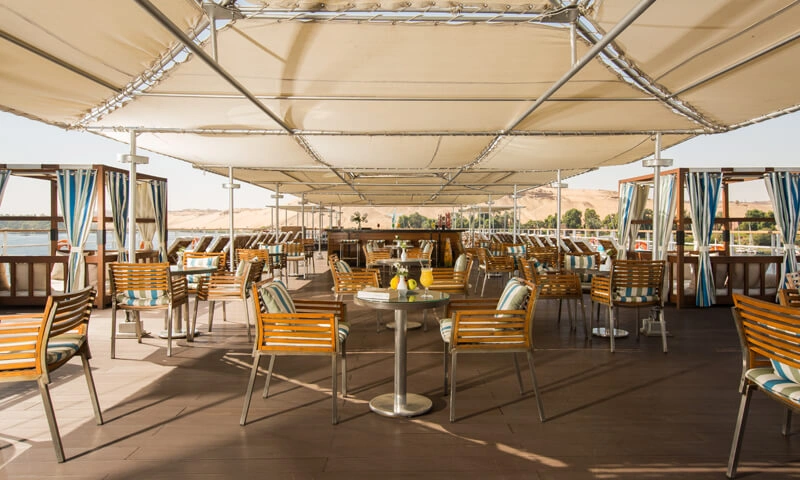
Back aboard by lunch. The ship casts off and sails south. This is the afternoon people remember — mud-brick villages, water buffalo, kids waving from the bank, the light going gold. Take a book to the sun deck and do not open it.
Evening. Moor at Esna or push on toward Edfu.
Excursions take three to four hours; the rest of the day is yours. A cruise is less regimented than the day-by-day list makes it look.
Day 3 — Edfu and Kom Ombo
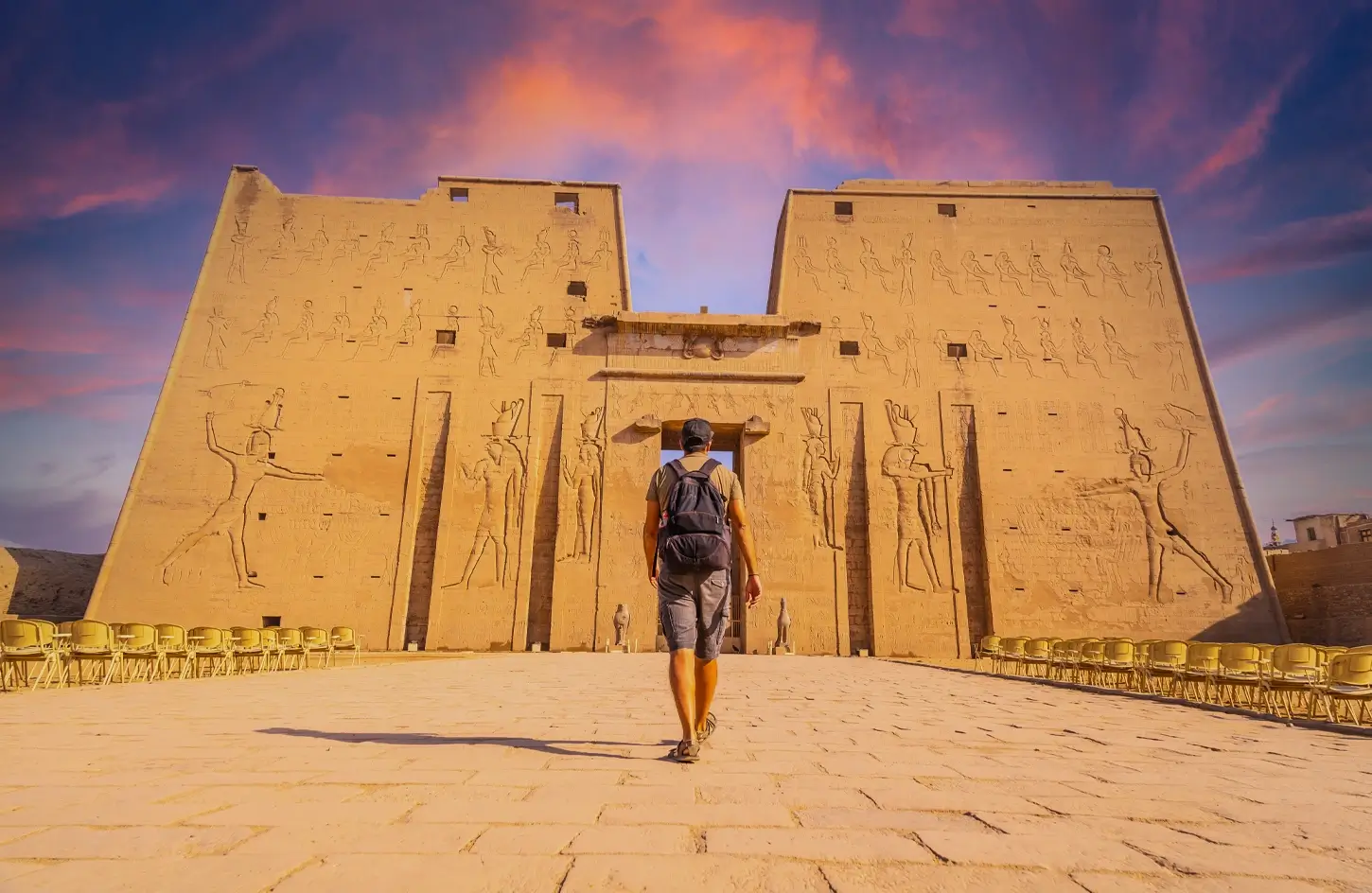
Early morning. Edfu, reached by horse-drawn carriage from the dock — about fifteen minutes through the town. A word of honesty: the horses are not always in good condition, and some travellers find the ride uncomfortable for that reason. You can ask for a minibus instead; it is a normal request.
The Temple of Horus at Edfu is the best-preserved major temple in Egypt, and the reason is age — it is Ptolemaic, finished around 57 BC, more than a thousand years younger than Karnak. The roof is intact. Walking into the hypostyle hall out of the sun is the closest you will get to seeing one of these buildings as it was meant to be experienced.
Midday. Sail on. This is when you pass through the lock at Esna if you did not do it overnight — the only real bottleneck on the river. In high season boats queue, sometimes for an hour or more. If the ship is sitting still and nobody has explained why, this is why.
Late afternoon. Kom Ombo, right on the bank — you walk off the boat and you are there. A double temple, unusually, dedicated to two gods on two symmetrical halves. The small crocodile museum next door holds around forty mummified crocodiles and is better than it sounds.
Kom Ombo at sunset, floodlit, with the ship moored twenty metres away, is one of the trip’s quiet highlights.
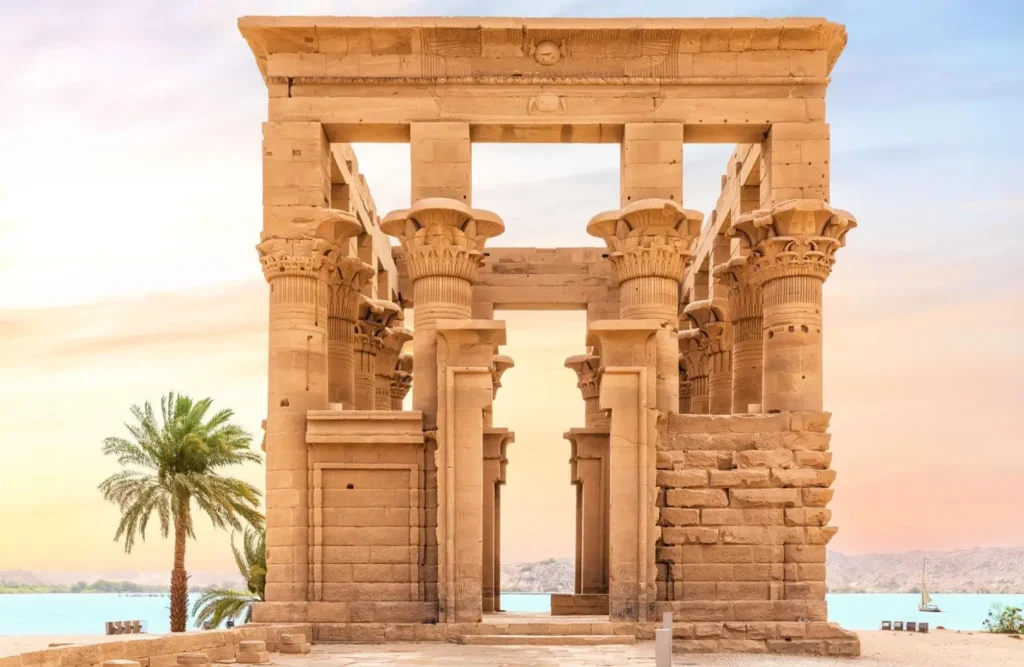
Philae closes the itinerary at Aswan, reached by motorboat from the mooring.
Day 4 — Aswan
Morning. Arrive at Aswan. The change in atmosphere is immediate — the river widens, granite islands break the surface, the pace drops.
Philae Temple, reached by motorboat to Agilkia Island. The temple was moved stone by stone in the 1970s when Lake Nasser was created, and the relocation was done so well that most visitors never realise. Dedicated to Isis, and the last place in Egypt where the old religion was still practised — into the sixth century AD.
The High Dam and the Unfinished Obelisk, a 1,200-tonne block still attached to the bedrock, abandoned when it cracked. It tells you more about how these things were actually made than any museum.
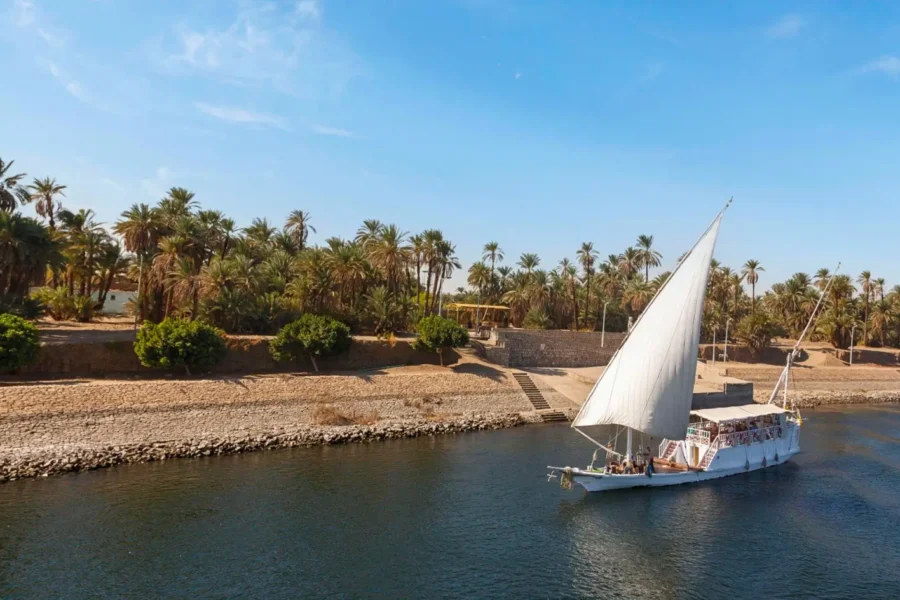
Afternoon. Usually free. The best use of it is a felucca sail around Elephantine Island and the Botanical Garden — an hour or two under sail for very little money. Tea on a riverside terrace at sunset is the other classic option.
Evening. Farewell dinner, often the galabeya party where the crew produce traditional dress for anyone willing. Tip envelopes go to reception tonight, not tomorrow morning — see our tipping guide for amounts.
Day 5 — Disembark
Breakfast, then off the ship by 8 or 9 so the crew can turn it around for the next sailing.
This is the day people plan badly. Your cruise covers nothing after breakfast, and if your flight is at six in the evening that is nine hours to fill. Options that work: a half-day Nubian village visit, a day-use hotel room with a pool for $30 to $70, or Abu Simbel if you are prepared for the 3:30am start — about three and a half hours each way by road.
Meals, and when they actually happen
Three meals a day from the evening you board to the morning you leave, and the timings are tighter than hotel timings because they work around the excursions.
Meal
Typical window
Format
Breakfast
6:00 – 9:30
Buffet, eggs cooked to order
Lunch
13:00 – 15:00
Buffet, served while sailing
Afternoon tea
16:30 – 17:30
Tea, coffee, pastries on deck
Dinner
19:30 – 21:00
Buffet, or table service on luxury ships
On early-start days the kitchen puts out a reduced breakfast before the excursion and a full one when you return. If you are leaving at 5:30 in summer, ask reception the night before for a boxed breakfast — every ship does it, few advertise it.
Water is poured at meals. Everything else you drink is charged to your cabin, including the bottled water in the fridge on most ships. Flag dietary requirements when you book, not at the buffet — these kitchens provision before departure and cannot improvise mid-river.
Mooring is usually alongside the town, so the walk to the first site of the day is short.
What the ship does while you sleep
A fair amount of the sailing happens overnight, which is why the itinerary fits into four nights at all.
The Esna lock transit is usually scheduled between midnight and four in the morning specifically so passengers sleep through the queue. You may wake briefly when the engines change note or the hull touches the lock wall. It is worth being on deck for once if you are awake — the boats go up or down about eight metres in the dark, with crews shouting between hulls.
Ships also reposition overnight between Edfu and Kom Ombo, and from Kom Ombo to Aswan. Cabins on the lowest deck at the stern sit nearest the engines and feel this most, which is one reason those cabins cost less.
What the 3-night version cuts
The 3-night Aswan to Luxor runs the same sequence in reverse and compresses it. You still see every major temple. What you lose is the unstructured afternoon in Aswan and one sailing half-day — which, for a lot of people, is the part they liked most.
The 7-night round trip adds Dendera and Abydos at the northern end, plus more time on the water. Be aware the second half retraces the first.
Lunch lands between the morning and afternoon sites, which is why the sailing hours fall where they do.
What is not on the itinerary but should be
Seti I’s tomb — extra ticket, and the finest painted tomb in Egypt.
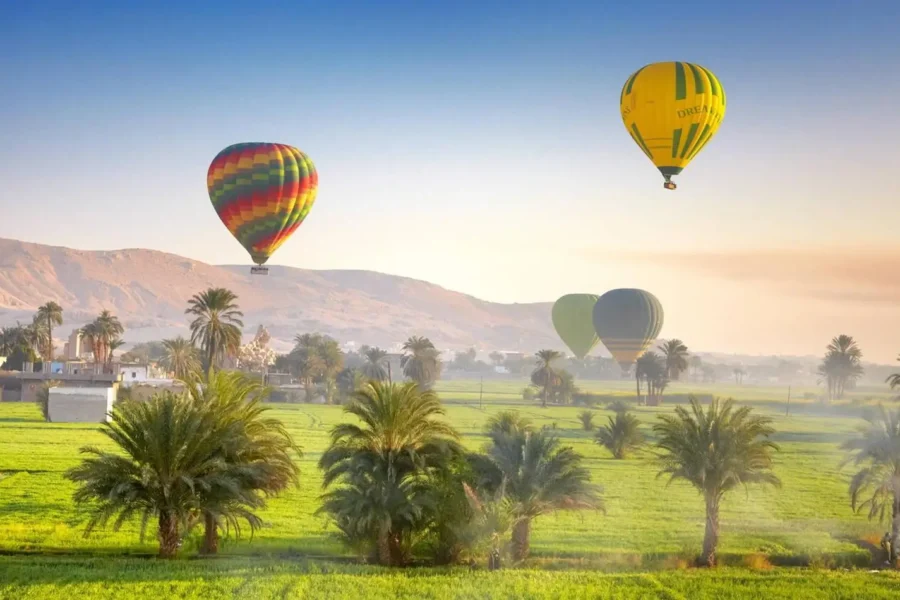
A hot air balloon over the West Bank — a 4:30am pickup, $80 to $130, and the only way to understand the geography of Thebes.
Abu Simbel — not on the river, not included, and one of the two or three greatest things in the country.
An hour on a felucca at sunset in Aswan — costs almost nothing and everyone remembers it.
What we would skip: the sound and light shows. $20 to $25 for a dated production, and Karnak in daylight has already done the job.
Frequently asked questions
What is a typical day on a Nile cruise?
A morning excursion to one or two temples, sailing through the middle of the day with lunch on board, an afternoon site visit or free time, then dinner and entertainment. Roughly four hours guided, the rest your own.
How early are the wake-up calls?
6:30 to 7:00 in winter. In summer, excursions leave at 5:30 or 6:00 to beat the heat, so wake-up is around 4:45.
Which temples do you visit on a 4-night cruise?
Karnak, Luxor Temple, the Valley of the Kings, Hatshepsut, the Colossi of Memnon, Edfu, Kom Ombo and Philae. Abu Simbel is a separate excursion.
Is there free time on a Nile cruise?
A lot of it. Most afternoons and every evening. The sailing hours are the point of the trip for many people, not dead time between temples.
How much of the cruise is actually spent sailing?
Roughly four to six hours a day on a 4-night itinerary, mostly around midday. Some legs happen overnight, including the Esna lock transit.
Do you get a full day at each stop?
No. Most temple visits are 90 minutes to two hours. The exceptions are Luxor’s West Bank, which takes a full morning, and Aswan, which usually gets most of a day.
What happens on the last day?
Breakfast, then disembarkation by 8 or 9am. Nothing after that is included, so plan the gap before your flight — a day-use room or a half-day excursion.
Can I skip an excursion and stay on board?
Yes, always. Nobody minds, the ship stays staffed, and after three temples in two days a fair number of people take a morning off by the pool.
Want this itinerary for your dates?
Send us your dates and a rough budget — a specialist replies with three ships across categories, live availability and a written price. No online payment.
Written byMagdy Fattouh38 guides published on this site
Magdy Fattouh is a Cairo University history graduate and the writer behind the guides on this site. Over 13 years he has researched and written about Egypt's history, its monuments and how to travel to them — from the pharaohs and the temples to month-by-month planning, ship comparisons and day-by-day itineraries. He speaks English and Arabic, and reviews every guide here for accuracy before it is published.
Read more by Magdy Fattouh →
We use essential cookies to make this site work. With your permission we also use Google Analytics cookies to understand how the site is used, so we can improve it. We never use cookies for advertising. Cookie Policy
Strictly necessaryRemember your cookie choice and keep the site secure. Always on.
Always on
Google Analytics: which pages are visited and how people find us. No personal profile, no advertising.


 Cruises