Abu Simbel is 280 km south of Aswan. Most travellers go by road in a 04:00 convoy — about three and a half hours each way, back in Aswan by early afternoon. Flying takes 45 minutes and costs roughly three times as much but returns you before lunch. Both are day trips; the temples themselves need about two hours.
Abu Simbel is a full-day trip from Aswan — about 3 hours 40 minutes each way by road, roughly ten hours in total, costing $85 to $160 per person. Flying takes 45 to 60 minutes each way at $200 to $300. It is not included in any Nile cruise. It is also, for most people who make the effort, the single most impressive thing they see in Egypt.
We get asked whether it is worth the 3:30am alarm more than any other question. The short answer is yes, with caveats that depend entirely on who you are travelling with.
Key takeaways
Abu Simbel is 280 km south of Aswan — a day trip, never a stop on the cruise itself.
The road convoy leaves around 04:00 and has you back by early afternoon; the flight takes 45 minutes each way.
Two hours at the site is enough for both temples.
It is an add-on on every itinerary, so the cost is never inside your cruise fare.
What is actually there
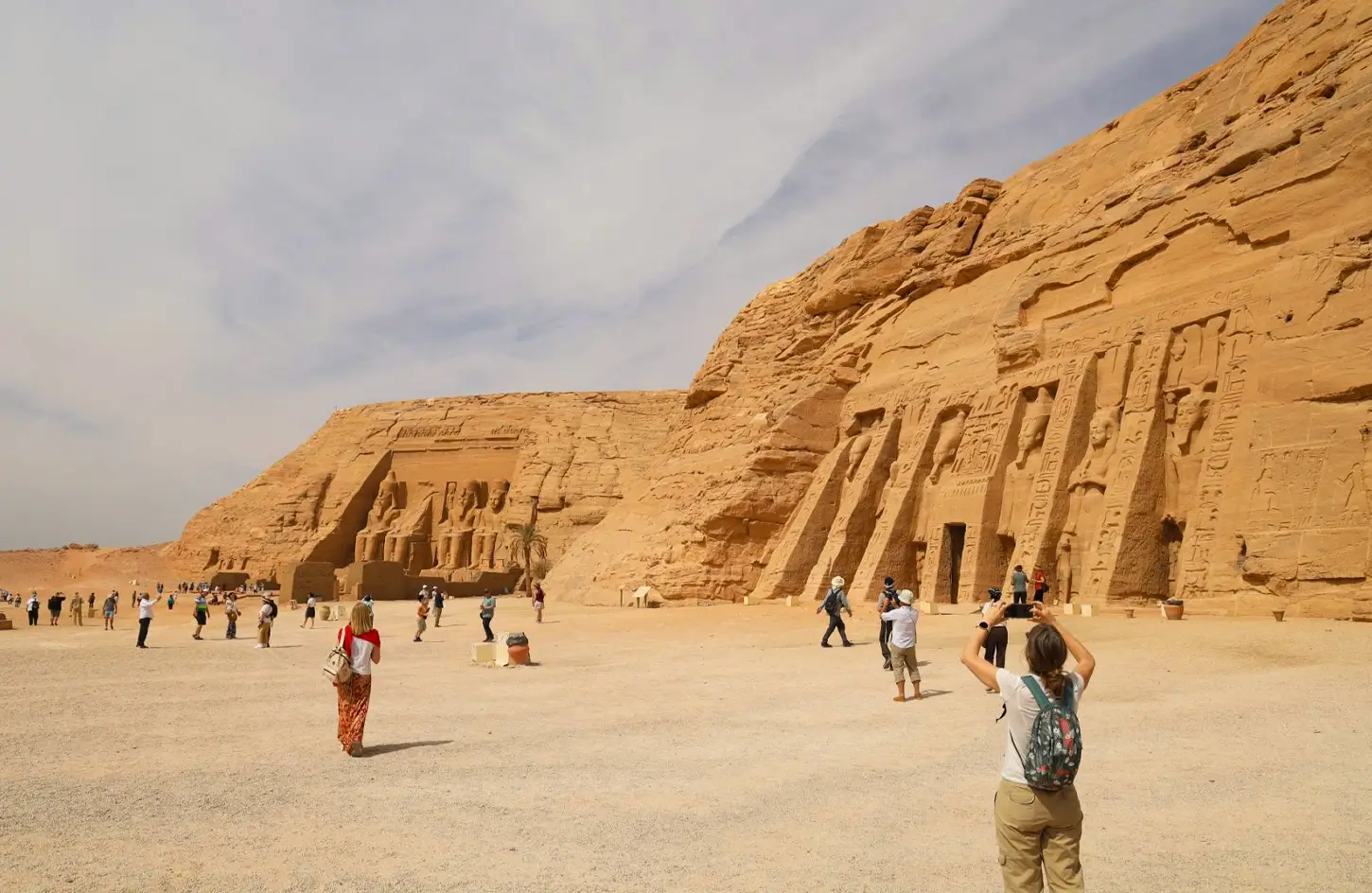
Two temples cut into a sandstone cliff above Lake Nasser, built by Ramesses II around 1264 BC.
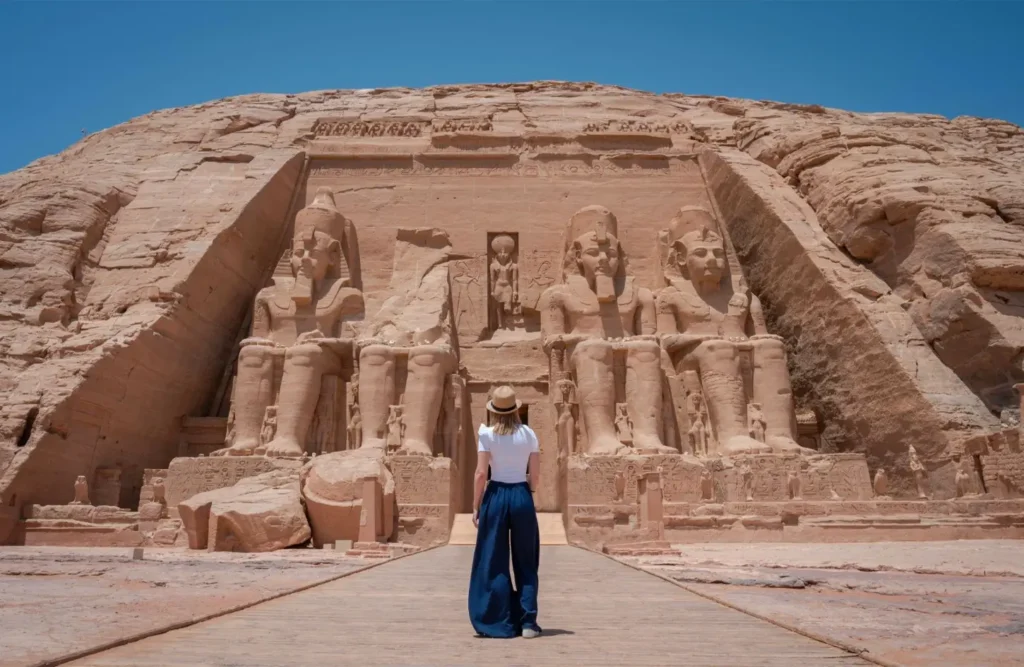
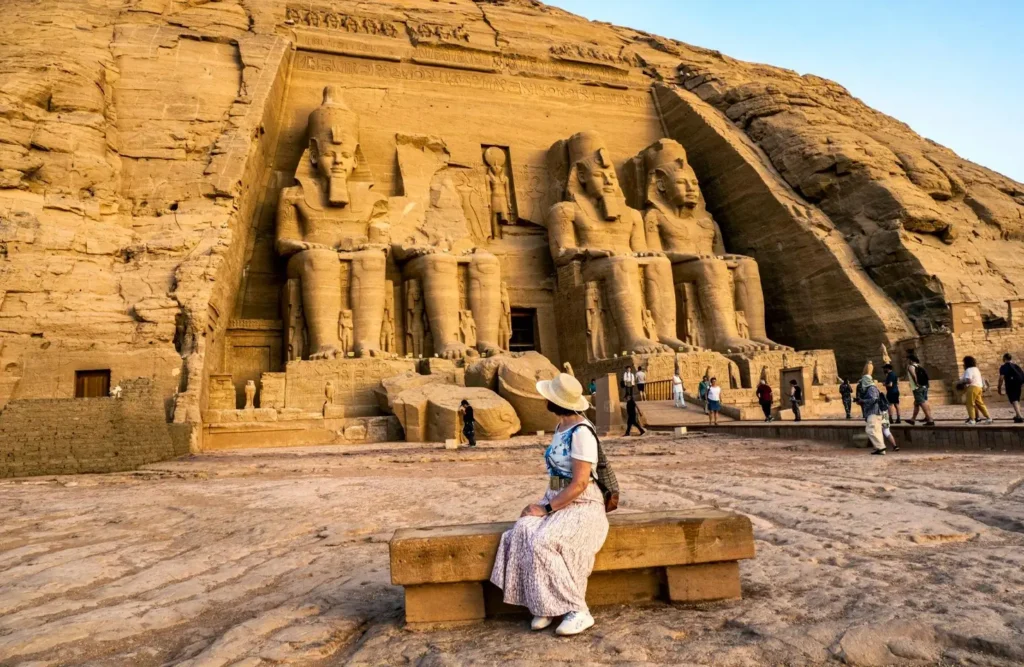
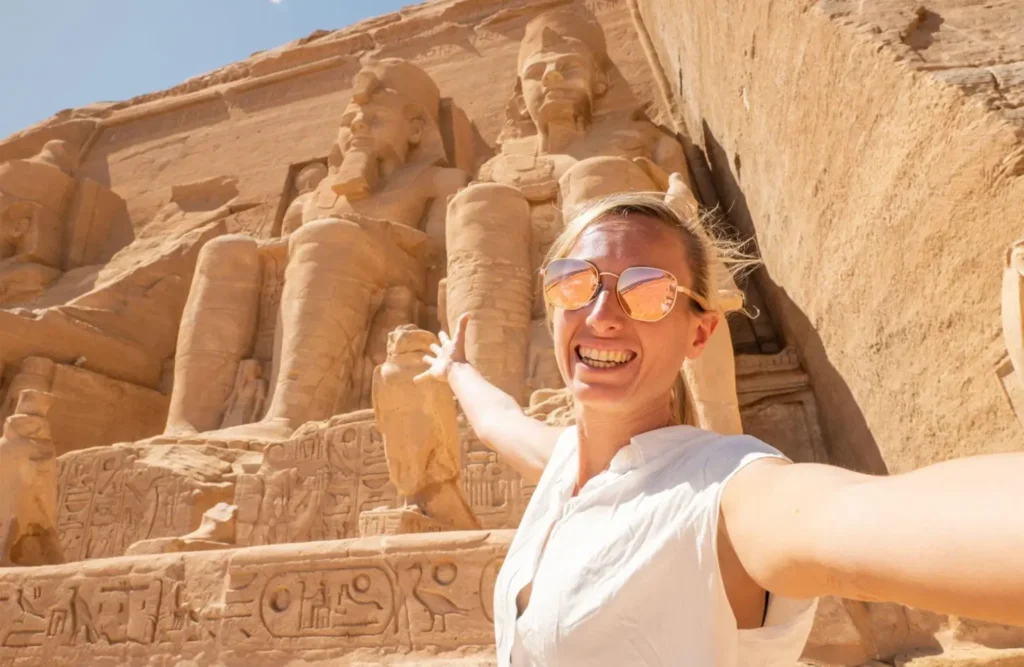
The Great Temple has four seated colossi of Ramesses across its facade, each about 20 metres tall — the height of a six-storey building. One collapsed in antiquity and was left where it fell, which does more to convey the scale than the three standing ones.
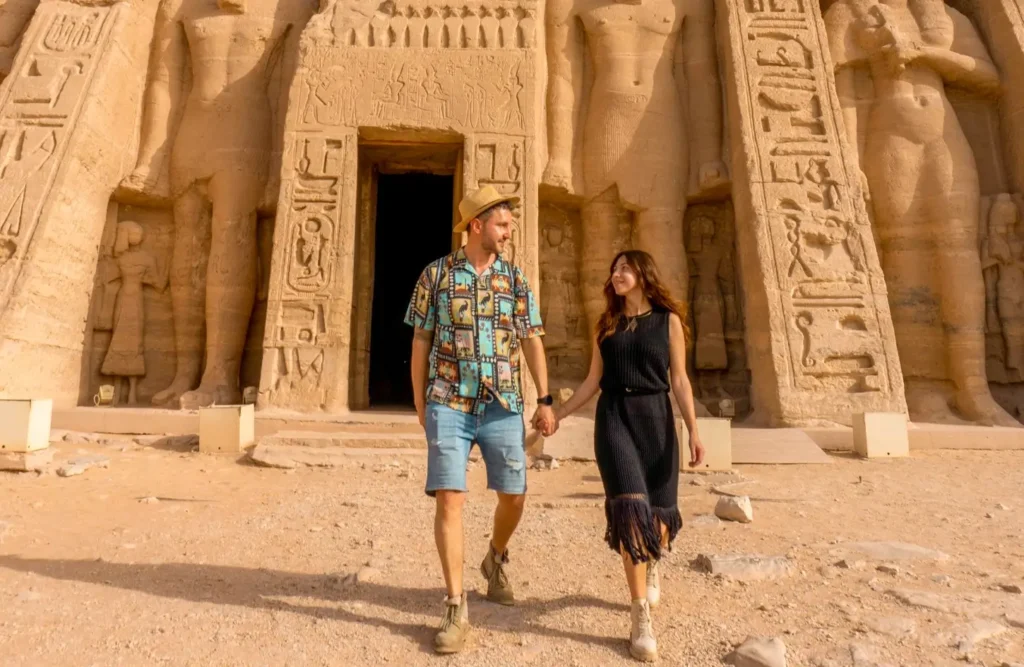
The Small Temple next to it is dedicated to Hathor and to Nefertari, Ramesses’ principal wife. Its facade shows her at the same height as the king, which is close to unique in Egyptian art and tells you something about the marriage.
Inside the Great Temple, a 60-metre axis runs back through pillared halls to a sanctuary with four seated gods.
The four seated colossi of Ramses II. Most road convoys arrive between 08:00 and 09:00, which is when the facade is still in shade.
The relocation
The part that makes it more remarkable rather than less.
When the High Dam created Lake Nasser in the 1960s, both temples were going to be drowned. Between 1964 and 1968 a UNESCO project cut them into more than a thousand blocks weighing up to 30 tonnes each, moved them 200 metres back and 65 metres up, and reassembled them inside an artificial mountain built to look like the original cliff.
You can find the joins if you look. Most visitors never do. Standing inside a hollow concrete dome behind a 3,200-year-old temple that was taken apart and put back together is its own kind of strange.
Getting there: road or air
By road
By air
Cost per person
$85 – $160
$200 – $300
Each way
~3 hrs 40 min
45 – 60 min
Departure
3:30 – 4:30am
5:00 – 6:00am
Total day
~10 hours
~6 hours
Time at site
2 hours
1.5 – 2 hours
You also see
Desert, Lake Nasser
The lake from the air
By road is what most people take. It is a long day but the drive is genuinely interesting for the first hour — open Nubian desert, and Lake Nasser appearing on your right as you approach. Air-conditioned coach or minibus, with a comfort stop each way.
By air costs roughly double and saves about four hours. Worth it if you are short on time, travelling with anyone who struggles with long journeys, or doing it in summer, when the road version means being outside in serious heat by mid-morning.
If you only do one add-on in Egypt, do this one. The 04:00 start is the price of admission, and almost nobody who goes says they would skip it.
Is it worth the early start?
Yes if: you are reasonably mobile, this is your first trip to Egypt, and you can absorb a day where nothing else happens. Nobody we have sent has come back and said it was not worth it. That is not a sales line; it is genuinely unanimous in a way almost nothing else on this trip is.
Think harder if: you are travelling with young children, you have mobility difficulties, you are going in June to August, or your cruise ends the same day and you have a flight to catch. A 3:30am start after four nights of early temple mornings lands differently than it sounds when you are booking.
Alternative if you are unsure: fly. The extra $115 to $140 buys back four hours and removes most of the reason people regret it.
The Small Temple of Nefertari stands beside the Great Temple — she is carved at the same height as the king, which is unique in Egypt.
When to fit it in
Three options, and they are not equal.
Before the cruise, from Aswan. Works well if your itinerary starts at Aswan — you arrive a day early, do Abu Simbel, then board. You are fresh, and it does not eat into cruise time.
After the cruise, from Aswan. The most common arrangement on a Luxor to Aswan itinerary, which disembarks at Aswan. You will need a hotel night, because you cannot do a ten-hour excursion and then fly home.
On the last cruise morning. Some operators offer this. We generally advise against it — you disembark at 8am after a 3:30 start, with luggage, and the day ends with an evening flight. It can be done and it is nobody’s favourite version.
If you take one of our Egypt packages, we build the hotel night in rather than leaving you to discover you needed one.
What the road day is actually like
Since this is the version most people take, here it is properly.
3:15am. Wake-up. Reception has a coffee flask out and a boxed breakfast if you asked the night before.
3:45am. Depart Aswan. Vehicles used to travel in a police convoy; these days they leave more freely, though there are checkpoints on the road and you will need your passport.
The first hour is dark and most people sleep. Around 5:30 the sky starts to go grey and you realise there is nothing outside the window in any direction — open Nubian desert, flat to the horizon.
6:45am. Lake Nasser appears on the right, enormous and completely still. This is the part of the drive worth staying awake for.
7:30am. Arrive. The temples are not visible from the car park — you walk around the side of an artificial hill and they appear all at once, which is clearly deliberate and works every time.
Two hours on site. An hour is not enough. Groups that rush it are the ones who wonder afterwards what the fuss was about.
9:45am. Back on the road. Most people sleep the whole way. Aswan by about 1:30pm, and the afternoon is gone.
Late afternoon light hits the facade square on — the reason some people take the second convoy rather than the dawn one.
The Sun Festival
Twice a year, on 22 February and 22 October, sunrise light travels the full 60 metres into the Great Temple and illuminates three of the four statues in the inner sanctuary. Ptah, associated with the underworld, stays in shadow — which appears to have been deliberate.
The alignment was designed more than 3,200 years ago and survived the temple being cut apart and moved. There is a one-day shift from the original dates as a result of the relocation, which is the sort of detail that makes the engineering feel more impressive rather than less.
If you want it: the site opens around 4am on those dates, there is a festival atmosphere with music and crowds, and the illumination itself lasts about twenty minutes. Book the cruise and the excursion four to six months ahead. October is the quieter of the two dates.
Practical notes
Entry tickets are not included in your cruise fare and are usually bundled into the excursion price. Confirm which.
Bring your passport. There are checkpoints on the road south.
Photography is free outside. Inside the temples a permit is required and flash is prohibited.
Take water and food. Options at the site are limited and expensive. Most coach trips provide a boxed breakfast; ask.
Shade is minimal. A wide-brim hat matters more here than anywhere else on the trip.
Allow two hours. Groups that rush it in 45 minutes are the ones who wonder afterwards what the fuss was about.
The four seated Ramses figures are about 20 m tall; the people at their feet give the only honest sense of scale.
How it compares to everything else
Fair question, since it costs extra and takes a day.
Karnak is bigger. The Valley of the Kings has more to look at. Philae is prettier. But Abu Simbel is the one people describe when they get home, because scale on that order does not photograph and has to be stood in front of.
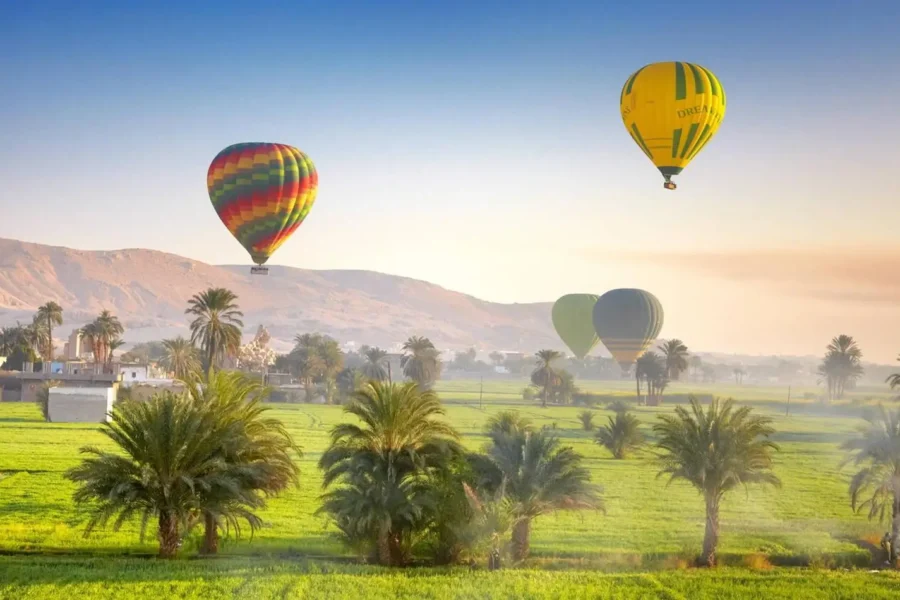
If your budget allows exactly one paid add-on across the whole trip — more than the balloon, more than Seti I’s tomb, more than the sound and light show — make it this one. What the cruise itself covers is listed in what’s included, and the other temples on the route are covered separately.
Frequently asked questions
Is Abu Simbel worth it?
For most visitors, yes — it is the most impressive single site in Egypt and the response is close to unanimous. Reconsider if you have young children, mobility issues, or are travelling in high summer.
How long does the Abu Simbel trip take from Aswan?
About ten hours by road, with roughly 3 hours 40 minutes driving each way and two hours at the site. By air it is about six hours in total.
How much does Abu Simbel cost?
$85 to $160 per person by road, $200 to $300 by air. It is not included in any Nile cruise fare.
Is Abu Simbel included in a Nile cruise?
No. It sits 280km south of Aswan, well off the cruise route, and is always sold as a separate excursion.
What time do you leave for Abu Simbel?
Road convoys leave Aswan between 3:30 and 4:30am. Flights depart around 5 to 6am.
When is the Abu Simbel Sun Festival?
22 February and 22 October each year. Book four to six months ahead; October is the less crowded of the two.
Should I fly or drive to Abu Simbel?
Drive if budget matters and you are comfortable with a long day. Fly if you are short on time, travelling with anyone who finds long journeys hard, or going in summer.
Can I do Abu Simbel on the last day of my cruise?
Physically yes, and we advise against it. You would disembark at 8am after a 3:30 start with your luggage, then face an evening flight. Add a hotel night in Aswan instead.
Adding Abu Simbel to your cruise?
Send us your dates and a rough budget — a specialist replies with three ships across categories, live availability and a written price. No online payment.
Written byMagdy Fattouh38 guides published on this site
Magdy Fattouh is a Cairo University history graduate and the writer behind the guides on this site. Over 13 years he has researched and written about Egypt's history, its monuments and how to travel to them — from the pharaohs and the temples to month-by-month planning, ship comparisons and day-by-day itineraries. He speaks English and Arabic, and reviews every guide here for accuracy before it is published.
Read more by Magdy Fattouh →
We use essential cookies to make this site work. With your permission we also use Google Analytics cookies to understand how the site is used, so we can improve it. We never use cookies for advertising. Cookie Policy
Strictly necessaryRemember your cookie choice and keep the site secure. Always on.
Always on
Google Analytics: which pages are visited and how people find us. No personal profile, no advertising.


 Cruises