July and August reach 35–42°C in Upper Egypt, and it is a dry heat. It is manageable on a cruise because excursions move to 06:00, the middle of the day is spent on an air-conditioned ship, and the pool is genuinely useful. Prices fall by roughly half. It is not the right season for anyone who struggles in heat.
Yes, you can cruise the Nile in summer — Luxor averages 41 to 42°C in June and July, prices drop 30 to 50 percent, and the temples are close to empty. Ships run year-round and are fully air conditioned. Excursions move to 5:30am starts and you spend the afternoon on board. It is a real trade, and it suits some people very well.
Almost every guide tells you to avoid May through September. We sell those months and we are not going to pretend the heat is not real — but the blanket “don’t go” advice loses people a genuinely good version of this trip.
Key takeaways
July and August reach 35–42°C — a dry heat, but genuinely hot.
Excursions move to 06:00 and the middle of the day is spent on board.
Prices fall by roughly half and the ships are quiet.
It is the wrong season for anyone who struggles in heat.
How hot is it really?
Month
Luxor avg high
Aswan avg high
Price vs. year average
May
39°C / 102°F
41°C
−30%
June
41°C / 106°F
42°C
−40% to −50%
July
42°C / 108°F
43°C
−40% to −50%
August
41°C / 106°F
42°C
−35%
September
39°C / 102°F
41°C
−30%
Those are averages. Individual days pass 45°C. Aswan runs one to two degrees hotter than Luxor throughout.
The number that matters more than the temperature is the humidity, which sits around 15 to 25 percent. This is dry desert heat, not tropical heat. Sweat evaporates immediately, shade works properly, and 41°C in Luxor is genuinely more bearable than 33°C somewhere humid. It is still 41°C.
Summer excursions start at six. By nine you are back on board, and that is what makes the season workable.
How the day changes
The itinerary does not shrink in summer. It shifts.
Winter
Summer
Wake-up
6:30 – 7:00
4:45 – 5:30
Excursion leaves
8:00
5:30 – 6:00
Back on board
11:30
9:30 – 10:00
Afternoon
Second site
Free — deck, pool, cabin
Evening
Dinner, entertainment
Dinner, entertainment
You see everything you would see in January. You just see it before nine in the morning, which — and this is the part nobody mentions — is the best time to be at these places anyway. The light is low and warm, the stone is still cool from the night, and there is nobody else there.
Standing in the Valley of the Kings at 6:30 in July with the valley to yourself is a different experience from queueing behind four coach parties in January. Some people would pay extra for that. In summer you pay less.
What summer actually gets you
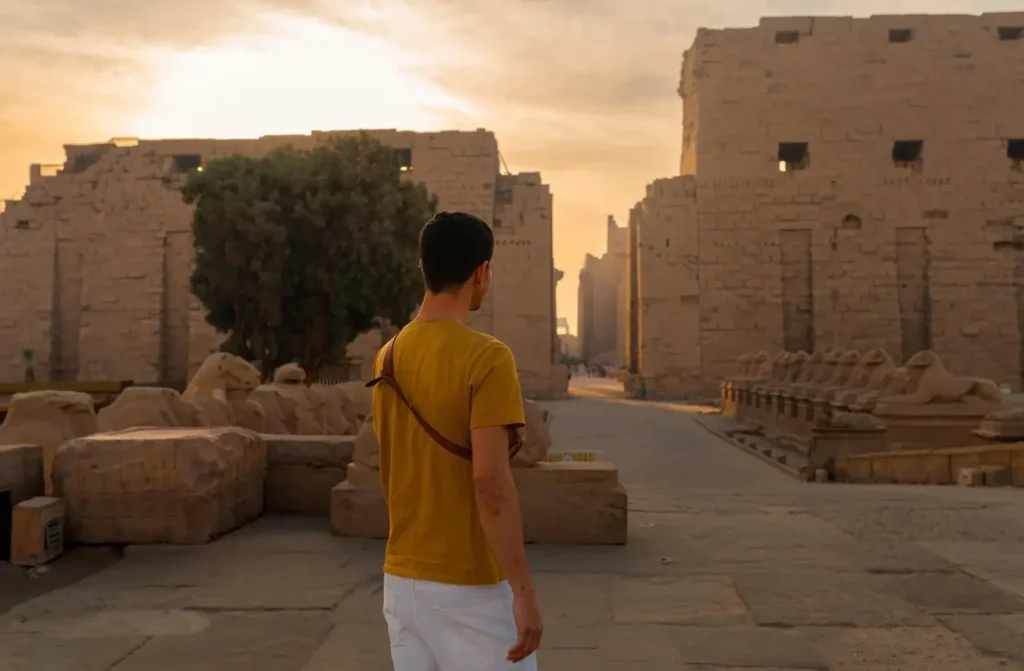
Empty temples. Not quieter — empty. Karnak’s hypostyle hall with a dozen people in it.
Prices 30 to 50 percent down. The ship you could not afford in December becomes available.
Better ships for the same money. The five-star vessels discount hardest because they have the most to lose from empty cabins.
Guides with time. A guide with four people instead of forty answers your actual questions.
Availability. You can book three weeks out and still get a good cabin.
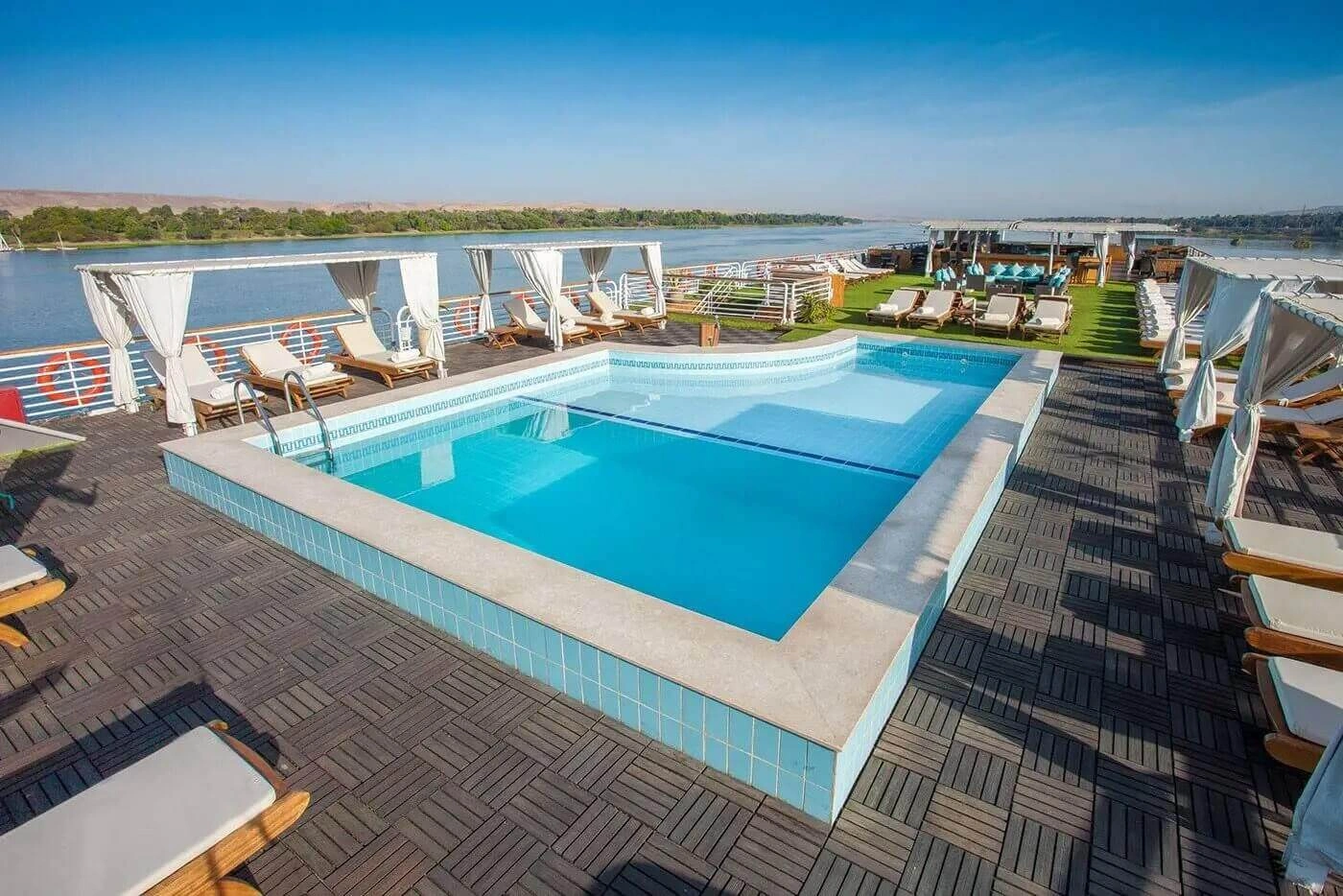
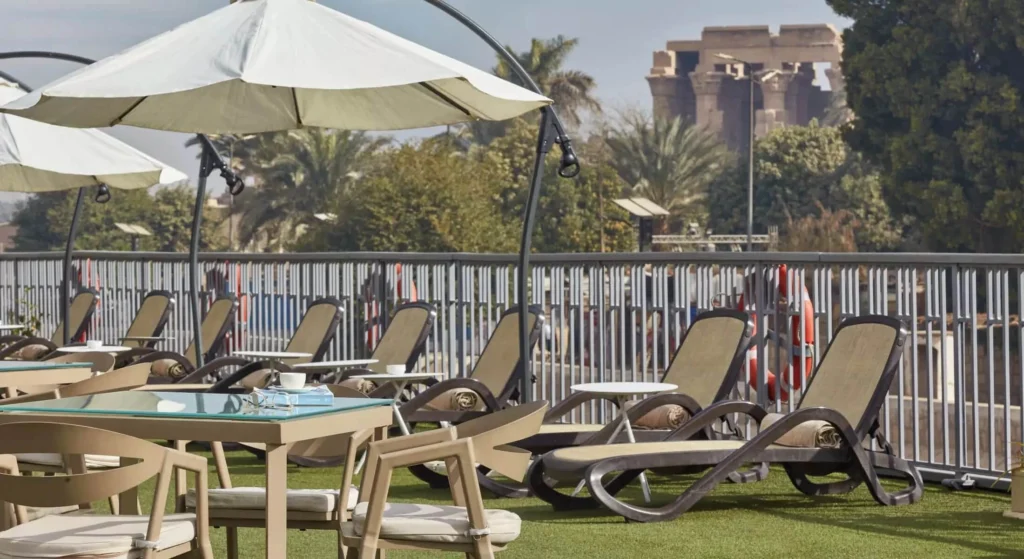
Check there is shade on the sun deck, not just sun. In August it is the single feature of the ship you will use most.
Who should not go in summer
We would rather lose a booking than sell someone a trip that makes them ill, so this list is honest.
Anyone with a heart or respiratory condition. This is not a formality. Speak to your doctor first.
Older travellers who find heat difficult. The 5am starts compound it.
Young children. They dehydrate faster and cope worse, and a 4:45 wake-up with a six-year-old is its own kind of holiday.
Anyone who has said “I don’t do heat.” Believe yourself.
People who want to explore independently in the afternoon. You will not. Nobody does.
Shade on the sun deck matters more in August than any other feature of the ship.
Staying comfortable
The practical things that actually make the difference:
Drink more than you want to. In 15 percent humidity you dehydrate without feeling sweaty, because it evaporates before you notice. Three to four litres a day. Electrolyte sachets are more useful than plain water and cost almost nothing in any Egyptian pharmacy.
Cover up. Loose long sleeves in light colours are cooler than bare skin — the fabric holds evaporative cooling against you and blocks direct sun. This feels wrong and it is right. See what to wear on a Nile cruise.
Wide-brim hat, not a cap. The back of the neck is what burns.
Do not skip the early start. Every summer, somebody sleeps in and asks to see the Valley of the Kings at eleven. It is the worst decision available.
Use the pool. Every ship has one. In summer it stops being decorative.
A real summer day, start to finish
To make the trade concrete, here is a July day on a four-night itinerary.
4:45. Wake-up call. It is dark and around 26°C — the coolest the air will be all day.
5:20. Coffee and a boxed breakfast in the lobby. Nobody is talking much.
5:45. Coach to the West Bank as the sun comes up over the river. Twenty minutes, air conditioned.
6:15. Valley of the Kings at opening. Around thirty people in the entire valley. The stone is still cool from the night, which matters inside the tombs — they hold the night temperature until mid-morning.
8:00. Hatshepsut. Now it is climbing, maybe 33°C, and the courtyard has no shade. This is the hardest forty minutes of the day.
8:50. Colossi of Memnon, a fifteen-minute stop, then back to the boat.
9:40. On board. Proper breakfast, then the pool. It is 38°C and rising and you are done for the day.
13:00. Lunch while sailing. The deck is usable under the awning with a breeze off the water; direct sun is not.
Afternoon. Cabin, pool, shade, sleep. This is the part that either sounds wonderful or sounds like a waste of a holiday, and your answer decides whether summer is for you.
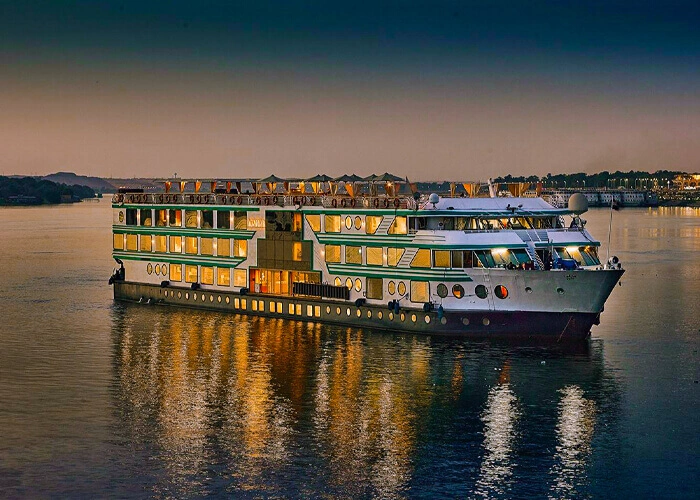
19:00. Down to about 33°C and the deck comes alive again. Dinner, entertainment, and the evenings in summer are genuinely lovely — warm, still, and the boat lit up on dark water.
What you actually save
Two people, deluxe five-star ship, four nights, same cabin, same itinerary.
Line
Late December
July
Cruise, 2 people
$2,600
$1,020
Gala supplements
$160
—
Tips
$112
$112
Abu Simbel
$190
$190
Drinks
$140
$170
Total
$3,202
$1,492
Roughly $1,700 for the same ship, same temples, same guide. Drinks go up in summer because you drink more; everything else goes down. Christmas pricing is covered in our Christmas and New Year guide.
There is no shade on the bank between June and September; the excursions move to first light for a reason.
If your dates overlap Ramadan
Ramadan moves about eleven days earlier each year, so it drifts through the summer months over time. Confirm the dates for your year before planning around it.
On board, nothing changes — ships serve all meals as normal because they cater to visitors. Sites and temples keep close to normal hours, occasionally closing a little earlier.
Ashore is different. Restaurants in Luxor and Aswan may not open until sunset, the towns are quiet during the day and busy late into the night, and some crew are fasting through a 42°C day, which is worth a moment’s thought when you are deciding what to leave in the tip envelope.
Visitor numbers drop further during Ramadan, so if empty temples are the appeal, this compounds it.
Which month, if you must choose
Late September is the answer for most people. The last ten days give you conditions close to October’s shoulder season at close to August’s prices, because the market has not adjusted yet. It is the single best-value window in the calendar and we book more returning travellers into it than any other summer date.
May is the mildest of the true summer months at 39°C, and still 30 percent down.
June and July are the cheapest and the emptiest. If price and solitude are what you are optimising for, this is it.
August is the one we would steer you away from — July’s heat without July’s emptiness, since European school holidays bring numbers back. Move to September if you can.
Water levels. The Nile runs lower before the annual release from the High Dam. Large ships are unaffected; a few smaller vessels and dahabiyas adjust their itineraries. Ask if you are booking a dahabiya.
Fewer departures. Some ships come out of service for summer refit, so the fleet is smaller. Choice is narrower than the low prices might suggest — book three to six weeks ahead rather than three days.
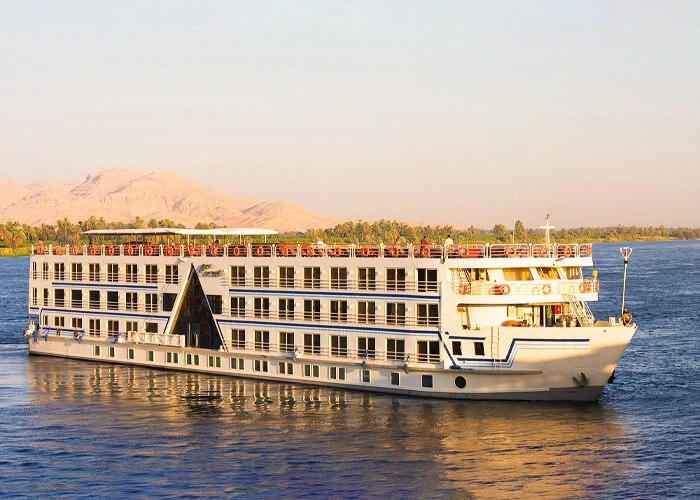
Air conditioning matters more. This is the season where a four-star minimum stops being a preference and becomes the whole trip. Below that, AC reliability is genuinely variable, and a hot cabin in July is unbearable in a way it simply is not in January.
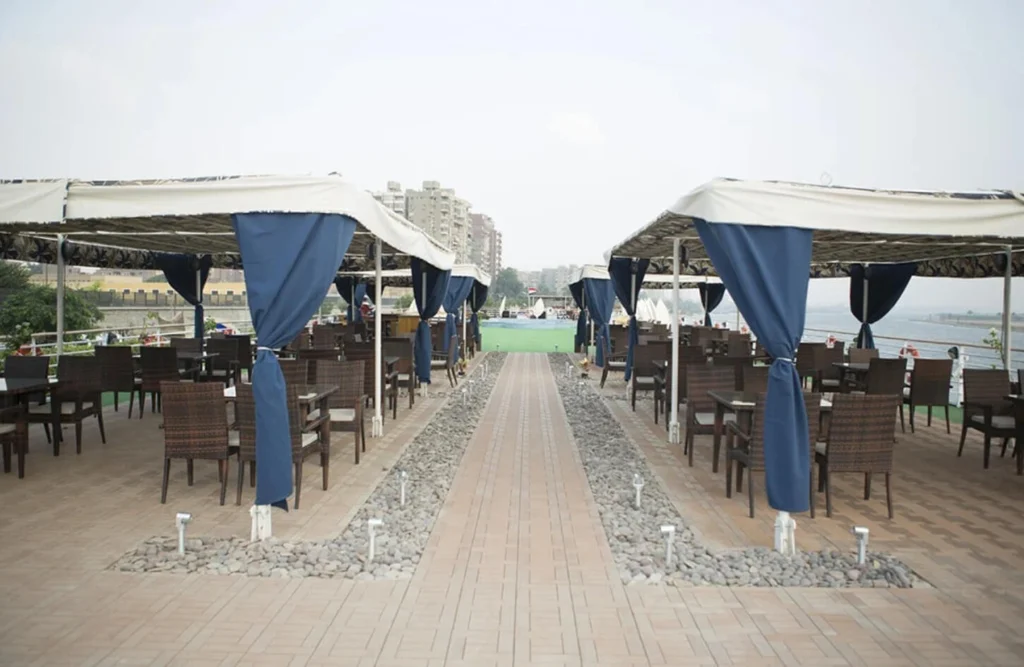
Shaded deck dining is the summer compromise — the restaurant is air-conditioned, the deck is where the breeze is.
Heat illness: the part worth taking seriously
Most summer travellers are completely fine. The ones who are not almost always made the same mistakes, and they are avoidable.
The warning signs are a headache that will not shift, feeling dizzy when you stand, stopping sweating, nausea, and confusion. The last two are the point where it stops being discomfort and becomes a medical problem.
What causes it here is rarely the temperature by itself. It is dehydration you did not notice because the sweat evaporated, combined with skipping breakfast before a 5:30 start, combined with alcohol the night before.
What to do: drink before you are thirsty, eat something before the early excursion even if you do not feel like it, take the salt sachets, and tell your guide immediately if you feel wrong. Guides deal with this every summer and would far rather you sat in the coach for half an hour than pushed on.
Every ship has a doctor on call, and Luxor and Aswan both have functioning hospitals used to treating visitors. Travel insurance is not a legal requirement in Egypt but this is the season to have it.
Frequently asked questions
Can you do a Nile cruise in summer?
Yes. Ships operate year-round and are fully air conditioned. Excursions move to 5:30 or 6am, afternoons are spent on board, and prices drop 30 to 50 percent.
How hot is Egypt in July?
Luxor averages 42°C and Aswan 43°C, with individual days above 45°C. Humidity is very low at 15 to 25 percent, which makes it more bearable than the same temperature in a humid climate.
Is a summer Nile cruise cheaper?
Considerably. June and July run 40 to 50 percent below the year average, and the biggest discounts are on the best ships.
What time do summer excursions start?
Between 5:30 and 6:00am, with a wake-up call around 4:45. You are usually back on board by 10am.
Are the temples empty in summer?
Close to it, especially June and July. This is the main non-financial reason to travel then.
Who should avoid a summer Nile cruise?
Anyone with heart or respiratory conditions, older travellers who struggle with heat, families with young children, and anyone who already knows they dislike hot weather.
What is the best summer month?
Late September. It offers near-shoulder-season conditions at summer prices. May is the mildest of the true summer months; August is the one to avoid.
Do I need a better ship in summer?
Yes. Air conditioning reliability becomes critical rather than a nice-to-have. Four stars is a hard minimum in these months.
Thinking about a summer sailing?
Send us your dates and a rough budget — a specialist replies with three ships across categories, live availability and a written price. No online payment.
Written byMagdy Fattouh38 guides published on this site
Magdy Fattouh is a Cairo University history graduate and the writer behind the guides on this site. Over 13 years he has researched and written about Egypt's history, its monuments and how to travel to them — from the pharaohs and the temples to month-by-month planning, ship comparisons and day-by-day itineraries. He speaks English and Arabic, and reviews every guide here for accuracy before it is published.
Read more by Magdy Fattouh →
Ten to seventeen hours depending on your coast, and a seven to ten hour time shift. Why twelve days beats seven, how to sequence Cairo, and what Thanksgiving…
Five hours direct from London with a one-hour time difference. What ATOL does and does not cover on a direct booking, sterling costs, and why February half term…
We use essential cookies to make this site work. With your permission we also use Google Analytics cookies to understand how the site is used, so we can improve it. We never use cookies for advertising. Cookie Policy
Strictly necessaryRemember your cookie choice and keep the site secure. Always on.
Always on
Google Analytics: which pages are visited and how people find us. No personal profile, no advertising.


 Planning