The fare covers your cabin, full board, the guided excursions on the programme, a licensed Egyptologist and standard temple tickets. It does not cover flights, the Egypt visa, tips, drinks other than water, optional tombs such as Tutankhamun and Nefertari, the balloon, Abu Simbel, laundry or the spa.
A standard Nile cruise includes your cabin, all three meals, temple entrance fees along the route, a licensed Egyptologist guide, and transfers between the ship and each site. It does not include drinks, tips, Abu Simbel, your Egypt visa, or the sound and light shows. Budget $100 to $215 per person for those — see the full cost breakdown.
The word “included” does a lot of quiet work in Nile cruise brochures. Below is what it actually covers on a properly packaged cruise, what it never covers, and how to read an inclusion list before you hand over a deposit.
Key takeaways
Included: the cabin, full board, the guided excursions, an Egyptologist and standard tickets.
Not included: flights, the visa, tips, drinks other than water.
Also extra: Tutankhamun, Seti I and Nefertari, the balloon and Abu Simbel.
Laundry and the spa are billed to your cabin.
What is included on a standard Nile cruise
Item
Included?
Notes
Cabin, full board basis
Yes
Double occupancy; solo pays a supplement
Breakfast, lunch, dinner
Yes
Buffet on most ships
Water at meals
Usually
Not always in the cabin
Tea and coffee at meals
Usually
Espresso drinks often charged
Temple entrance fees on the route
Yes
Philae, Kom Ombo, Edfu, Karnak, Valley of the Kings
Three tombs are covered by the standard ticket. Tutankhamun, Seti I and Nefertari are separate — and worth it.
Meals: what full board actually means
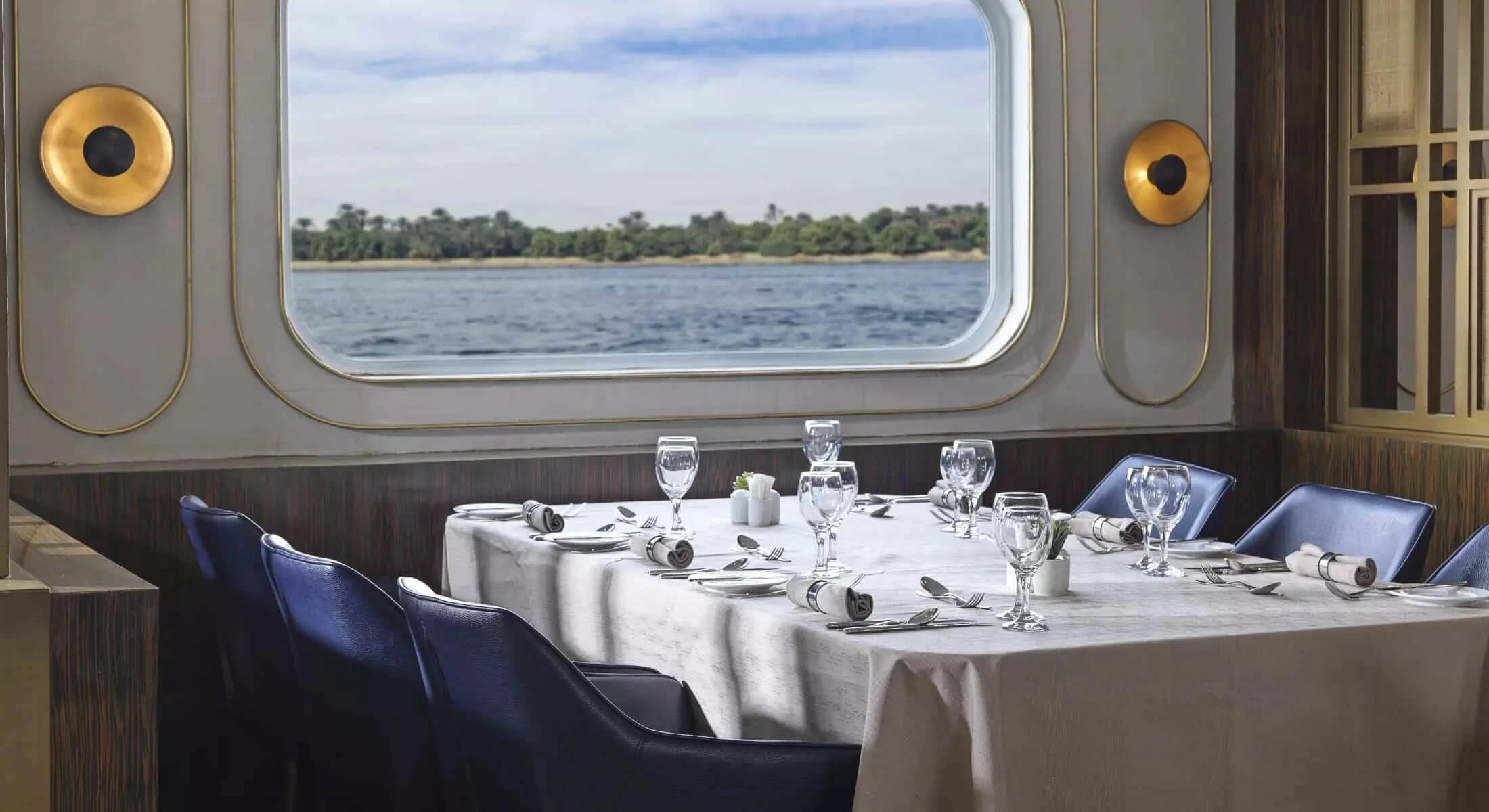
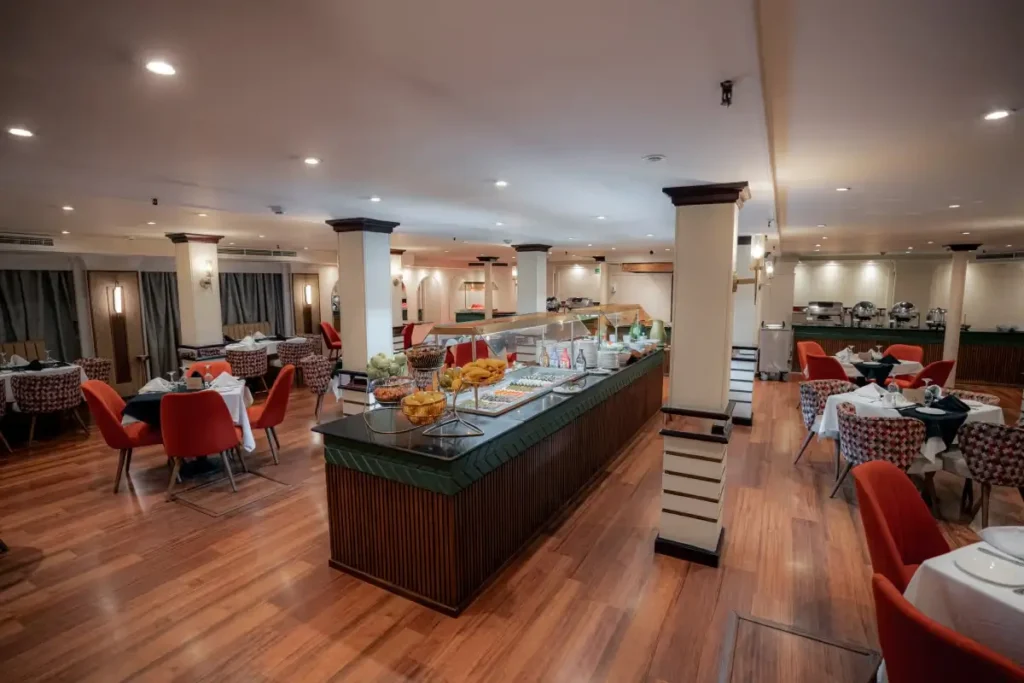
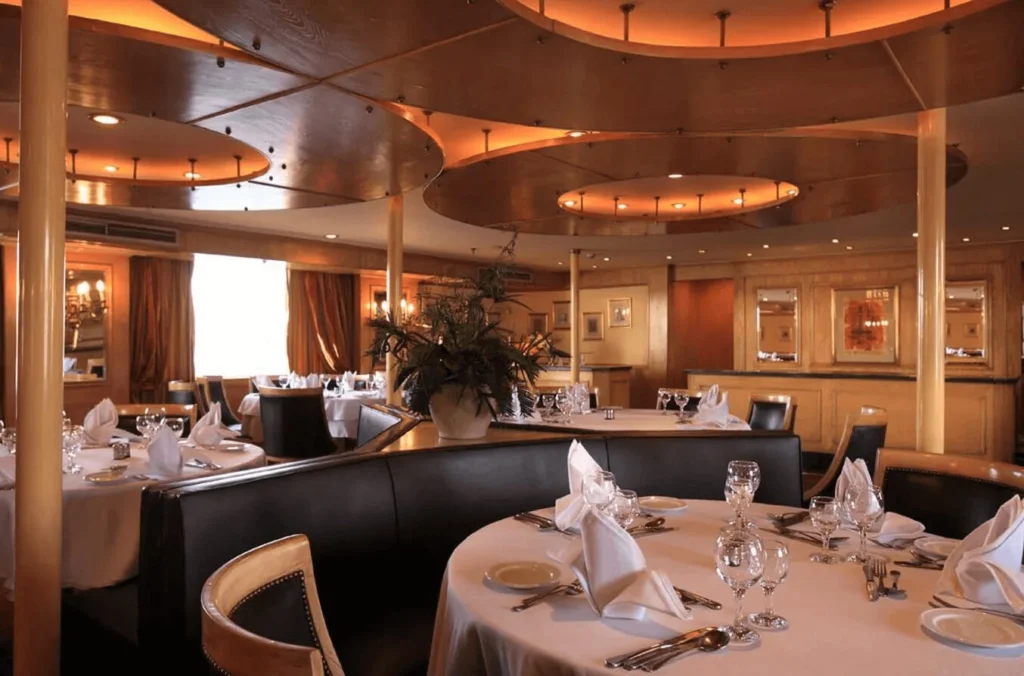
Three meals a day, from the evening you board to the morning you leave. Breakfast is a buffet with eggs cooked to order on most ships. Lunch is a buffet, usually served while the boat is sailing. Dinner is a buffet on standard and deluxe ships, or table service on luxury ones.
The food is generally better than people expect and more repetitive than they hope. Four nights of the same rotation is fine. Seven starts to feel long, which is one more argument for the shorter cruise.
Two things worth knowing. First, if you board in the afternoon, dinner that night is included but lunch usually is not — check your embarkation time against your flight. Second, on the morning of disembarkation you get breakfast and nothing else, and you are typically off the ship by 8 or 9am.
Dietary requirements are handled well if you give notice. Vegetarian is straightforward and there is always something. Vegan, gluten-free and serious allergies need to be flagged at the time of booking, not mentioned to a waiter on day two. Kitchens on these ships plan their provisioning before departure and cannot improvise mid-river.
Drinks: the biggest misunderstanding
This causes more end-of-cruise surprise than anything else, so we will be blunt about it.
On the overwhelming majority of Nile cruises, drinks are not included. Full board covers food. It does not cover the can of Coke you order at lunch, the beer on the sun deck, or in many cases the bottled water in your cabin fridge.
Typical onboard prices: bottled water $1 to $2, soft drink $2.50 to $4, local beer $4 to $6, glass of Egyptian wine $5 to $8, cocktail $7 to $12. A couple drinking moderately over four nights will run up $80 to $140.
Water at meal times is usually poured for you at no charge. Water in the cabin usually is not, though a small number of ships now provide two bottles a day. If you are trying to control this, buy water on shore — a 1.5-litre bottle costs a fraction of the onboard price, and nobody minds you bringing it aboard.
Some luxury ships and most dahabiyas do include soft drinks, and a few include local beer and wine. If yours does, it will say so explicitly.
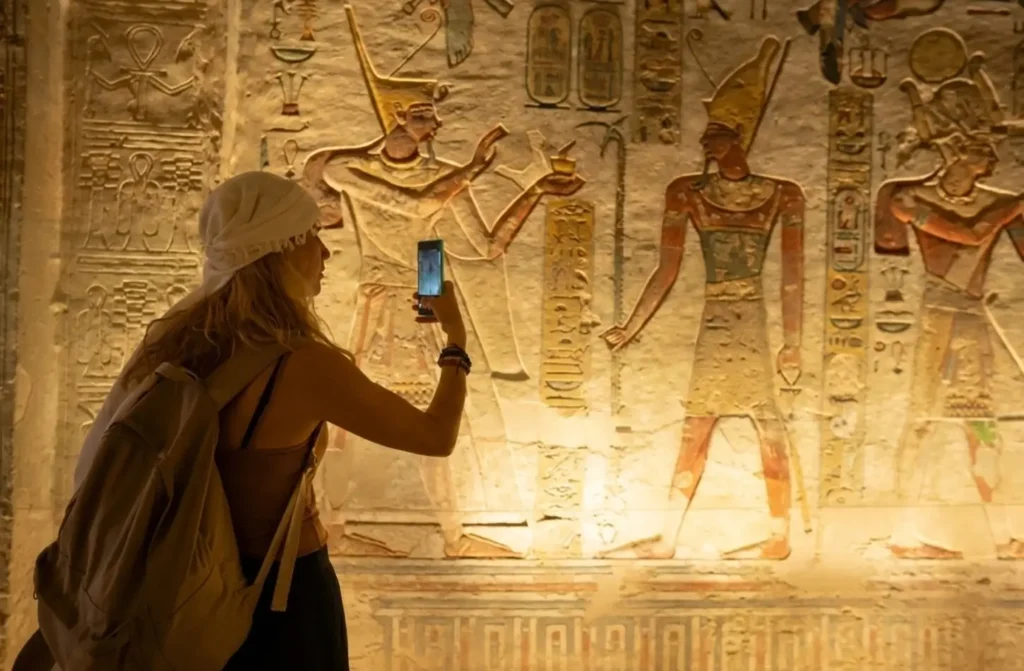
The optional tombs are the extras worth paying. Nefertari in particular is the best-preserved painted tomb in Egypt, and the ticket is limited.
Temple entrance fees: included, but not all of them
A packaged cruise covers the standard tickets for the sites on your itinerary. That means Philae, Kom Ombo, Edfu, Karnak and Luxor Temple, and the general Valley of the Kings ticket which admits you to three tombs from a rotating list.
What it does not cover:
Tutankhamun’s tomb — a separate ticket, around $12 to $18
Seti I’s tomb — the most expensive in the valley, and by some distance the most spectacular
Nefertari’s tomb in the Valley of the Queens, if it is open
Abu Simbel — not on the cruise route at all
Photography permits in some tombs
The three tombs on the general ticket are genuinely worth seeing and nobody needs to feel short-changed by them. Seti I is the one where the extra money buys something categorically different, and if you have any real interest in the period, take it.
Full board means three meals a day on every ship in every category, with water on the table.
Your guide: what “guided” covers
On a packaged cruise you get a licensed Egyptologist who accompanies your group to every site on the itinerary, explains it, handles ticketing, and gets you back to the ship.
What that does not mean is a private guide. On a 150-passenger ship you will be in a group of 30 to 45 people following someone with a numbered paddle. On a luxury ship, 10 to 15. On a dahabiya, everyone.
Private guiding is available on almost every cruise as a paid upgrade, typically $60 to $120 per day for the group. If you are travelling as a family or with a specific interest, it changes the trip substantially. If you are happy in a group, the standard arrangement is perfectly good.
Guides do not usually accompany you at meals or in the evenings. They have their own accommodation, often ashore, and they are with you for excursions only.
Transfers: the gap most people miss
Your cruise fare includes transfers between the ship and the sites. It does not automatically include the airport.
This is the single most common gap in a Nile cruise booking. You land at Luxor, you have a confirmed cruise, and there is nobody holding a sign because the airport transfer was a separate line item nobody mentioned. It costs $12 to $25 and it is easy to add — but only if you know to ask.
Check specifically for: airport to ship on arrival, ship to airport on departure, and any hotel nights either side of the cruise. If your itinerary has you arriving a day early, that hotel night and its transfers are almost never in the cruise price.
What is in the cabin
Worth setting expectations, because Nile cruise cabins are not hotel rooms and the photography is usually generous.
A standard cabin on a deluxe ship runs about 20 square metres. You get a double or twin bed, a narrow wardrobe, a small desk or dressing table, a compact bathroom with a shower, individual air conditioning, a safe, a hairdryer, a kettle or minibar on better ships, and a picture window that does not open. On standard ships, closer to 15 square metres and the window may be smaller and higher.
Housekeeping services the cabin daily and turns it down in the evening. Towels are changed daily, bed linen usually every second day.
What is not in the cabin: free bottled water on most ships, a bathrobe outside the luxury bracket, and reliable Wi-Fi. Cabins on the lowest deck sit closest to the engine and closest to the waterline, which means a smaller window and, at the stern, audible vibration at night. That is why they cost less.
Embarkation and disembarkation day
The two days that catch people out, because neither is a full day — see the full day-by-day itinerary.
On embarkation day you can normally board from around noon and cabins are ready by two or three. Dinner that evening is included. Lunch may or may not be, depending on your arrival time and your operator. If your flight lands in the morning, ask whether lunch is covered or whether you should eat before boarding.
On disembarkation day you get breakfast and you are off the ship by eight or nine so the crew can turn it around. Your cruise fare covers nothing after that. If your flight is at six in the evening, that is nine hours to fill, and it is not the operator’s problem unless you arranged a day-use room or a final excursion in advance.
This gap is worth planning for. A half-day tour of the West Bank or a day-use hotel room with a pool costs $30 to $70 and turns dead time into something useful.
Full board means all three meals in the restaurant. Drinks other than water at the table are the main thing that is not.
Onboard facilities and entertainment
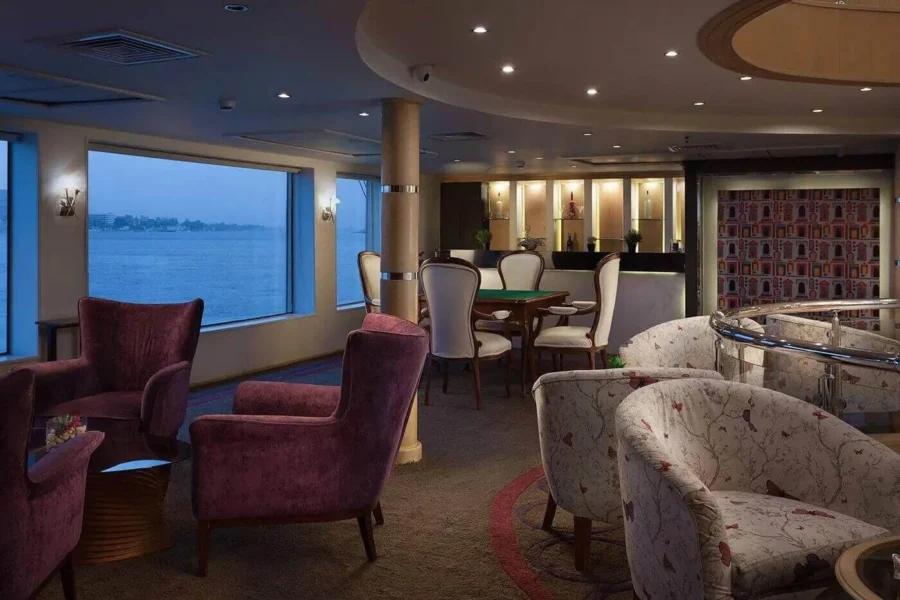
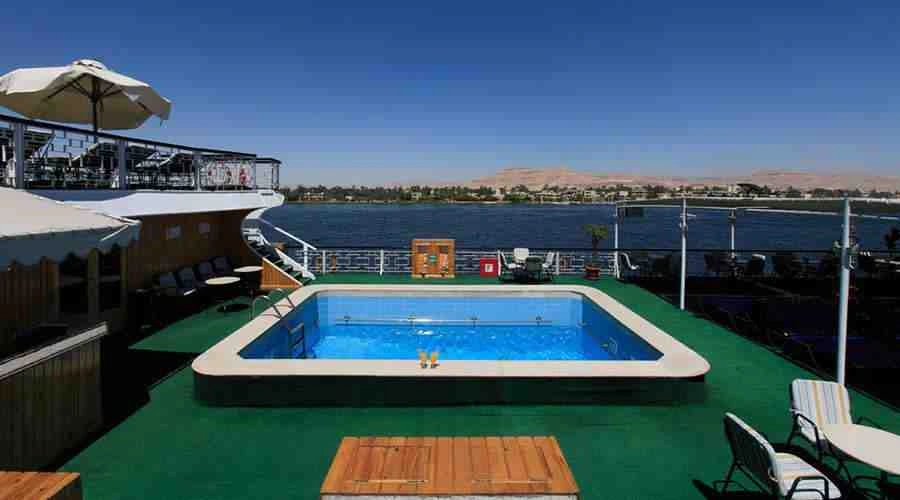
Included on essentially every ship: an outdoor pool on the sun deck, a lounge bar, a restaurant, and a small reception desk that handles everything from tips to lost passports.
Included on most: an evening programme. That typically means a galabeya party where the crew produce traditional dress for anyone willing, a Nubian music and dance show, and on many ships a belly dancer and a whirling dervish performance. It is unashamedly touristic and most people enjoy it more than they expect to.
Charged extra where they exist: massage and spa treatments, the gym on ships that have one, laundry, and the boutique. Laundry pricing is per item and adds up quickly — $2 to $4 for a shirt is normal.
The nine things almost never included
International flights — unless you bought a full package
Domestic flights — Cairo to Luxor or Aswan, $180 to $290 return per person
Egypt visa — $30 on arrival, or $30 for the e-Visa online in advance
Travel insurance — not legally required, strongly advisable
All drinks other than water at meals
Tips — $45 to $65 per person over four nights
Abu Simbel — $85 to $160 by road, $200 to $300 by air
Optional excursions — hot air balloon $80 to $130, sound and light $20 to $25
Anything after breakfast on disembarkation day — plan the gap, or take a full package that covers it
Onboard services — laundry, spa, and in some cases Wi-Fi
What “all-inclusive” really means on the Nile
The phrase is used loosely in Egypt and it is worth pinning down before it costs you money.
Some operators mean all-inclusive drinks — soft drinks and local alcohol at the bar, Caribbean-resort style. A small number of ships genuinely offer this.
Others mean all-inclusive trip — flights, Cairo hotels, transfers, the cruise, and every excursion, sold as one price. This is a package, not a drinks policy, and the two get conflated constantly.
Neither definition normally includes tips, your visa, or personal spending. When someone says all-inclusive, ask them to list what is in it. A straight answer takes ten seconds and tells you a lot about who you are dealing with.
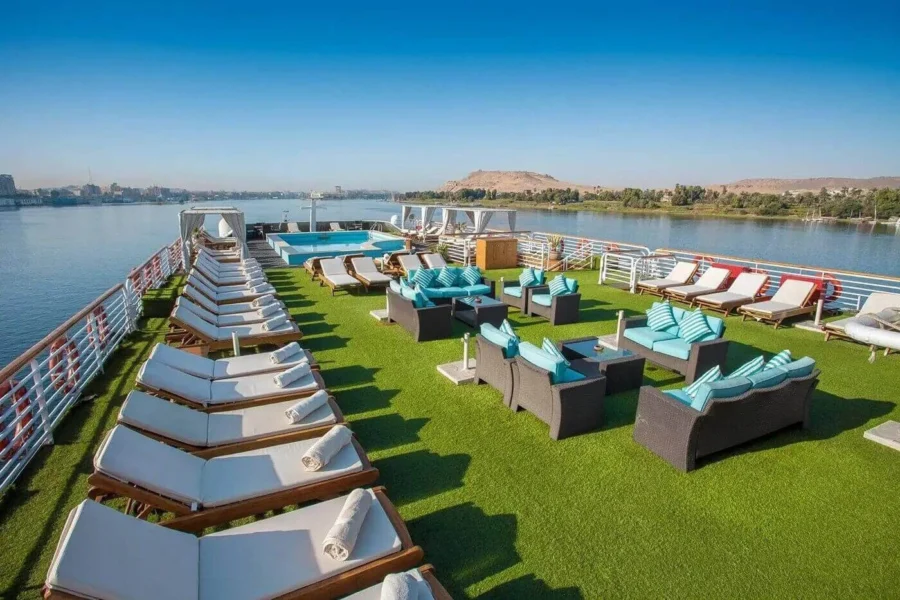
Pool, sun deck and lounges carry no charge on any Nile ship — the extras are drinks, spa and laundry.
How to read an inclusion list before you book
Six questions. Ask them in writing, and keep the reply.
Are airport transfers included in both directions?
Which specific temples are covered, and does that include the general Valley of the Kings ticket?
Is a licensed Egyptologist included, and how large is the group?
Are any drinks included, and is cabin water free?
Is Abu Simbel included, and if not, what does it cost through you?
What is the single supplement, or the child rate?
A reputable operator answers all six in one email. If the answers are vague, or if the reply is a price rather than a list, that is your signal.
Frequently asked questions
What is included in a Nile cruise?
Your cabin, three meals daily, temple entrance fees along the route, a licensed Egyptologist guide, and transfers between the ship and each site. Drinks, tips, Abu Simbel and your visa are extra.
Are drinks included on a Nile cruise?
Rarely. Water at meals is normally included; soft drinks, beer, wine and cabin water are charged to your account. Expect $80 to $140 for a couple over four nights. Some dahabiyas and luxury ships do include soft drinks — check in writing.
Are excursions included in a Nile cruise?
The excursions on your itinerary are included, with entrance fees and a guide. Optional extras — Abu Simbel, the hot air balloon, sound and light shows, and additional tombs — are not.
Is Abu Simbel included in a Nile cruise?
No. Abu Simbel is about 280 kilometres south of Aswan and is not on the cruise route. It is sold as a separate day trip, $85 to $160 by road or $200 to $300 by air.
Is Wi-Fi included on a Nile cruise?
It varies. Most ships offer Wi-Fi in public areas, some charge for it, and coverage between towns is poor regardless. A local SIM with a data bundle is more reliable and costs a few dollars.
Are airport transfers included?
Often not. Site transfers are included; airport transfers are frequently a separate line. Confirm both directions explicitly before you travel.
Do I need to pay for the Valley of the Kings separately?
The general ticket, which admits you to three tombs, is normally included. Tutankhamun, Seti I and Nefertari require separate tickets bought on site.
Want it all in one written price?
Send us your dates and a rough budget — a specialist replies with three ships across categories, live availability and a written price. No online payment.
Written byMagdy Fattouh38 guides published on this site
Magdy Fattouh is a Cairo University history graduate and the writer behind the guides on this site. Over 13 years he has researched and written about Egypt's history, its monuments and how to travel to them — from the pharaohs and the temples to month-by-month planning, ship comparisons and day-by-day itineraries. He speaks English and Arabic, and reviews every guide here for accuracy before it is published.
Read more by Magdy Fattouh →
The tourist visa is $30 on arrival or online, valid 30 days. Bring clean US dollars in small denominations, and get Egyptian pounds for everything minor. Plus SIMs,…
We use essential cookies to make this site work. With your permission we also use Google Analytics cookies to understand how the site is used, so we can improve it. We never use cookies for advertising. Cookie Policy
Strictly necessaryRemember your cookie choice and keep the site secure. Always on.
Always on
Google Analytics: which pages are visited and how people find us. No personal profile, no advertising.


 Practical