Most nationalities buy a 30-day visa on arrival for US$25 at the airport, in cash, before immigration; the e-visa costs the same and saves the queue. Bring small US dollars for tipping and change Egyptian pounds for everything else. Cards work in hotels and cities but not on board for tips.
Most nationalities pay $30 for an Egyptian tourist visa — either on arrival at the airport, or online in advance through the official e-Visa portal. Both give 30 days. Your passport needs six months’ validity and a blank page. Bring US dollars in clean, undamaged notes, and get small denominations early because you will need them constantly.
The visa fee rose from $25 to $30 on 1 March 2026, and a lot of older guides still quote the old figure. Everything below reflects the current position, but check the official portal before you travel — this is one of the few things on your trip that can change without notice.
Key takeaways
Most nationalities buy a 30-day visa on arrival for US$25 in cash, before immigration.
The e-visa costs the same and saves the queue.
Bring small US dollar notes for tips and change pounds for everything else.
Cards work in hotels and cities; tips on board are cash only.
Visa: the two options
Visa on arrival
e-Visa
Cost, single entry
$30
$30
Cost, multiple entry
—
$65
Stay permitted
30 days
30 days
Where
Bank kiosk before passport control
visa2egypt.gov.eg
Processing
Immediate
About 3 business days
Payment
Cash, USD preferred
Card
Visa on arrival is available to citizens of more than 45 countries including the US, UK, Canada, Australia and most of Europe. You buy a sticker at a bank kiosk in the arrivals hall before you reach passport control, stick it in your passport, and queue. It takes a few minutes and there is no drama to it.
The e-Visa is worth doing if you would rather not deal with a kiosk after a long flight, or if you are arriving late at a smaller airport. Apply at least a week ahead through visa2egypt.gov.eg — the official government portal. Numerous commercial sites resell this at two or three times the price for no added value.
A few exemptions exist: some nationalities enter visa-free, and holders of a valid Schengen, US or UK visa can qualify for reduced-cost or short-stay entry in certain cases. Check your own nationality rather than assuming.
Cash still runs the souk. One and five dollar notes are worth more to you here than a card.
Passport requirements
Six months’ validity beyond your date of entry. This is enforced.
At least one blank page, ideally two — the visa sticker takes a full page.
Bring a photocopy or a photo on your phone. You will need it for checkpoints on the road to Abu Simbel and occasionally at hotels.
Your ship’s reception will usually take your passport at check-in to register with the river authority, and return it within a day. This is normal and required. Keep a copy for the interim.
Money: what to bring
Egypt’s currency is the Egyptian pound, EGP. The exchange rate has moved a great deal in recent years, so check it close to travel rather than relying on a figure you read months ago.
Bring US dollars in cash. They are the default second currency across Egyptian tourism, they are what you tip with, and they are accepted almost everywhere that matters. Two rules:
Clean, undamaged notes issued 2009 or later. Older or torn US bills are frequently refused, because Egyptian banks are wary of them.
Small denominations. $1 and $5 bills, in quantity. This is the single most useful piece of preparation for this trip.
Get Egyptian pounds too, for anything small — carriage drivers, felucca captains, a bottle of water ashore, the man who opens a door. Change money at the airport bank or your hotel; avoid street changers.
Ones and fives are worth more than twenties here. Nobody at a temple gate or a carriage rank will have change for a large note.
Why small notes matter so much
Because the alternative is standing in front of someone holding a 200-pound note for a service worth twenty, doing arithmetic while they wait.
ATMs in Egypt dispense large denominations almost exclusively, so you cannot rely on them to solve this. Break a large note at a shop or hotel on day one and keep a working float of 10, 20 and 50 pound notes plus $1 and $5 bills. Sort it out at the start and the rest of the trip is frictionless.
How much cash: budget $150 to $250 per person for a week, covering tips, small purchases and ashore meals. The tipping guide breaks down what goes where.
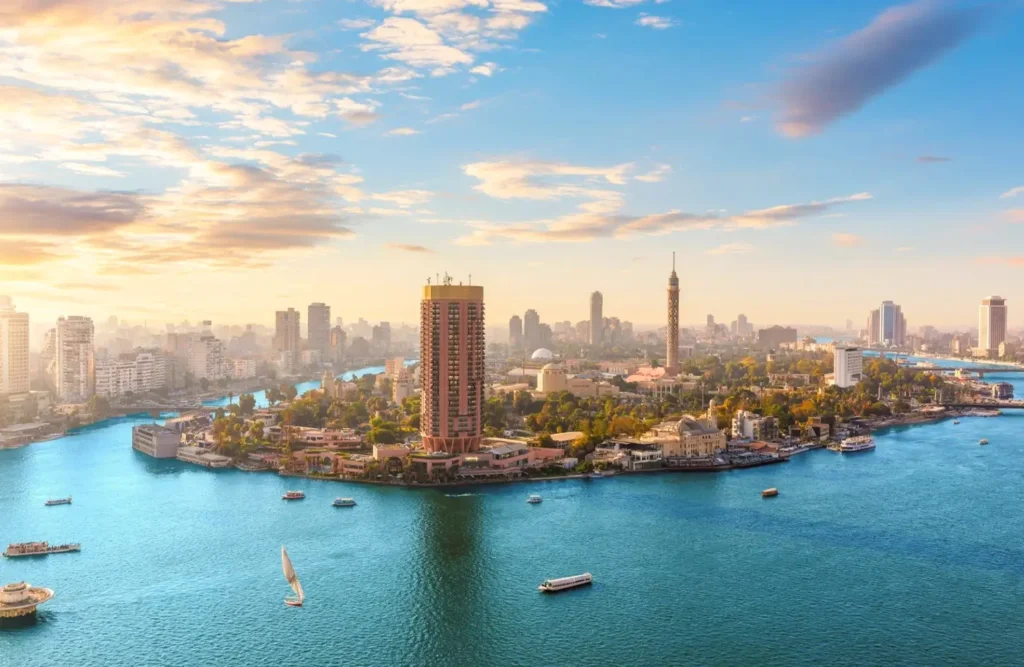
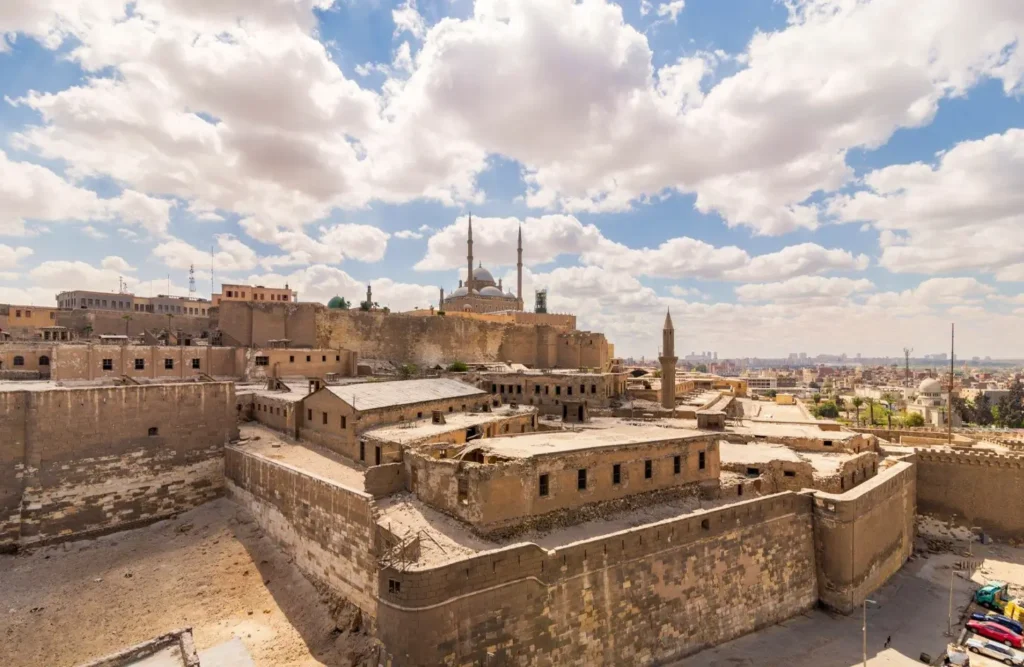
Cairo is where nearly every Egypt trip starts — and where the visa queue happens.
Cards, ATMs and what accepts what
Where
Cards?
Cruise ship account
Yes, Visa and Mastercard
Hotels
Yes
Larger restaurants
Usually
Souks and markets
No — cash
Taxis
No. Uber and Careem take cards
Tips and baksheesh
Cash only
Temple ticket offices
Cash, mostly
Amex is accepted far less widely than Visa or Mastercard. Tell your bank you are travelling, or your card will be blocked on the first transaction.
ATMs are common in Luxor, Aswan and Cairo, less so at moorings. Withdraw in town rather than at the airport where the rate is worse. If the machine offers to charge you in your home currency, decline — that is dynamic currency conversion and it costs you several percent.
Arrival, step by step
For Cairo, which is where most cruise passengers land.
Disembark and follow signs to arrivals.
Buy your visa sticker at a bank kiosk before passport control, unless you have an e-Visa. Cash, dollars preferred.
Passport control. Short queues most of the time.
Baggage, then customs. Generally a walk-through.
Find your transfer. Your operator’s representative meets you in the arrivals hall with a sign.
If you have booked a package, someone will be there. If you have booked cruise-only, check whether airport transfers are included — they frequently are not, and this is the single most common gap in a Nile cruise booking. See what’s included.
Ignore anyone in the hall who approaches you offering a taxi or help with bags. Some are legitimate; the rest are working on commission.
The Citadel is a card-friendly ticket office; most of what sits below it in the old city is still cash only.
Staying connected
Ship Wi-Fi exists and is unreliable. Most vessels offer it in public areas, some charge for it, and coverage drops between towns because it runs on mobile networks. Do not plan work around it.
A local SIM is the better answer. Vodafone has the most consistent coverage along the river; Orange and Etisalat are cheaper and slightly patchier outside the main towns. A tourist SIM with a useful data allowance costs roughly 100 to 500 EGP depending on the bundle — a few dollars to around ten. You need your passport to buy one, and there are official vendors at the airports.
An eSIM is easier if your phone supports it: buy before you fly, activate on landing, no queue and no passport. Expect roughly $4 to $25 depending on the data allowance.
Coverage along the Luxor–Aswan stretch is decent in the towns and intermittent mid-river. Download maps, books and anything you need offline before you sail.
Haggling, and what things should cost
Fixed prices apply on the ship, in hotels and at ticket offices. Everywhere else is negotiable, and visitors either overpay badly or make the whole thing adversarial.
The workable version: ask the price, offer around half, settle somewhere near two-thirds, and be prepared to walk. Walking away is not rude here and frequently produces the real number. If you would happily pay what they asked, pay it — nobody is obliged to haggle.
Rough guides, so you have an anchor:
Item
Reasonable
Bottled water, 1.5L, ashore
15 – 30 EGP
Coffee or tea in a local café
25 – 60 EGP
Meal in a local restaurant
150 – 350 EGP
Short taxi across town
50 – 100 EGP
Felucca, 1–2 hours
300 – 600 EGP for the boat
Scarf or small souvenir
100 – 300 EGP
These move with inflation and the exchange rate, so treat them as orders of magnitude rather than fixed. If someone quotes ten times these figures, that is the tourist opening bid and not an insult — just start low.
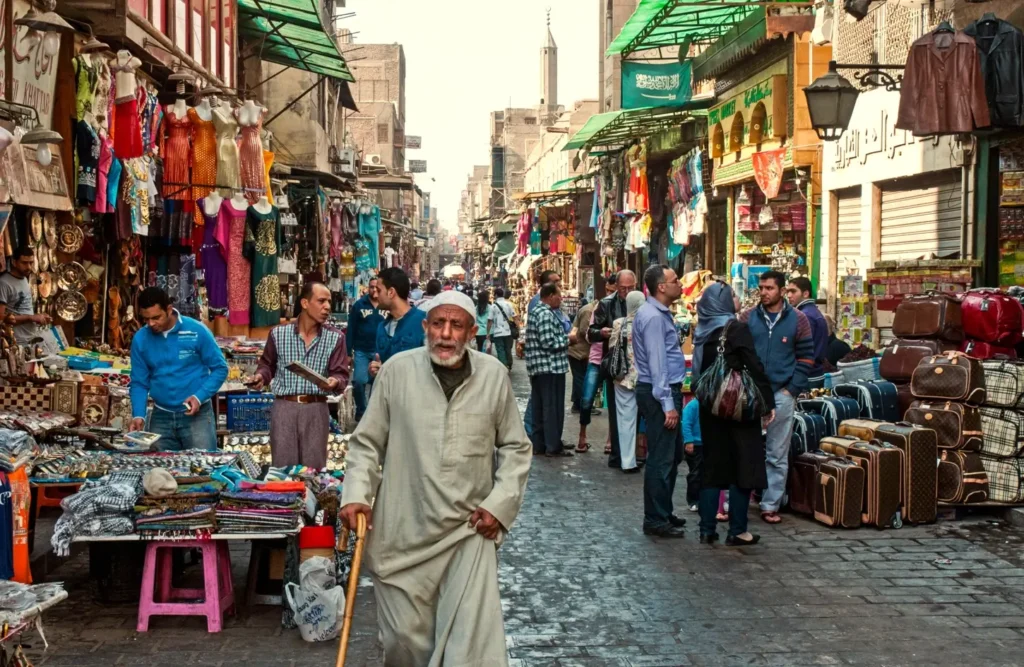
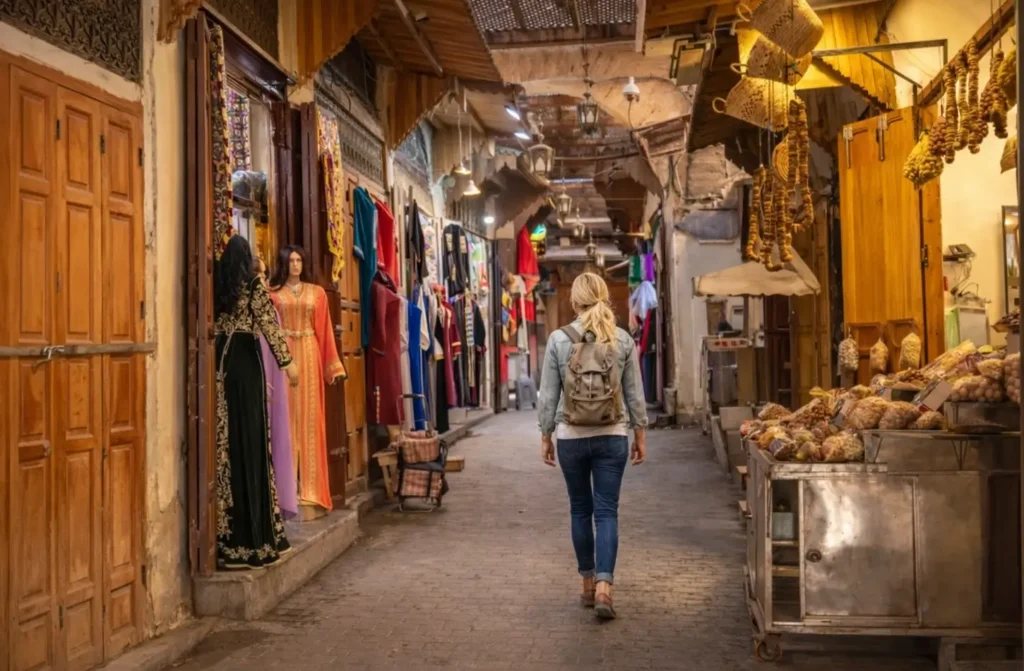
Khan el-Khalili is where small notes matter most — break a large one before you go in, not at the first stall.
Plugs, time and other small things
Plugs are European two-pin, type C and F, 220V. UK and US visitors need an adapter.
Time is UTC+2, with daylight saving observed in summer.
Friday is the weekend day, with Saturday. Government offices close; tourism does not.
Photography of military sites, bridges and airports is prohibited. Take this seriously.
Drones require advance permission and are confiscated at customs without it.
$30 for a single-entry tourist visa, whether bought on arrival or online as an e-Visa. Multiple entry is $65 through the e-Visa portal. Both allow a 30-day stay.
Can I get a visa on arrival in Egypt?
Yes, for citizens of over 45 countries including the US, UK, Canada, Australia and most of Europe. Buy the sticker at a bank kiosk before passport control, in cash.
Should I get the e-Visa or the visa on arrival?
Either works. The e-Visa saves a queue after a long flight; apply at least a week ahead at visa2egypt.gov.eg. Use the official portal — resellers charge two or three times as much for nothing extra.
How much passport validity do I need?
Six months beyond your entry date, plus at least one blank page for the visa sticker.
Should I bring dollars or Egyptian pounds?
Both. Dollars for tipping and larger payments — clean notes issued 2009 or later. Egyptian pounds in small denominations for everything else.
How much cash should I bring?
$150 to $250 per person for a week, covering tips, small purchases and meals ashore. Cards work on the ship and in hotels but not in markets or taxis.
Is there Wi-Fi on a Nile cruise?
Usually in public areas, sometimes charged, and unreliable between towns because it runs on mobile networks. A local SIM or eSIM is far more dependable.
What plug does Egypt use?
European two-pin, types C and F, at 220V. UK and US travellers need an adapter.
Everything else sorted?
Send us your dates and a rough budget — a specialist replies with three ships across categories, live availability and a written price. No online payment.
Written byMagdy Fattouh38 guides published on this site
Magdy Fattouh is a Cairo University history graduate and the writer behind the guides on this site. Over 13 years he has researched and written about Egypt's history, its monuments and how to travel to them — from the pharaohs and the temples to month-by-month planning, ship comparisons and day-by-day itineraries. He speaks English and Arabic, and reviews every guide here for accuracy before it is published.
Read more by Magdy Fattouh →
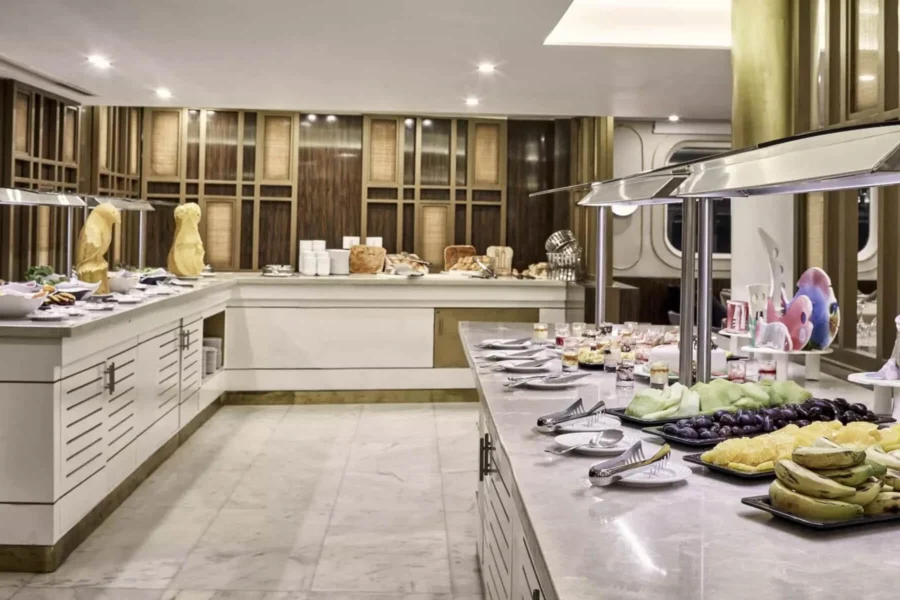
Three buffet meals a day mixing Egyptian and international dishes, included in your fare. Drinks are not. Vegetarian is easy, vegan needs notice, allergies need booking-time warning.
We use essential cookies to make this site work. With your permission we also use Google Analytics cookies to understand how the site is used, so we can improve it. We never use cookies for advertising. Cookie Policy
Strictly necessaryRemember your cookie choice and keep the site secure. Always on.
Always on
Google Analytics: which pages are visited and how people find us. No personal profile, no advertising.


 Practical