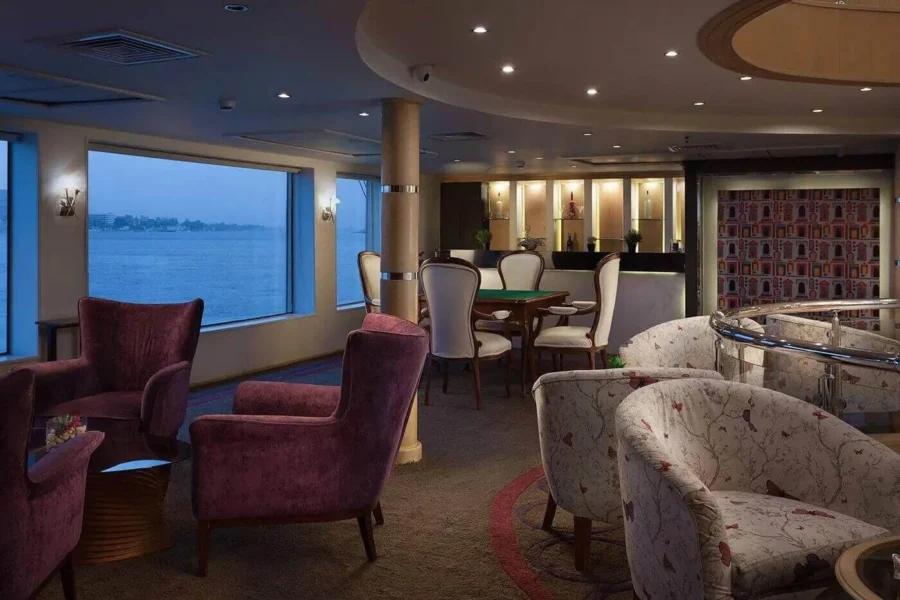
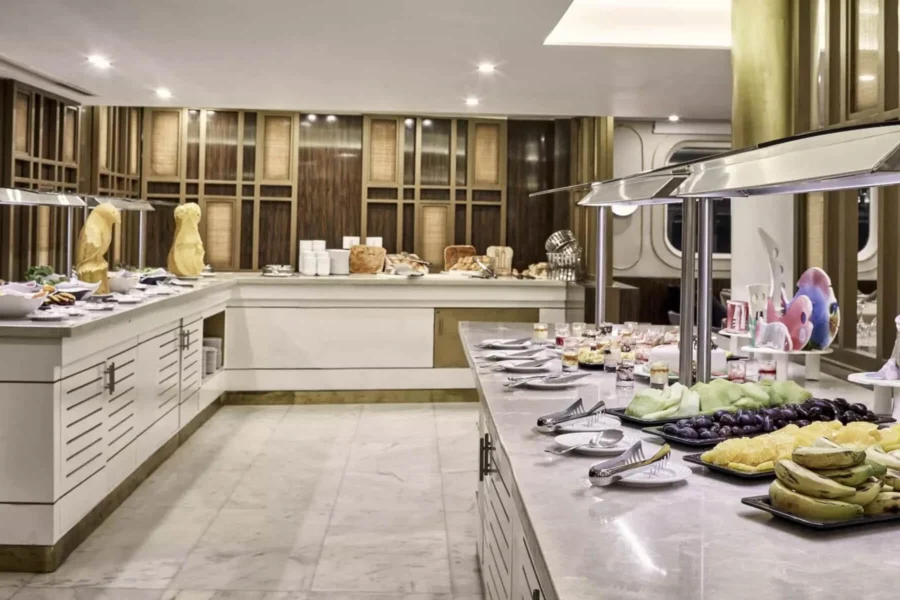
You do not get seasick on a Nile cruise. The river is flat, the ship moves slowly, and most sailing happens while you are eating or asleep. Mosquitoes exist near the banks at dusk but cabins are screened and air-conditioned. Drink bottled water only, including for brushing teeth — it is provided free on every ship.
You will not get seasick on a Nile cruise. The river is flat, the boats are wide and shallow-drafted, and there are no waves. Mosquitoes exist but are mild and seasonal. The one thing that does catch people out is stomach upset from water and ice, and that is almost entirely preventable. Bring medication from home rather than buying it at 2am in Aswan.
These three worries come up in almost every pre-trip email we get, so here they are answered properly.
Key takeaways
You do not get seasick on the Nile — it is a flat river and the ship moves slowly.
Most of the sailing happens while you are eating or asleep.
Mosquitoes appear near the banks at dusk; cabins are screened and air-conditioned.
Drink bottled water only, including for teeth. It is free on board.
Seasickness: no
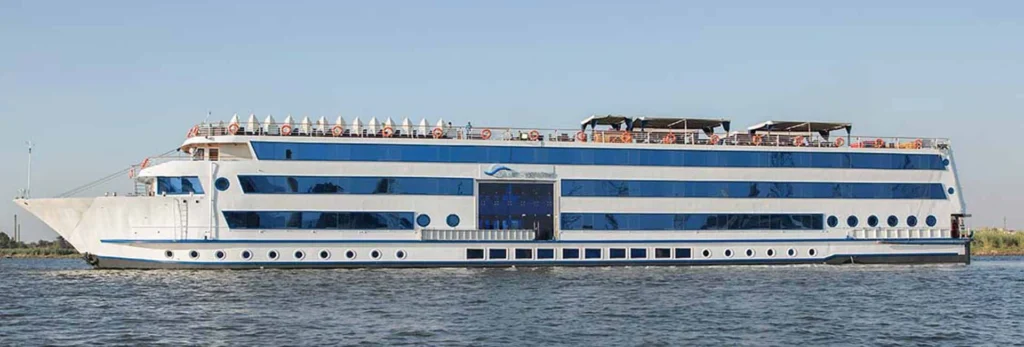
The Nile between Luxor and Aswan is a slow, wide river with no tide, no swell and no open water. Cruise ships on it are flat-bottomed, broad and heavy, and they move at around ten knots.
In fifteen years we have not had a passenger report seasickness. People who get sick on ferries, on small boats, in cars — fine here. If you have a serious motion sensitivity, bring your usual remedy for peace of mind and expect not to open it.
What you will feel:
A low engine vibration under way, strongest in stern cabins on the lower deck
A slight lean in a strong crosswind, mostly at Aswan where the river widens
A bump and a scrape when mooring, and again when boats tie up alongside you
The Esna lock, usually overnight, where the boat rises or drops about eight metres
None of that is motion in the sense that causes sickness. It is noise and sensation rather than movement.
The one exception worth naming: a dahabiya under sail heels slightly, which some people notice. Still nothing like a sea crossing.
Most of the sailing happens while the ship is this quiet — you feel the engine more than the water.
Stomach upsets: the real risk
This is the one that actually spoils trips, and the pattern is consistent — people are careful on board and casual ashore.
What causes it
Almost always water rather than food. Tap water, ice made from tap water, salad washed in tap water, and a wet glass. Egyptian tap water is chlorinated and safe for locals; visitors’ systems are not adapted to the local bacteria.
What prevents it
Sealed bottled water only. Check the seal is intact. Use it for brushing teeth.
Ice on reputable ships is fine — made from filtered water. Ashore, skip it.
Hot food that is properly hot. Eat from the busy trays, where turnover is high.
Peel your own fruit.
Salads on the ship are generally fine; at a roadside stall they are the highest-risk item on the table.
Hand sanitiser before every meal. Temple handrails, coach rails, money.
What to bring
An anti-diarrhoeal such as loperamide, oral rehydration sachets, and something for cramps. Egyptian pharmacies are good, well stocked and cheap — but you want this in your cabin at two in the morning, not at nine the next day.
If it lasts more than 48 hours, or comes with fever or blood, see the ship’s doctor rather than treating it yourself. Every vessel has one on call.
Mosquitoes
Present, and milder than most people expect.
Egypt is dry — humidity in Luxor and Aswan runs 15 to 25 percent — so mosquito numbers are far lower than in tropical destinations. Malaria is not a risk in the Nile Valley, Cairo or the Red Sea; no antimalarials are recommended for this route. Check current guidance with a travel clinic, but this has been the position for many years.
When they appear: at dusk, near still water, and most noticeably in Aswan and around the greener stretches of bank. Worst in the warmer months and after the annual dam release.
What works: repellent on the sun deck at sunset, long sleeves in the evening — which you want anyway for the air conditioning — and keeping your cabin door shut when moored. Cabin windows do not open, so the cabin itself is not a problem.
Other insects: nothing of consequence. There are no biting flies on the river and the ships are kept clean.
Pack repellent anyway. It costs nothing to carry and the half hour on deck at dusk is when you will want it.
Heat, which is the actual medical issue
More people have problems with heat than with everything else on this page combined.
The trap is the low humidity. Sweat evaporates before you notice it, so you dehydrate without feeling sweaty. Three to four litres a day, and electrolyte sachets rather than plain water alone.
Warning signs: a headache that will not shift, dizziness on standing, nausea, and — the serious one — stopping sweating or becoming confused.
Tell your guide immediately if you feel wrong. They handle this every season and would rather you sat in the coach. Full detail in cruising in summer.
Bottled water is on the table at every meal and free in the cabin; the tap is for washing only.
The other small things
Dust. The Valley of the Kings is fine limestone dust and it gets into everything. If you have asthma or a dust sensitivity, carry your inhaler and consider a light scarf over your face on windy days.
Slips. Wet pool decks, and tomb ramps that are dusty and steep with inconsistent handrails. Grip on your shoes matters more than most people expect — see what to wear.
Air conditioning. Ships run it hard and cabin windows are sealed. A number of passengers pick up a mild cold from four nights of cold dry air. Bring something with sleeves for sleeping.
Sun. The glare off pale limestone is severe and people burn at temples rather than by the pool, because they are not thinking about it.
How clean are the ships?
The question behind several of the others, so worth answering directly.
At four stars and above, cleanliness is generally good. Cabins are serviced daily, linen changed every second day, and kitchens are inspected — these ships depend on repeat operator business and a norovirus outbreak would end a season.
Below four stars it becomes variable, and this is the main reason we do not sell three-star vessels. The problems reported at that level are older bathrooms, air conditioning that struggles, and buffets held too long. None of it is dangerous; all of it is avoidable by not booking at the bottom of the market.
Two things to know regardless of class. Ships run on tanked water, so shower water is not drinking water even on the best vessels. And because cabin windows are sealed and air is recirculated, a cough travels around a boat faster than it would around a hotel — which is the actual reason a mild cold is the most common ailment people bring home.
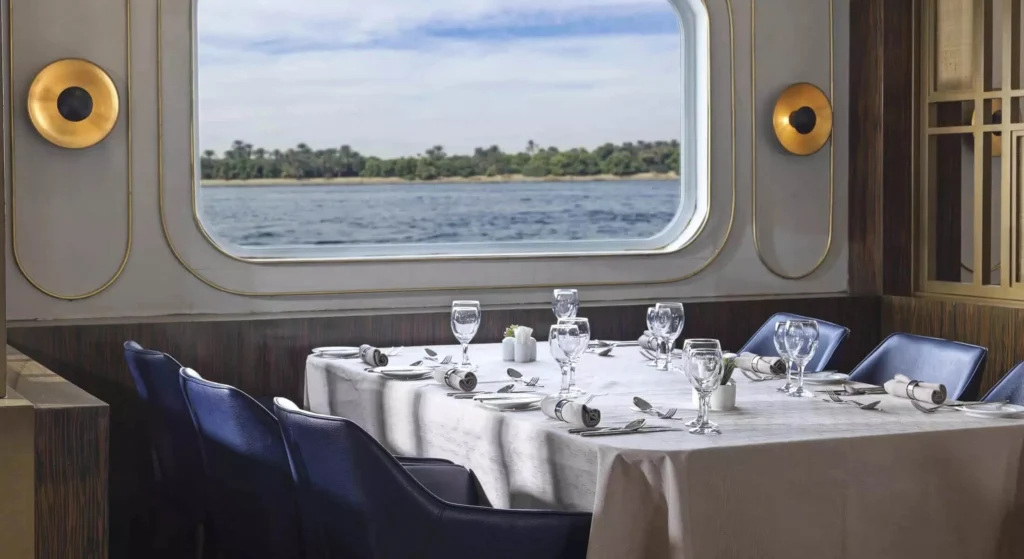
The Nile is a river, not a sea — the hull sits in flat water, which is why seasickness is so rarely an issue here.
If something goes wrong
The order to do things in, since people hesitate.
Tell reception first. Every ship has a doctor on call, and reception is how you reach them. It is a normal request and there is no reluctance about it — call-out fees are modest by Western standards and payable in cash or on your cabin account.
Tell your guide if it happens ashore. They carry basic supplies, know the nearest pharmacy in every town on the route, and have done this before.
Pharmacies are excellent. Egyptian pharmacists are well trained, often speak English, and can dispense a wider range without prescription than you may be used to. There is one within a few minutes of every mooring.
For anything serious, Luxor and Aswan both have hospitals accustomed to foreign visitors, and Cairo has international-standard private hospitals about an hour’s flight away. This is what your travel insurance is for — check it covers medical repatriation before you travel.
What to pack, medically
Anti-diarrhoeal and rehydration sachets
Electrolyte tablets for heat
Painkillers you know work for you
Antihistamine, for bites and dust
High-factor sunscreen — expensive and limited in range locally
Insect repellent
Hand sanitiser
Any prescription medication in original packaging, with a copy of the prescription
Plasters, for shoes you have not broken in
Egyptian pharmacies are genuinely good and pharmacists often speak English, so nothing here is a disaster if forgotten. It is simply easier to have it with you.
No vaccinations are required for most travellers from Europe, North America or Australia. Check with a travel clinic six to eight weeks ahead, and see is Egypt safe for the wider picture.
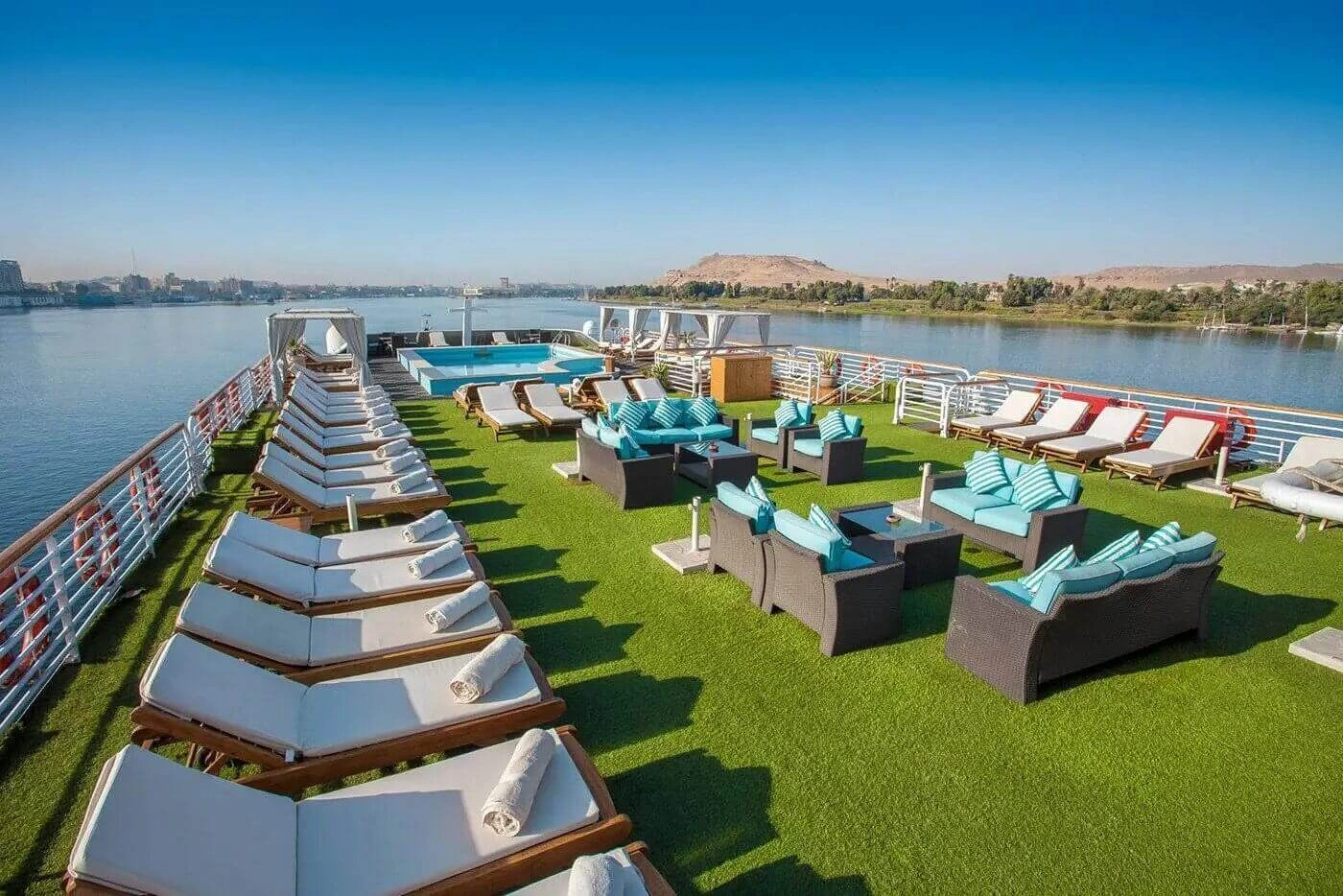
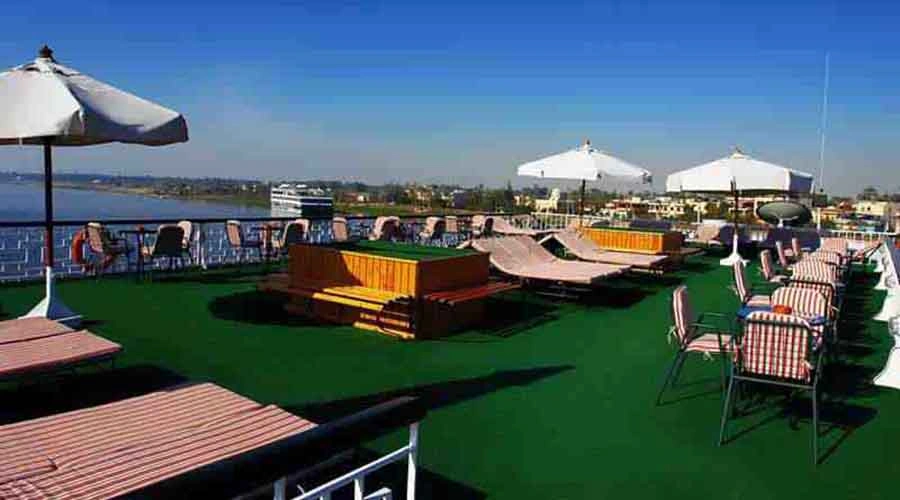
Mosquitoes are a dusk-on-the-bank problem, not a mid-river one; the sun deck is the safest place to be at that hour.
Frequently asked questions
Do you get seasick on a Nile cruise?
No. The Nile is flat with no tide or swell, and the ships are wide and shallow-drafted. Even people who get sick on ferries are fine.
Is the boat bumpy?
You feel a low engine vibration, a bump when mooring, and the Esna lock overnight. None of it is the kind of motion that causes sickness.
Are there mosquitoes on a Nile cruise?
Some, mainly at dusk and mainly in Aswan, but far fewer than in tropical destinations because the air is dry. Repellent at sunset and long sleeves in the evening handle it.
Is there malaria in Egypt?
Not in the Nile Valley, Cairo or the Red Sea. No antimalarials are recommended for this route, though you should confirm current guidance with a travel clinic.
Will I get an upset stomach?
Not if you stick to sealed bottled water, including for brushing teeth, and are careful with ice and salads ashore. Bring anti-diarrhoeal medication as a precaution.
Can I drink the tap water?
No. Use sealed bottled water throughout. Ice on reputable ships is made from filtered water and is fine.
Is there a doctor on board?
Every ship has one on call, and Luxor and Aswan both have hospitals used to treating foreign visitors.
What is the most common health problem?
Heat exhaustion, well ahead of anything else. The low humidity means you dehydrate without feeling sweaty — drink more than you want to and take electrolyte sachets.
Any other worries before you book?
Send us your dates and a rough budget — a specialist replies with three ships across categories, live availability and a written price. No online payment.
Written byMagdy Fattouh38 guides published on this site
Magdy Fattouh is a Cairo University history graduate and the writer behind the guides on this site. Over 13 years he has researched and written about Egypt's history, its monuments and how to travel to them — from the pharaohs and the temples to month-by-month planning, ship comparisons and day-by-day itineraries. He speaks English and Arabic, and reviews every guide here for accuracy before it is published.
Read more by Magdy Fattouh →
The tourist visa is $30 on arrival or online, valid 30 days. Bring clean US dollars in small denominations, and get Egyptian pounds for everything minor. Plus SIMs,…
Three buffet meals a day mixing Egyptian and international dishes, included in your fare. Drinks are not. Vegetarian is easy, vegan needs notice, allergies need booking-time warning.
We use essential cookies to make this site work. With your permission we also use Google Analytics cookies to understand how the site is used, so we can improve it. We never use cookies for advertising. Cookie Policy
Strictly necessaryRemember your cookie choice and keep the site secure. Always on.
Always on
Google Analytics: which pages are visited and how people find us. No personal profile, no advertising.


 Practical