A Nile cruise suits older travellers well: you unpack once and the ship moves while you rest. The limits are ashore — the Valley of the Kings involves ramps and steps, Edfu is reached by carriage, and few sites have level access. Ask for a ship with a lift and a middle-deck cabin, and expect to skip one or two tombs.
A Nile cruise suits older travellers well — you unpack once, the ship carries you between sites, and excursions are short. The two real obstacles are stairs, because most ships have no lift, and the Valley of the Kings, where tomb ramps are steep and handrails inconsistent. Ask about deck layout before you book, take a main-deck cabin near the restaurant, and travel between November and March.
This is the group we are asked about most by adult children booking for parents, and it is the one where the standard brochure is least useful. So here is what actually matters.
Key takeaways
You unpack once and the ship moves while you rest — the easiest way to see Upper Egypt.
The limits are ashore: ramps and steps at the tombs, a carriage at Edfu.
Ask for a ship with a lift and a middle-deck cabin.
Skipping one or two tombs costs you very little of the trip.
Why the format works
One unpack. No moving hotels, no repacking, no hauling luggage through a second lobby.
Short excursions. 90 minutes to two hours at each site, then back to an air-conditioned room. Compare that with a land tour, which means a car, a hotel change and a longer day.
Nothing to arrange. Meals, transport, tickets and guiding are all handled. Detail in what’s included.
You can skip anything. Freely, without notice, and nobody minds. The ship stays staffed all day. A morning by the pool instead of a fourth temple is a perfectly normal choice.
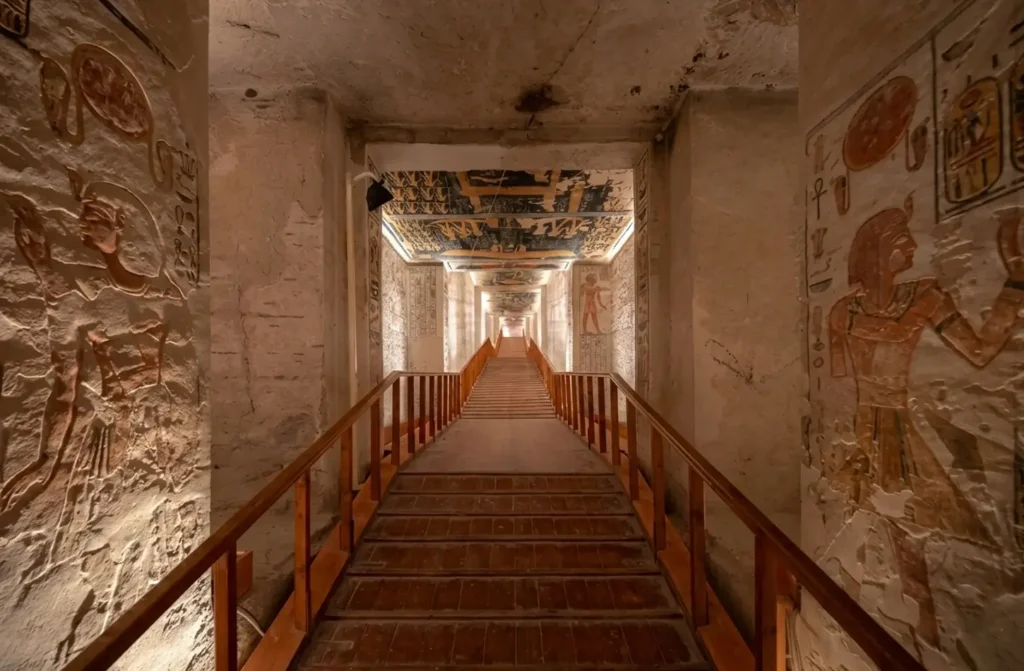
Tomb entrances are ramps and steps with handrails. This is the part of the trip that decides whether the pace works.
The stairs problem
This is the single most important thing to establish before booking, and it is the one nobody volunteers.
Most Nile cruise ships have no lift. A handful of newer and larger vessels do; the majority do not. That means stairs between your cabin deck, the restaurant and the sun deck — several times a day, on stairs that are steeper and narrower than hotel stairs.
What to do about it:
Ask directly whether the ship has a lift. Not “is it accessible” — ask about the lift specifically.
Take a main-deck cabin, which is usually the same deck as the restaurant and reception. It costs less than the upper deck and removes most of the daily climbing.
Accept the trade. Main deck means a slightly smaller window than upper deck. For someone with knees, that is an easy exchange — see which deck to book.
Boarding is also worth asking about. When ships moor abreast in high season, you may walk across two or three other vessels to reach the shore, which means crossing gangways and short flights of steps each time.
The Valley of the Kings is the one to plan around. Tombs are corridors cut downward into rock, some descending 60 to 100 metres, with the same climb back out. Ramps are dusty, lighting is low, and handrails come and go. There is a shuttle train from the car park to the tomb entrances, which helps with the approach but not the tombs themselves.
If stairs are difficult, pick one or two tombs rather than the three on your ticket. The guide will steer you to the shallowest open ones if you ask.
Say it when you enquire, not on the day. A ship with a lift and a cabin near it can be arranged in advance; it cannot be arranged at the gangway.
Heat, which matters more than age
Travel November to March. Not October, not April, and certainly not June to August, when Luxor averages 41 to 42°C and excursions leave at 5:30am.
Heat is the most common medical issue we deal with, and it affects older travellers disproportionately. Anyone with a heart or respiratory condition should treat the summer months as off the table and speak to their doctor about the shoulder months.
Even in winter: drink more than you feel you need, take the shade when it is offered, and say something early if you feel wrong. Guides deal with this constantly and would far rather you sat in the coach for half an hour.
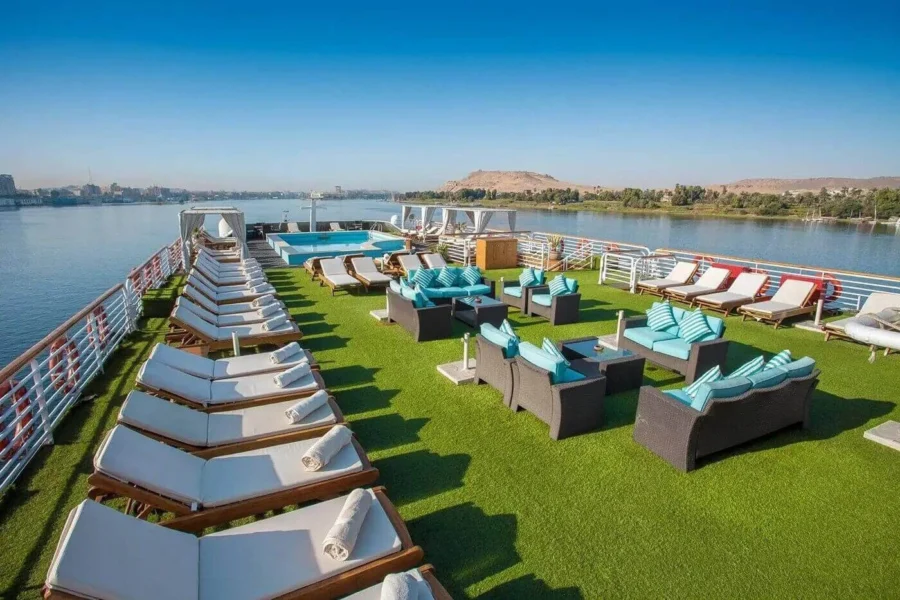
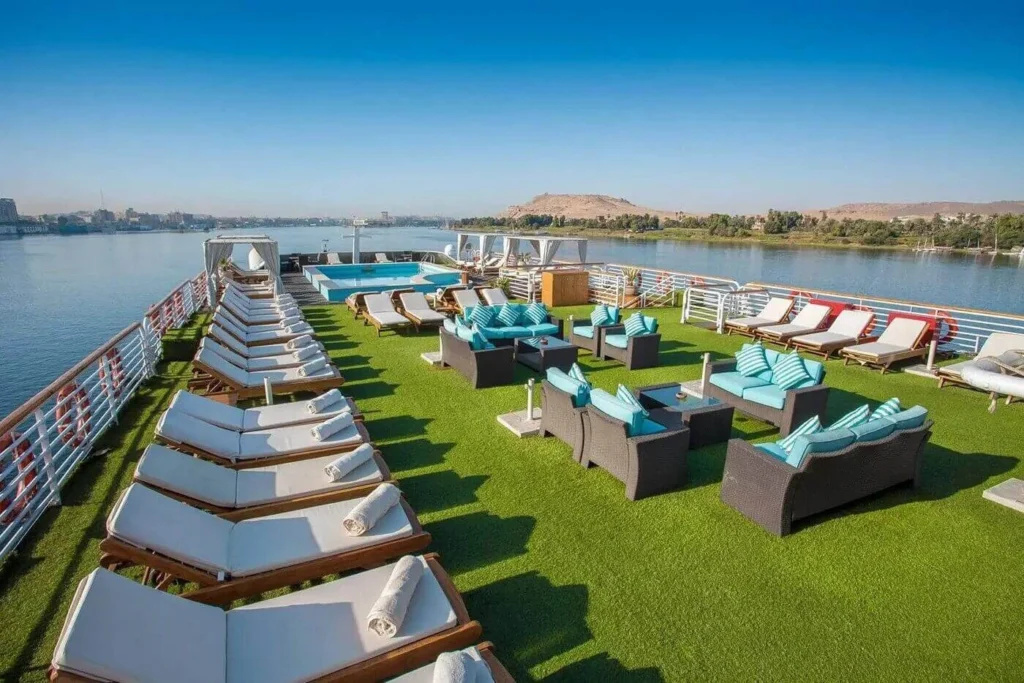
The alternative to a hard excursion is a good deck — worth checking there is shade as well as sun.
Medical practicalities
Ships have a doctor on call, and Luxor and Aswan both have hospitals used to treating foreign visitors.
Bring all medication in original packaging, with a copy of the prescription, and enough for the trip plus several days.
Split medication between hand luggage and cabin.
Travel insurance that covers pre-existing conditions and medical repatriation. Read this one properly rather than assuming.
Bottled water only, including for teeth.
Bring a walking stick if you use one at home, even occasionally. Temple ground is uneven.
Choosing the ship
Different priorities from a younger booking.
A lift, if you can find one. This outranks star rating, cabin size and everything else.
Smaller passenger count. Less queueing, shorter walks to and from the coach, and a guide who can adjust the pace. A group of forty moves at the speed of the fastest; a group of twelve does not.
Four stars minimum. Air conditioning reliability is not something to gamble on.
Ask about a private guide. $60 to $120 a day for your own guide and vehicle means you go at your own pace, sit down when you want, and leave a site when you have had enough. For older travellers this is the best-value upgrade available, ahead of any cabin.
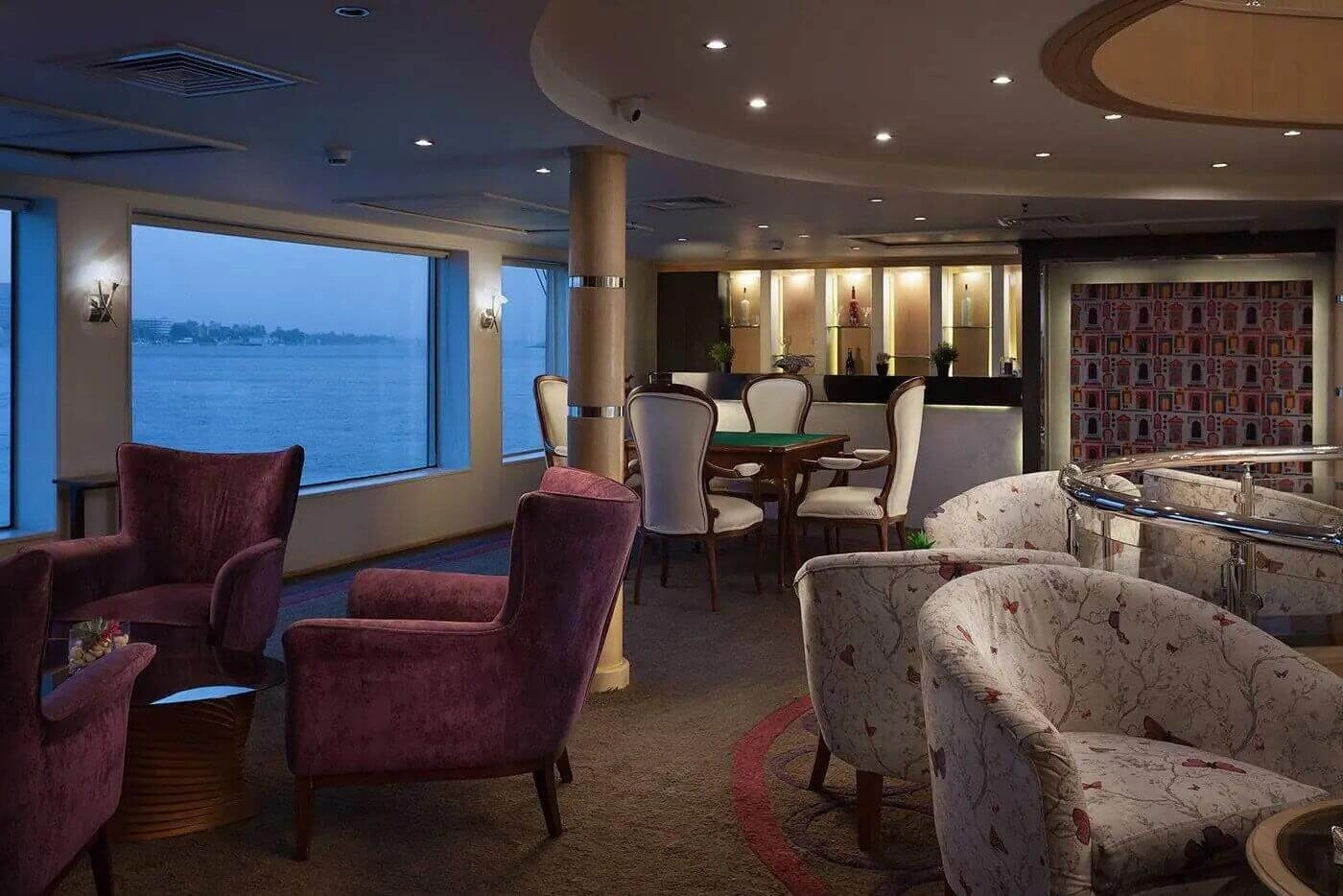
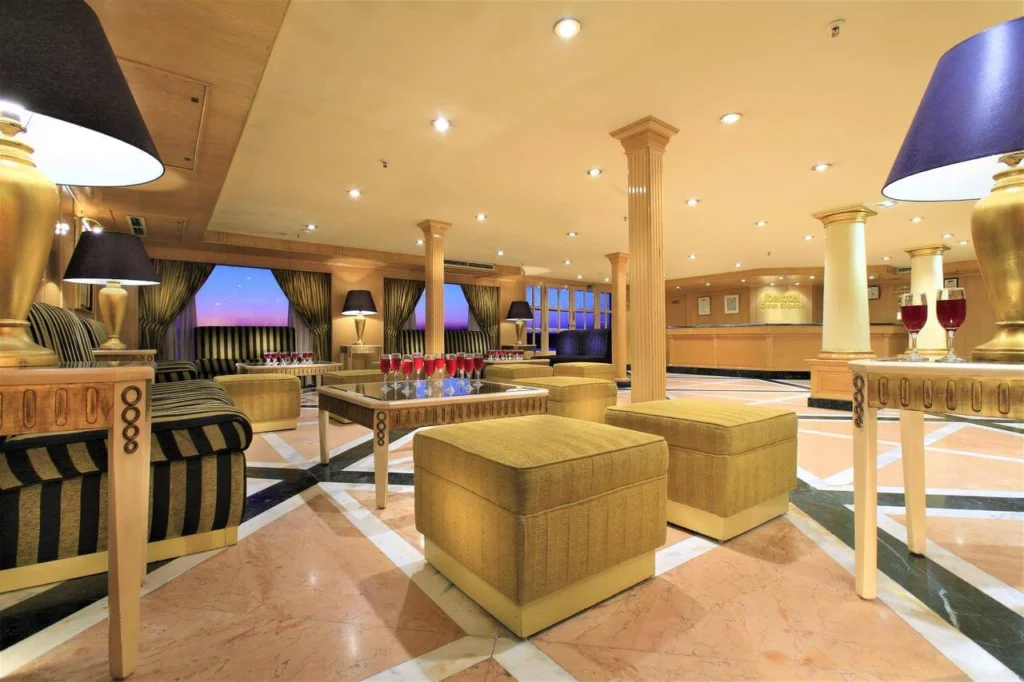
Lounges are all on one level, but getting to them can mean stairs — ask which deck the lift actually reaches.
Questions to ask before you pay a deposit
Booking sites will not answer any of these. An operator should answer all of them in one email.
Does this specific ship have a lift? Not “is it accessible” — the lift, specifically.
Which deck is the restaurant on, and which deck is my cabin? Same deck is the goal.
How many steps from the gangway to reception? And does the ship moor abreast on these dates, meaning crossing other vessels to reach shore?
How large is the excursion group? Twelve moves differently from forty.
Is there a shuttle at the Valley of the Kings, and which tombs are currently open with the shallowest descent?
What does a private guide and vehicle cost for our dates?
Can we board early or leave late on the first and last days?
An operator who answers vaguely on the lift question is telling you the answer is no.
Travelling with a walking difficulty
The honest position, since generic accessibility language helps nobody.
If you walk unaided but slowly, this trip works well with the adjustments above. If you use a stick, bring it and expect to use it on uneven temple ground even if you rarely do at home. If you use a frame or wheelchair, the picture is much narrower: most ships have no lift, gangways are steep and change angle with the water level, and the great majority of tombs and temples involve steps, ramps or loose ground.
It is not impossible — a few larger modern vessels and a private vehicle with a driver who knows the sites can make a limited version work, focused on Kom Ombo, Luxor Temple, the Colossi and Philae’s approach. But it needs to be built deliberately rather than booked off a page, and some sites will be off the itinerary.
Tell us the specifics rather than the label and we will tell you honestly whether it works.
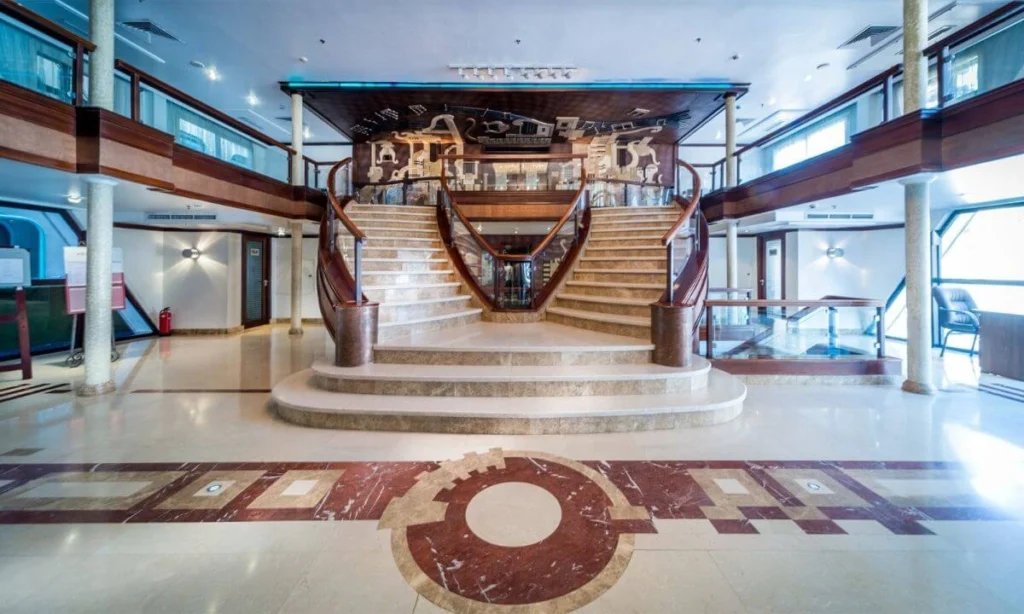
Grand staircases photograph well and are the only route between some decks. It is a fair question to ask before booking.
Length and pacing
Four nights rather than three. The extra night is a rest day in practice.
Build in a spare day at each end. Arriving the day before you board, and staying a night after you disembark, removes the two most stressful parts of the trip. Disembarkation is at 8 or 9am and nothing after breakfast is included — a hotel day room is worth the $30 to $70.
Consider skipping Abu Simbel, or flying rather than driving. The road version is a 3:30am start and about ten hours. The flight halves it for roughly double the price — see Abu Simbel from Aswan.
Our packages can all be paced down, and we would rather build you a slower trip than sell you a full one you find exhausting. Tell us what you need.
Frequently asked questions
Is a Nile cruise suitable for older travellers?
Generally yes — you unpack once, excursions are short, and you can skip anything. The main obstacles are stairs on ships without lifts, and the Valley of the Kings.
Do Nile cruise ships have lifts?
Most do not. A handful of newer and larger vessels have them. Ask specifically about the lift rather than asking whether the ship is accessible.
Which deck should older travellers book?
Main deck, usually the same level as the restaurant and reception. It removes most of the daily stair climbing, and costs less than the upper deck.
How difficult is the Valley of the Kings?
The hardest site on the itinerary. Tombs descend 60 to 100 metres on steep dusty ramps with inconsistent handrails. Take one or two tombs rather than three, and ask your guide for the shallowest open ones.
Is a Nile cruise wheelchair accessible?
Only partially, and only on specific ships. Most vessels have no lift and most tombs and temples have steps or uneven ground. Discuss specific requirements with an operator before booking anything.
What is the best time of year for older travellers?
November to March. Avoid June to August entirely, and be cautious about April and October when highs reach 35°C.
Should we take a private guide?
If budget allows, yes — $60 to $120 a day for your own guide and vehicle. It is the best-value upgrade for older travellers, ahead of any cabin improvement.
Can we skip excursions?
Any of them, without notice. The ship stays staffed and nobody minds. Many travellers take at least one morning off.
Want a ship that suits the pace?
Send us your dates and a rough budget — a specialist replies with three ships across categories, live availability and a written price. No online payment.
Written byMagdy Fattouh38 guides published on this site
Magdy Fattouh is a Cairo University history graduate and the writer behind the guides on this site. Over 13 years he has researched and written about Egypt's history, its monuments and how to travel to them — from the pharaohs and the temples to month-by-month planning, ship comparisons and day-by-day itineraries. He speaks English and Arabic, and reviews every guide here for accuracy before it is published.
Read more by Magdy Fattouh →
The tourist visa is $30 on arrival or online, valid 30 days. Bring clean US dollars in small denominations, and get Egyptian pounds for everything minor. Plus SIMs,…
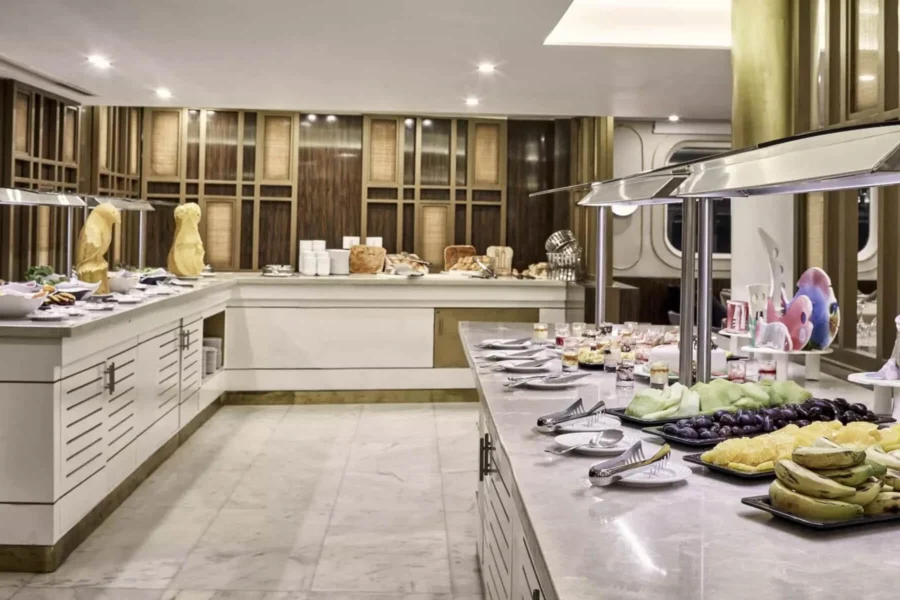
Three buffet meals a day mixing Egyptian and international dishes, included in your fare. Drinks are not. Vegetarian is easy, vegan needs notice, allergies need booking-time warning.
We use essential cookies to make this site work. With your permission we also use Google Analytics cookies to understand how the site is used, so we can improve it. We never use cookies for advertising. Cookie Policy
Strictly necessaryRemember your cookie choice and keep the site secure. Always on.
Always on
Google Analytics: which pages are visited and how people find us. No personal profile, no advertising.


 Practical