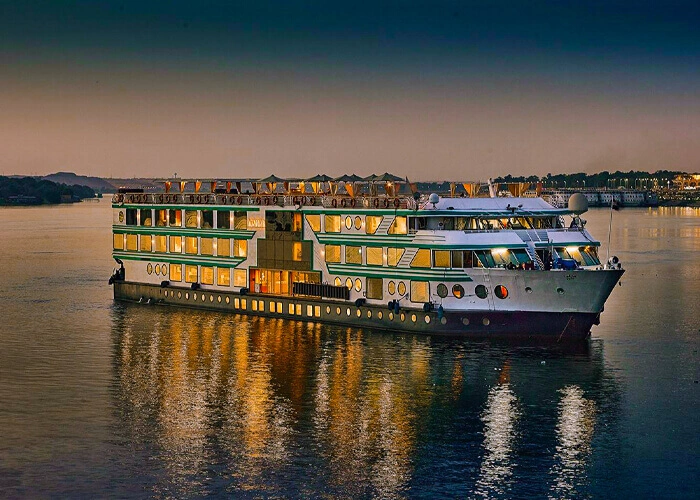
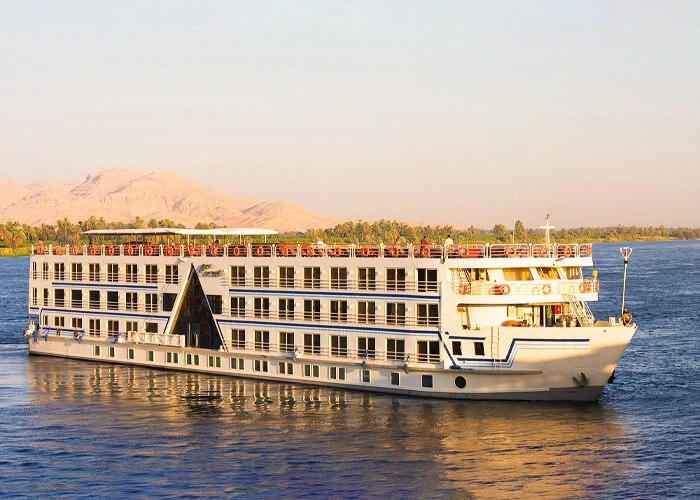
For October to April, book three to six months ahead. For Christmas, New Year and Easter, book six to nine months ahead — the good ships sell out first and prices only rise. For May to September you can book four to six weeks ahead and still choose. Late availability exists, but rarely on the ships people want.
Book three to four months ahead for high season, four to six months for Christmas and New Year, and three to six weeks for summer. The rule people get wrong is that waiting always saves money. In low season it does. Between 21 December and 5 January it costs you both money and choice, because the affordable cabins go first and the suites are what remain.
We take booking enquiries every day of the year, so we can tell you exactly what is left at each point in the cycle rather than guessing at it.
Key takeaways
October to April: book three to six months ahead.
Christmas, New Year and Easter: six to nine months, and prices only rise.
May to September: four to six weeks is enough.
Late availability exists, but rarely on the ships people actually want.
The booking window by season
Sailing dates
Book by
What happens if you wait
21 Dec – 5 Jan
4–6 months
Only suites left, at peak prices
Easter week
4–5 months
Sells out; limited fallback
November, March
3–4 months
Ship choice narrows sharply
Oct, Dec (1–18), Feb, Apr
6–10 weeks
Manageable, prices firm
May – September
3–6 weeks
Nothing — waiting helps
Suites and balcony cabins are what disappear first — the ship may still have space when the cabin you wanted does not.
Why waiting works in summer and fails at Christmas
Nile cruise pricing behaves more like airline pricing than hotel pricing, and understanding that one thing explains everything else.
Ships release blocks of cabins to operators months ahead at fixed net rates. Those blocks have deadlines. If an operator has not sold its allocation by a certain point, it releases the cabins back and the ship discounts them to fill the boat.
In summer, boats sail half empty, so that release happens constantly and prices fall 30 to 50 percent. Genuine last-minute deals appear two to four weeks out, and the deepest discounts land ten to fourteen days before sailing.
Over Christmas, nothing gets released because nothing goes unsold. What remains in December is the inventory nobody wanted at any price — the most expensive cabins on the boat. The discount mechanism simply does not engage.
What booking early actually buys you
It is not usually a lower headline price. Early-bird reductions exist and run around 10 to 15 percent on selected departures, but that is not the main return.
What you are really buying:
The ship you wanted. There are maybe eight or ten genuinely excellent vessels on this river. They fill first, every season.
Cabin position. Middle of the boat, upper deck. The good positions go months ahead; latecomers get the stern on the lowest deck.
Connected flights. Domestic flights between Cairo and Luxor or Aswan also fill in peak weeks and are not always released far ahead.
A guide you chose. The best Egyptologists are booked out in high season the same way the ships are.
If any of those matter to you, book early. If you genuinely do not care which boat you are on, you have more flexibility than most people.
The cabin sells out before the ship does. Balcony cabins and suites go first, so booking early buys the room more than the boat.
When last-minute genuinely works
It works, and we sell it. Here is the honest shape of it.
Timing. Two to four weeks out is where real availability appears. Ten to fourteen days is where the biggest reductions land — 30 to 40 percent below the published rate on a boat that needs the occupancy.
Seasons. May through September, plus the quiet pockets in early December before the 18th and mid-January after the 6th.
What you give up. Choice. You take the ship that has space, the cabin that is left, and the departure date that exists rather than the one you wanted. If your dates are fixed, last-minute is a bad strategy.
What to avoid. Turning up in Luxor and negotiating on the dock. You will be quoted a price that excludes the guide and the temple entries, and those alone run $70 to $90 per person — see what’s included in a Nile cruise. It is not a saving, it is a different product.
Peak season fills because the weather is genuinely better; the temples are the same in June.
What a fair quote looks like
Once you start asking, you will get quotes that are impossible to compare because each one includes a different set of things. Here is how to make them comparable.
A quote you can trust names the ship, not the category. “5-star deluxe” is not a ship. “Sonesta St. George I, main deck, midship” is. Operators who will not name the vessel until you pay are keeping their options open at your expense.
It also states the cabin deck and position, whether airport transfers are included in both directions, which temples the entrance fees cover, and whether the guide is a licensed Egyptologist or a tour escort. Those four lines account for most of the gap between two quotes that look 30 percent apart.
Ask for it in writing and keep the reply. Not because operators are dishonest — most are not — but because the person who quoted you in August may not be the person handling your file in November.
Booking around flights
The mistake we see most often is booking a cruise before confirming how you get to it.
Almost everyone flies internationally into Cairo, then takes a domestic flight south. In peak weeks those internal flights sell out, and they are sometimes not loaded into booking systems until closer to departure. A cruise deposit paid before the flight is confirmed is a risk you do not need to take.
The sequence that works: fix your international arrival date, check domestic availability, then book the cruise to match. If you take a full package, we handle the internal flights as part of it and time them to the ship rather than to the cheapest fare.
Ships sell by cabin category, not by ship — the cheap categories go first and the suites last.
Deposits, balances and cancellation
Standard practice across most Egyptian operators, ours included:
Stage
Typical terms
Deposit
20–30% to hold the cabin
Balance due
30–60 days before sailing
Free cancellation
Usually to 45–60 days out
Peak-date terms
Stricter — often non-refundable inside 90 days
Two things to check in writing before you pay anything. First, whether your dates carry peak-season cancellation terms, which are materially stricter than the standard ones. Second, whether the deposit is refundable if a domestic flight fails to materialise.
Pay by card rather than bank transfer to a personal account. That is not a comment on any particular operator; it is simply the only version where you have recourse.
How far ahead should you decide the details?
You do not have to settle everything at once, and people delay booking because they think they do.
Lock in first: the dates, the ship, the cabin category, the direction. These are the scarce things.
Decide later, comfortably: Abu Simbel, the hot air balloon, extra tombs at the Valley of the Kings, a private guide upgrade, extra nights in Cairo. All of these can be added weeks out, and several can be arranged on board.
So if you are hesitating because you have not chosen between Luxor to Aswan or Aswan to Luxor, or because you are not sure about the balloon — book the boat. The rest keeps.
Christmas and Easter fill six to nine months out; May to September can often be booked inside a month.
The dates worth moving for
If your leave is flexible even by a week, these shifts save real money for near-identical weather:
18 December instead of 27 December. Same 24°C, roughly half the price.
8 January instead of 2 January. The peak collapses on the 6th.
Late September instead of late October. Two degrees warmer, around 30 percent cheaper.
Early March instead of Easter week. Easter prices like Christmas.
If you want us to check what is actually available on your dates rather than what a website says, send them over. It takes us an afternoon and costs nothing.
Frequently asked questions
How far in advance should I book a Nile cruise?
Three to four months for high season, four to six months for Christmas and New Year, and three to six weeks for summer sailings.
Are last-minute Nile cruise deals real?
Yes, in low season. Genuine reductions of 30 to 40 percent appear ten to fourteen days out when boats need occupancy. They do not appear over Christmas, New Year or Easter.
Is it cheaper to book early or late?
Late in summer, early in winter. Summer boats discount unsold cabins heavily; peak-season boats sell out, so the last cabins available are the most expensive ones.
When do Christmas Nile cruises sell out?
The best ships and cabins go four to six months ahead. By late November you are usually choosing between suites and nothing.
How much deposit is normal?
20 to 30 percent, with the balance due 30 to 60 days before sailing. Peak dates often carry stricter, sometimes non-refundable terms inside 90 days.
Should I book the cruise or the flights first?
Confirm your international arrival, check domestic flight availability, then book the cruise to match. Domestic flights sell out in peak weeks and are sometimes released late.
Can I book a Nile cruise once I am in Egypt?
You can, and in low season you may pay less. Be careful what the price covers — dock-side quotes often exclude the guide and temple entries, which are $70 to $90 per person on their own.
What can I decide later?
Abu Simbel, the hot air balloon, extra tombs, private guiding and additional Cairo nights can all be added closer to departure. Ship, cabin and dates cannot.
Have your dates? Check what is free
Send us your dates and a rough budget — a specialist replies with three ships across categories, live availability and a written price. No online payment.
Written byMagdy Fattouh38 guides published on this site
Magdy Fattouh is a Cairo University history graduate and the writer behind the guides on this site. Over 13 years he has researched and written about Egypt's history, its monuments and how to travel to them — from the pharaohs and the temples to month-by-month planning, ship comparisons and day-by-day itineraries. He speaks English and Arabic, and reviews every guide here for accuracy before it is published.
Read more by Magdy Fattouh →
Ten to seventeen hours depending on your coast, and a seven to ten hour time shift. Why twelve days beats seven, how to sequence Cairo, and what Thanksgiving…
Five hours direct from London with a one-hour time difference. What ATOL does and does not cover on a direct booking, sterling costs, and why February half term…
We use essential cookies to make this site work. With your permission we also use Google Analytics cookies to understand how the site is used, so we can improve it. We never use cookies for advertising. Cookie Policy
Strictly necessaryRemember your cookie choice and keep the site secure. Always on.
Always on
Google Analytics: which pages are visited and how people find us. No personal profile, no advertising.





 Planning