Luxor to Aswan is four nights sailing south; Aswan to Luxor is three nights sailing north. The four-night direction gives you an extra night for the same temples and slightly better light at Edfu and Kom Ombo. The three-night direction is cheaper and easier to combine with a Cairo flight. The sights are identical either way.
Both directions visit the same temples. The real difference is length: Aswan to Luxor is usually 3 nights, Luxor to Aswan is usually 4. Around eight in ten ships sail Luxor to Aswan, so that direction gives you more choice of boat and better pricing. Pick your ship and your guide first. Direction second.
We get asked this more than almost anything else, and usually by people who have been reading forum threads for two hours and come away more confused than when they started. So here is the honest version, from an operator who sells both.
Key takeaways
The direction changes the length, not the sights: three nights northbound, four nights southbound.
Sailing south gives you an extra night on the water for the same temples.
Northbound is cheaper and slots more easily around a Cairo flight.
Both directions pass the Esna lock, Edfu and Kom Ombo.
Does the direction of a Nile cruise actually matter?
Less than you think.
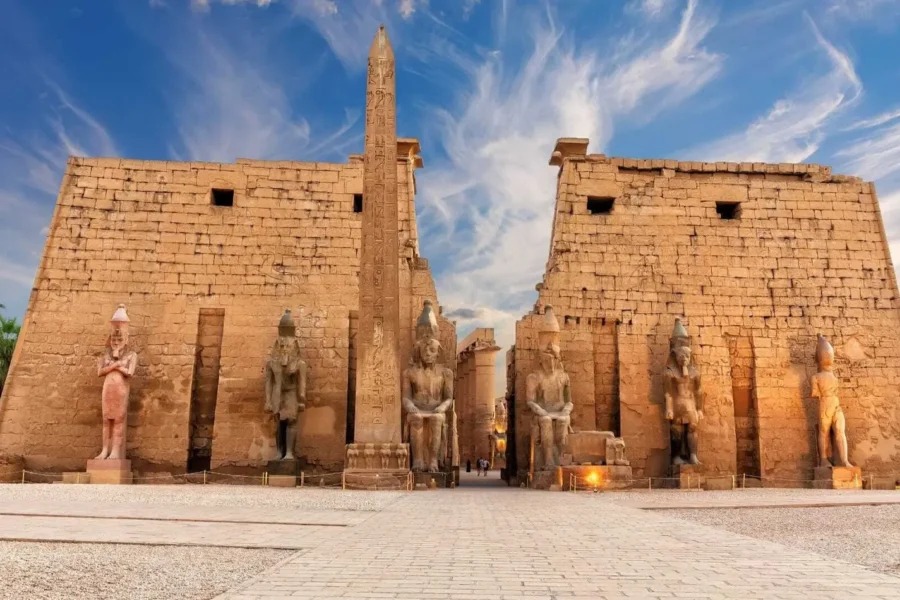
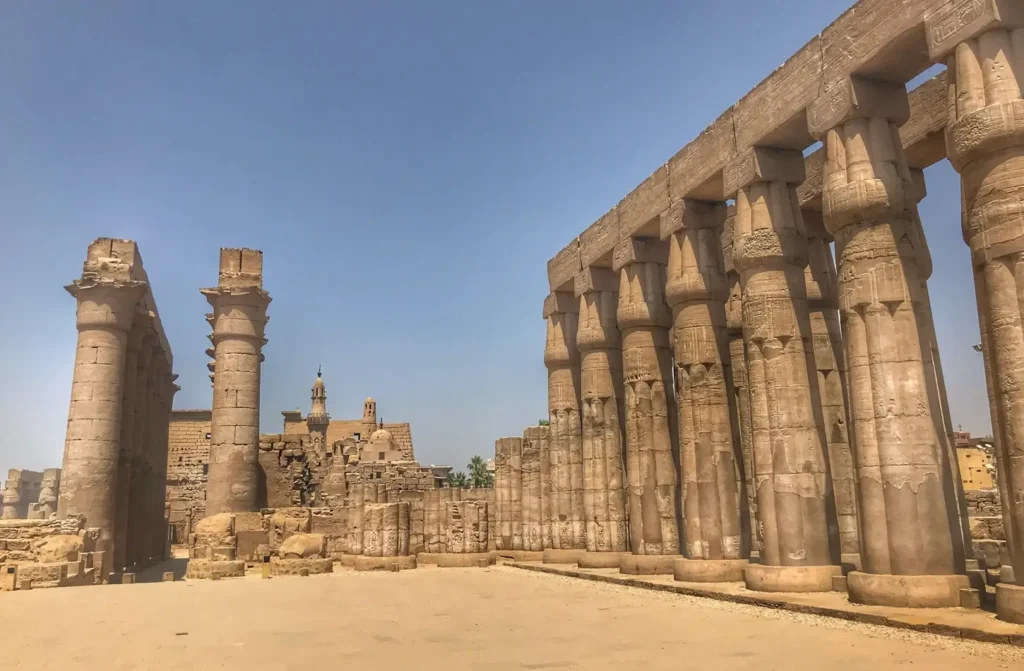
Every boat sailing between the two cities stops at the same places, because there is only one river and only one set of temples on it. Philae at Aswan. Kom Ombo. Edfu. (The full list of temples is here.) The lock at Esna. Karnak, Luxor Temple, and the West Bank tombs at the northern end. Whether you meet them going north or going south, you meet all of them.
What changes is the number of nights, the price, the choice of boat available on your dates, and — if you care about this sort of thing — the order in which the history unfolds. Those are worth understanding before you book. None of them are worth losing sleep over.
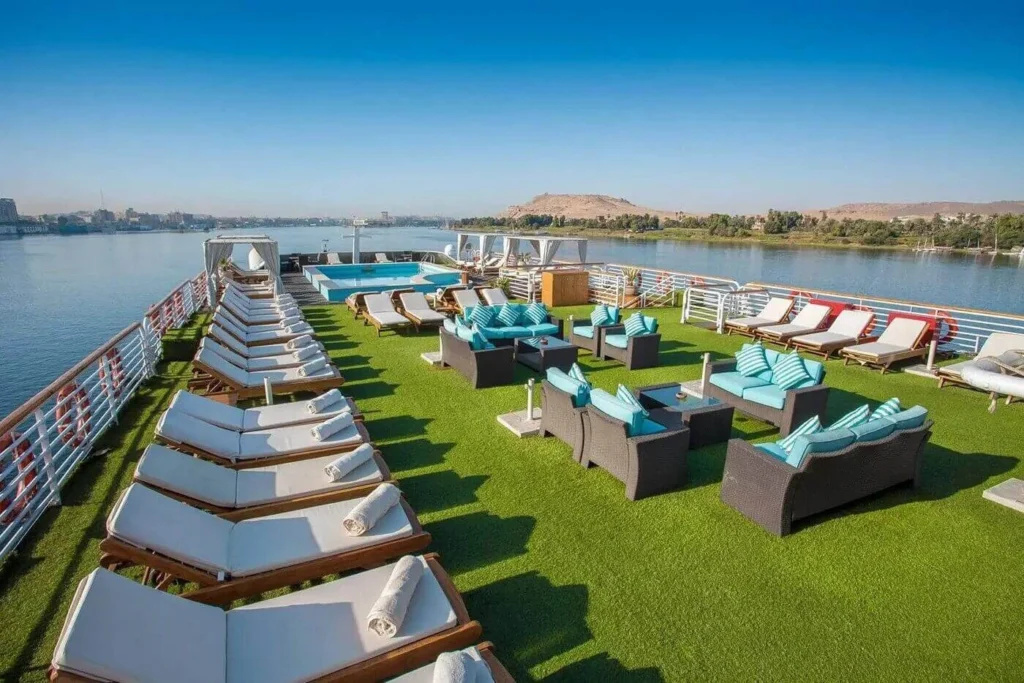
The extra night on the four-night direction is mostly sailing time — which is the part people remember.
The one real difference: 3 nights or 4
This is the difference that actually shows up on your invoice and in your calendar, and it catches people out constantly.
Aswan to Luxor is almost always 3 nights
You board at Aswan on a Friday or a Monday depending on the ship, sail north with the current, and disembark at Luxor on the fourth day. Three nights on board. It is the shorter, cheaper, faster version of the same trip — the 3-night Aswan to Luxor itinerary.
It works well if you are fitting Egypt into ten days or less, or if the cruise is one component of a longer trip rather than the centrepiece.
Luxor to Aswan is almost always 4 nights
You board at Luxor, sail south against the current, and disembark at Aswan on the fifth day. Four nights. The extra night is not padding — it usually buys you a proper full day in Aswan at the end, which is the part most people say they wish they had more of. See the 4-night Luxor to Aswan itinerary, or our day-by-day breakdown of what happens on each one.
There are exceptions to both patterns, particularly on dahabiyas and on the longer round trips. But if someone quotes you a 3-night cruise, it is going to be Aswan to Luxor, and if they quote 4 nights, it is going to be the other way. That rule holds nine times out of ten.
Side by side: the two directions compared
Luxor → Aswan
Aswan → Luxor
Typical length
4 nights
3 nights
Share of ships sailing it
Roughly 80%
Roughly 20%
Current
Against (upstream)
With (downstream)
Temple chronology
Oldest to newest
Newest to oldest
Typical price for the same cabin
Higher — one more night
Lower
Availability on short notice
Better
Tighter
Ends in
Aswan — slower, quieter
Luxor — busier, bigger
Best paired with
Cairo first, Abu Simbel after
Red Sea or Cairo after
Our rule of thumb: if you have the days, sail Luxor to Aswan. The fourth night is the one people say they would not give back.
Sailing with the current versus against it
The Nile runs south to north. Aswan sits upstream of Luxor by about 210 kilometres of river, which means going Aswan to Luxor you are travelling downstream with the flow, and going the other way you are pushing against it.
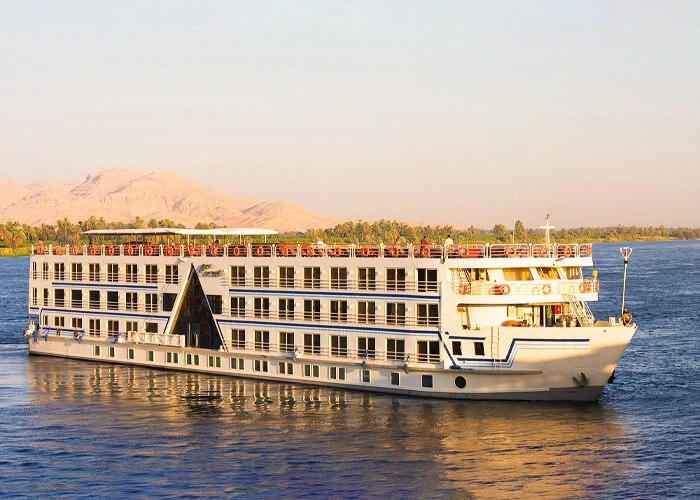
On a modern engine-driven cruise ship this makes almost no difference to your experience. The boats are not sailing; they are motoring. You will not feel it, and the itineraries are built so that you arrive where you need to be regardless.
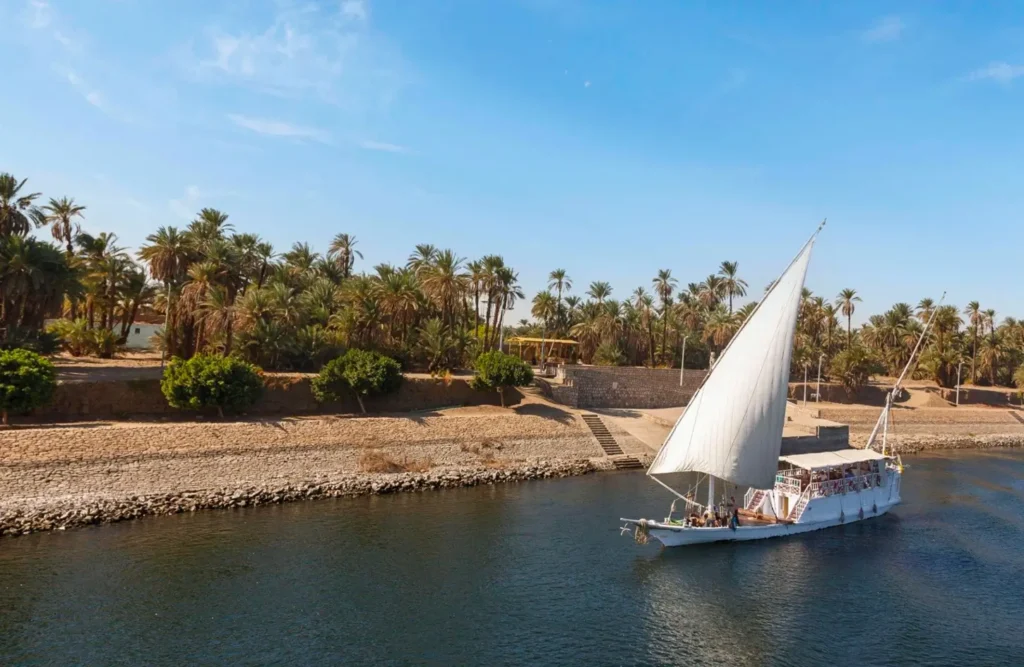
Where it does matter is on a dahabiya. Those genuinely sail, and wind and current shape the day. Dahabiya operators overwhelmingly run Aswan to Luxor for exactly this reason — it is the direction the boat wants to go. If you are booking a dahabiya, the direction is largely decided for you.
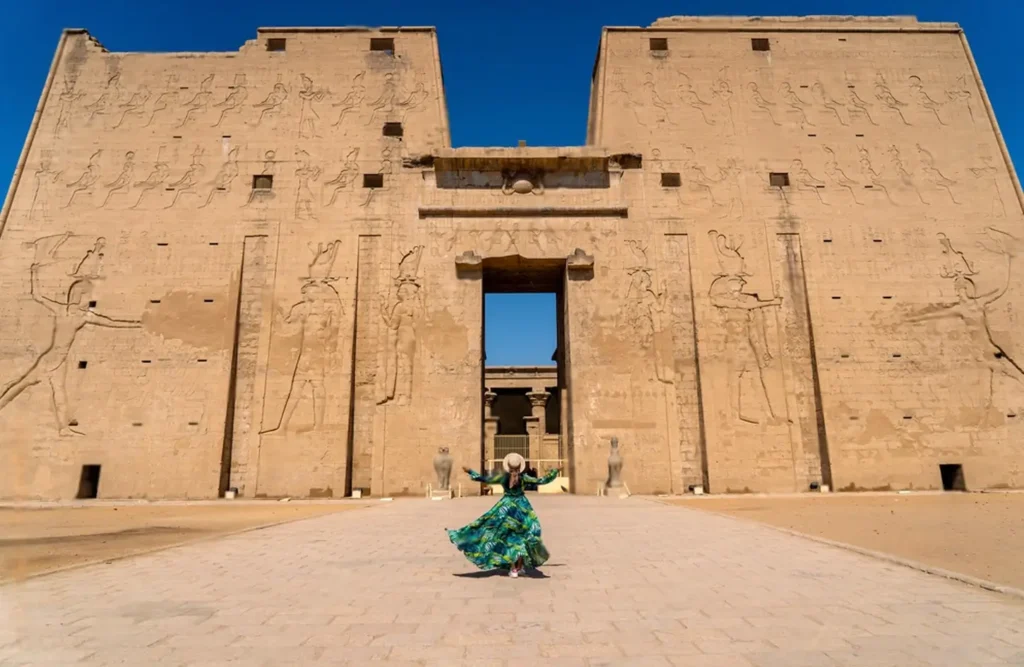
Edfu is visited from the dock by horse carriage in both directions; only the hour changes.
The one thing nobody mentions: the Esna lock
Between Edfu and Luxor there is a lock at Esna, and every ship in both directions has to pass through it. It is the only genuine bottleneck on the river.
In high season boats queue. Sometimes for twenty minutes, sometimes for two hours, occasionally longer if a barge has priority. Crews handle it by scheduling the transit overnight or during lunch, so most passengers sleep or eat through it without ever knowing it happened. But it is the reason a cruise itinerary that looks generous on paper can feel compressed on the day, and it is the reason your ship’s departure time from Edfu is not really negotiable.
It affects both directions equally. We mention it because if your boat is sitting still for an hour somewhere between two temples and nobody has explained why, this is almost certainly why. Ask the reception desk — they will know the queue position.
Why roughly eight in ten ships sail Luxor to Aswan
Not for any romantic reason. It is logistics.
Luxor has the bigger airport, the bigger hotel inventory, and the deeper tourism infrastructure. Most Egypt itineraries put Cairo first, then fly south, and Luxor is the natural first stop coming out of Cairo. The fleet arranged itself around that pattern decades ago and has never had a reason to change.
The practical consequence for you: Luxor to Aswan gives you a much wider choice of boat on any given date. If you have your heart set on a particular ship, or you are booking inside eight weeks, or you are travelling over Christmas, that wider choice is genuinely useful. It also tends to mean more competitive pricing, because more boats are chasing the same passengers.
Aswan to Luxor departures are fewer, and on peak dates they sell out first precisely because they are the cheaper, shorter option.
The temple chronology argument, and why it is oversold
You will read that Luxor to Aswan is better because you see the temples in the order they were built. That is true, and it is a real thing, and it is also less important than the people making the argument suggest.
Here is the actual chronology. Karnak and Luxor Temple and the Valley of the Kings are New Kingdom — roughly 1500 to 1100 BC, the era of Hatshepsut, Ramesses, Tutankhamun. Edfu, Kom Ombo and Philae are Ptolemaic, built more than a thousand years later, between about 300 and 30 BC, when Greek pharaohs were ruling Egypt and copying an architectural style that was already ancient to them.
So going south from Luxor, you do move forward through time. You watch the style get later, more decorated, more complete — Edfu is the best-preserved temple in Egypt largely because it is the youngest of the big ones.
Does experiencing that in order change your trip? For a handful of people with a real interest in the period, yes, a little. For most travellers, a good Egyptologist explaining the same thing on day two does the identical job. We have run this both ways for years and nobody has ever come back and said the sequence ruined it.
Luxor Temple is walkable from the mooring in either direction — it is the one site that never depends on which way you sailed.
How each direction changes your flights
This is the part worth actually thinking about, because it costs money.
Almost everyone flies internationally into Cairo. From there you take a domestic flight south — about an hour to Luxor, a bit longer to Aswan — and then reverse the process at the end.
Luxor to Aswan works cleanly if your trip is Cairo first, then cruise, then home. You fly Cairo to Luxor, cruise south, and fly Aswan back to Cairo for your international connection. It also puts you in Aswan at the end, which is where you want to be if you are adding Abu Simbel — it is a day trip from Aswan, roughly three and a half hours each way by road, and doing it at the end of the cruise rather than the start means you are not losing a night’s sleep before you board.
Aswan to Luxor makes more sense if you are continuing east afterwards. Luxor to Hurghada is about four hours by road, so if you are finishing with a few days on the Red Sea, ending in Luxor saves you a flight. It also works if you want Abu Simbel done and dusted on day one before the cruise starts.
Which direction suits your trip?
Choose Luxor to Aswan if
You want the widest possible choice of ship
You are booking late, or travelling at Christmas, New Year or Easter
The extra night is worth it to you — and it usually is
You are adding Abu Simbel and would rather do it after the cruise
You want to finish somewhere calm rather than somewhere busy
Choose Aswan to Luxor if
You are on a tighter budget — one fewer night is real money
Your whole Egypt trip is ten days or less
You are heading to the Red Sea afterwards
You are booking a dahabiya, in which case this is the direction anyway
You would rather end in Luxor, where the West Bank alone can absorb another two days
Aswan is the calmer end of the route whichever way you arrive, and it is where the felucca afternoon happens.
What matters far more than direction
If you take one thing from this page, take this. In fifteen years of running these trips, the things that determine whether someone comes home delighted or disappointed are, in order:
Your guide. An Egyptologist who can make Kom Ombo land is worth more than every other variable combined. A bad one turns four temples into four car parks.
The boat itself. Not the star rating on paper — the actual condition. Ships below four stars can have unreliable air conditioning, and you will be on board for at least three nights.
Your cabin’s position. Upper decks get bigger windows and more light. Cabins at the stern get engine noise. This is a small decision with an outsized effect on how you sleep.
Group size. A 250-passenger ship arriving at Edfu alongside four others is a different morning to a 40-passenger one.
The direction you sail. A distant fifth.
Book the right boat with the right guide on dates that work, and take whichever direction that comes in. That is genuinely the whole answer.
Frequently asked questions
Is Aswan to Luxor or Luxor to Aswan better?
Neither is better. Both visit the same temples. Luxor to Aswan is typically 4 nights with more ships to choose from; Aswan to Luxor is typically 3 nights and cheaper. Choose based on how many nights you want and which ship is available.
Do you see different temples depending on the direction?
No. Both directions include Philae, Kom Ombo, Edfu, Karnak, Luxor Temple and the West Bank tombs. The stops are identical; only the order changes.
Which direction is cheaper?
Aswan to Luxor, because it is usually 3 nights rather than 4. Expect to pay roughly 20 to 25 percent less for the equivalent cabin on the equivalent ship — full figures in our cost guide.
Is a 3-night Nile cruise long enough?
Yes for most first-time visitors. Three nights covers every major temple between the two cities. What it does not leave is much unstructured time on deck, which is the part people tend to miss.
Which direction is faster?
Aswan to Luxor sails with the current, so it is marginally quicker. On an engine-driven ship the difference is not something you would notice. On a dahabiya it is more meaningful, which is why almost all dahabiyas sail that way.
Can I do a round trip and see both directions?
Yes. Seven-night round trips from Luxor or Aswan exist and give you more time on the water. Be aware that the second half retraces the first, and some travellers find the return leg slow. Four nights one way plus extra land time in Luxor or Aswan is often the better use of the same week.
Does the direction affect crowds at the temples?
Slightly. Ships bunch up at Edfu and Kom Ombo because everyone is working to the same lock timings at Esna. A smaller ship or an earlier start affects your crowd experience far more than which way you are pointing.
Not sure which direction suits you?
Send us your dates and a rough budget — a specialist replies with three ships across categories, live availability and a written price. No online payment.
Written byMagdy Fattouh38 guides published on this site
Magdy Fattouh is a Cairo University history graduate and the writer behind the guides on this site. Over 13 years he has researched and written about Egypt's history, its monuments and how to travel to them — from the pharaohs and the temples to month-by-month planning, ship comparisons and day-by-day itineraries. He speaks English and Arabic, and reviews every guide here for accuracy before it is published.
Read more by Magdy Fattouh →
We use essential cookies to make this site work. With your permission we also use Google Analytics cookies to understand how the site is used, so we can improve it. We never use cookies for advertising. Cookie Policy
Strictly necessaryRemember your cookie choice and keep the site secure. Always on.
Always on
Google Analytics: which pages are visited and how people find us. No personal profile, no advertising.


 Cruises