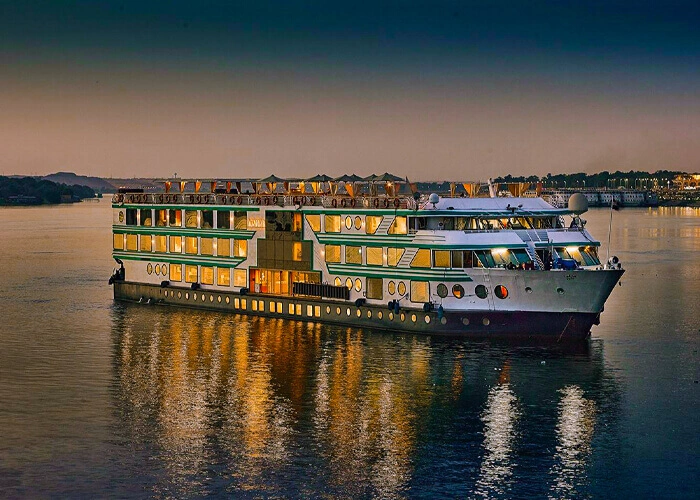
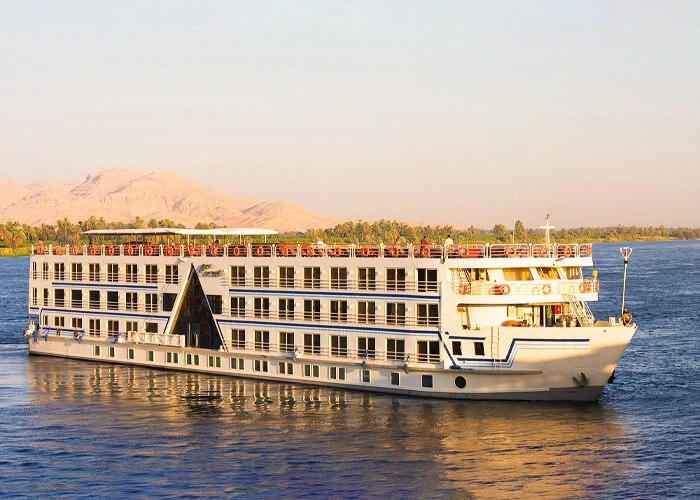
A Nile cruise suits couples, families, solo travelers and older travelers alike: you unpack once, the ship moves between the temples and you can skip any excursion. What differs is the one choice that decides the trip — a small ship for couples, the right cabin for families, a single cabin or low season for solo travelers, and a ship with an elevator for anyone who finds stairs hard.
A Nile cruise suits almost everyone — couples, families, solo travelers and older travelers — because you unpack once, the ship carries you between the temples, and you can skip anything you like. What changes from one kind of traveler to the next is the single decision that makes or breaks the trip: the size of the ship for a couple, the cabin for a family, the single supplement for a solo traveler, and the stairs for anyone with limited mobility.
We plan trips for all four groups. This page is the short version of each, with a link to the full guide for the one that is you.
Key takeaways
Couples: choose a small luxury ship or a dahabiya — passenger count matters more than anything else.
Families: book the cabin first — connecting cabins or a family cabin, never one room with a rollaway.
Solo travelers: ask for a dedicated single cabin, or sail in low season when supplements soften.
Older travelers: ask whether the ship has an elevator, and take a main-deck cabin near the restaurant.
November to March suits every group; June to August does not suit children or older travelers.
What every traveler gets from the format
The reasons a Nile cruise works are the same whoever you are traveling with.
One unpack. You check in once and the hotel moves with you — no repacking, and no second lobby.
The ship does the traveling. Much of the sailing happens while you eat, sleep or sit on deck, so the distance between temples costs you very little of your day.
Guided, short excursions. Each site is a visit of an hour or two with an Egyptologist, then back to an air-conditioned cabin. Meals, transfers, tickets and guiding are arranged for you — the detail is in what is included in a Nile cruise.
You can skip anything. Nobody minds, and the ship stays staffed all day. A morning by the pool instead of a fourth temple is a normal choice for a tired child, a jet-lagged couple or a traveler whose knees have done enough.
At a glance: the one thing that matters for each trip
Who is traveling
The decision that matters
What to ask for
Full guide
Couples and honeymooners
How many people are on the ship
A luxury ship under 80 guests or a dahabiya; an upper-deck, river-facing cabin
What makes a Nile trip romantic is quiet: dinner on deck as the boat moors somewhere with no town in sight, and long afternoons with nothing scheduled. What ruins it is a large ship — buffet lines, crowded landings, and four boats moored side by side so your window looks into someone else’s cabin.
So the choice of ship comes first. A luxury ship with fewer than 80 guests gives you a pool, a proper bar and a larger cabin; a dahabiya — a traditional sailing boat with a handful of cabins — gives you real quiet and moorings at islands rather than town docks. The comparison is in dahabiya vs Nile cruise.
Take more than three nights — five or more if you can. Three is short enough that you spend the first evening settling in and the last one packing. November and March are the best months for this trip. Tell us it is a honeymoon when you book, not at check-in: most ships arrange something for the cabin or a dinner, and it needs notice. Our honeymoon trips add Cairo before the river and a few nights on the Red Sea after it.
An hour on a felucca at Aswan costs very little and suits every kind of traveler — couples most of all.
Families
A Nile cruise is a trip built for adults that children can enjoy, and whether it works depends mostly on two things: the cabin and the pace of the mornings.
The cabin decides everything. Nile cabins are small, so four people in one room with a rollaway bed is a long few nights. Ask for connecting cabins or a genuine family cabin; two cabins next to each other on the same deck are the fallback. The layout questions are covered in which deck to book.
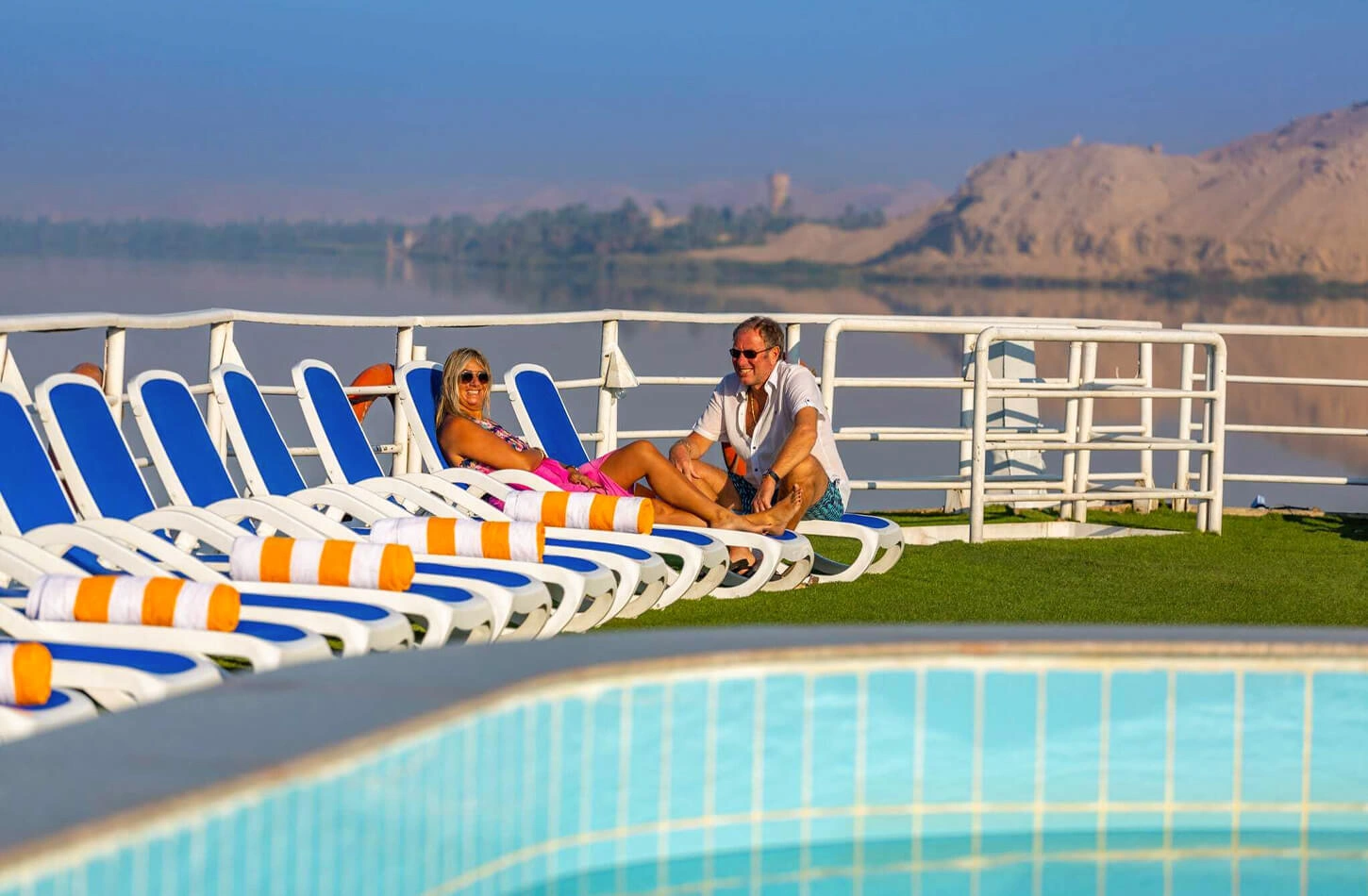
Children remember the ship as much as the temples. The pool, the Esna lock, the felucca at Aswan, the crocodile museum at Kom Ombo and the tombs in the Valley of the Kings are the parts they talk about afterwards. Long guided explanations and a full two hours at Karnak are the parts to shorten. There is no kids’ club and no childcare on any Nile ship, so plan the afternoons around the pool.
Children under six travel free, and ages six to eleven pay around half the adult rate when they share with two adults. Avoid June to August with young children — the heat is the real risk. Our family trips combine Cairo and the cruise at a pace that suits children.
Solo travelers
A cruise is one of the easiest ways to travel alone: you eat at shared tables, excursions are guided groups, and there is no evening logistics problem because you are already home. Luxor and Aswan are also the two easiest Egyptian cities to travel alone in, including for solo women.
The obstacle is money. Cruise prices assume two people per cabin, so a single supplement of 50 to 80 percent is normal. There are three ways round it:
A dedicated single cabin. Some ships have two or three, priced far better than a double with a supplement. They are rarely shown online — ask for them by name.
Low season. From May to September, when ships need to fill cabins, supplements often soften or disappear.
A smaller ship. Not cheaper, but on a small ship you become part of a group by the second lunch; on a very large one you can go four days without a real conversation.
Safety questions, including advice for solo women, are answered in is Egypt safe.
Older travelers and limited mobility
For older travelers the format is close to ideal: one unpack, short excursions and the freedom to skip any of them. The limits are stairs on board and steps ashore.
Ask about the elevator. Most Nile ships have none, which means stairs between your cabin, the restaurant and the sun deck several times a day. Of the 61 ships in our fleet whose layout we have recorded, 9 have an elevator, and every ship’s page on this site says whether it does — you can check them side by side on compare ships. Without an elevator, a main-deck cabin on the same level as the restaurant removes most of the climbing.
Plan around the Valley of the Kings. It is the hardest site on the route: tombs are corridors cut down into the rock, with steep ramps and handrails that come and go. Choosing one or two tombs rather than three costs very little of the trip. Edfu and Kom Ombo, by contrast, are easy.
Travel between November and March. Heat affects older travelers more than anyone else, and the summer months are best avoided altogether.
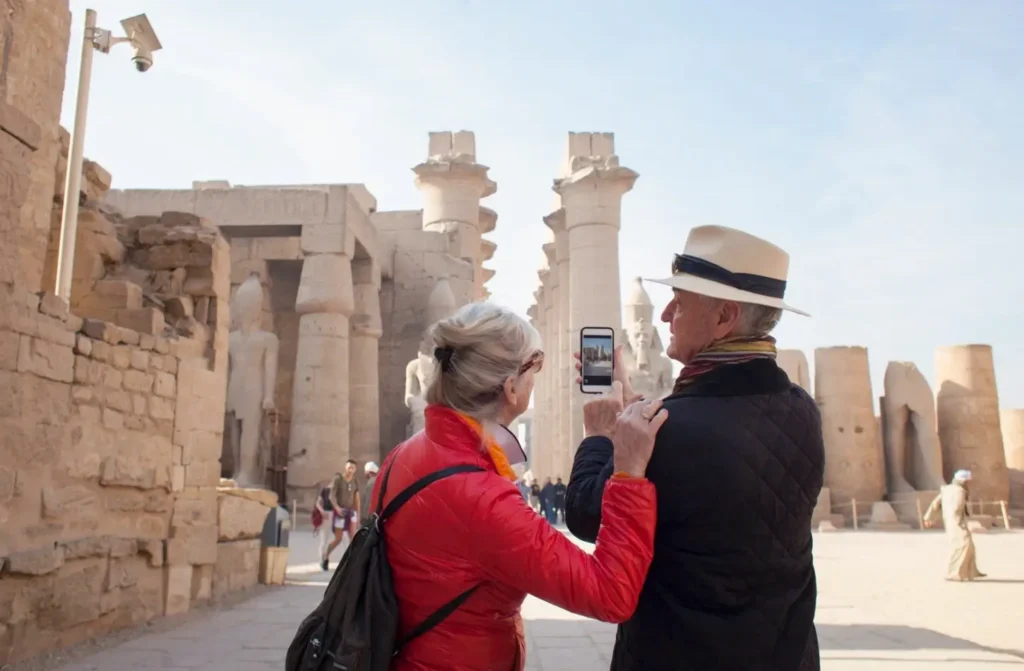
Luxor Temple is one of the easy sites: compact, and walkable at your own pace.
When several generations travel together
Grandparents, parents and children on one ship is one of the most rewarding ways to do this trip, and it is simpler than it sounds because the needs overlap. Pick a ship that has both an elevator and a proper pool, book connecting cabins on the main deck, and let each person skip what does not suit them — the ship stays staffed all day. A private guide for your party is also available on every ship at extra cost, which lets the pace follow the slowest member rather than the group.
For a larger party, a whole dahabiya can be chartered, so the boat, the timetable and the moorings are yours.
When to go, whoever you are
November to March suits every group: warm days, cool evenings and comfortable walking at the temples. June to August is too hot for young children and older travelers, though it is when solo travelers find the best supplements. The week between Christmas and New Year is the busiest and most expensive of the year — see Christmas and New Year on the Nile. The full month-by-month picture is in the best time for a Nile cruise.
Frequently asked questions
Who is a Nile cruise best for?
Almost anyone who wants to see the temples of Upper Egypt without changing hotels. It suits couples, families with school-age children, solo travelers and older travelers, provided each chooses the right ship and cabin for their trip.
Is a Nile cruise good for a honeymoon?
Yes, on the right boat. Choose a luxury ship with fewer than 80 guests or a dahabiya, an upper-deck river-facing cabin, and travel in November or March. Large ships are what spoil it.
Can you take children on a Nile cruise?
Yes. There are no kids’ clubs, but the pool, the felucca and the tombs keep children busy. Book connecting cabins or a family cabin, keep the mornings short, and avoid June to August.
How do solo travelers avoid the single supplement?
Ask for a dedicated single cabin, which some ships have and rarely list online, or sail between May and September, when supplements often soften or are waived.
Do Nile cruise ships have elevators?
Most do not. Of the 61 ships in our fleet whose layout we have recorded, 9 have an elevator. Without one, a main-deck cabin near the restaurant removes most of the stairs.
Tell us who is traveling
Send us your dates and a rough budget — a specialist replies with three ships across categories, live availability and a written price. No online payment.
Written byMagdy Fattouh39 guides published on this site
Magdy Fattouh is a Cairo University history graduate and the writer behind the guides on this site. Over 13 years he has researched and written about Egypt's history, its monuments and how to travel to them — from the pharaohs and the temples to month-by-month planning, ship comparisons and day-by-day itineraries. He speaks English and Arabic, and reviews every guide here for accuracy before it is published.
Read more by Magdy Fattouh →
Ten to seventeen hours depending on your coast, and a seven to ten hour time shift. Why twelve days beats seven, how to sequence Cairo, and what Thanksgiving…
Five hours direct from London with a one-hour time difference. What ATOL does and does not cover on a direct booking, sterling costs, and why February half term…
We use essential cookies to make this site work. With your permission we also use Google Analytics and Microsoft Clarity cookies to understand how the site is used, so we can improve it. We never use cookies for advertising. Cookie Policy
Strictly necessaryRemember your cookie choice and keep the site secure. Always on.
Always on
Google Analytics and Microsoft Clarity: which pages are visited, how people find us and where they get stuck. No personal profile, no advertising.








 Planning