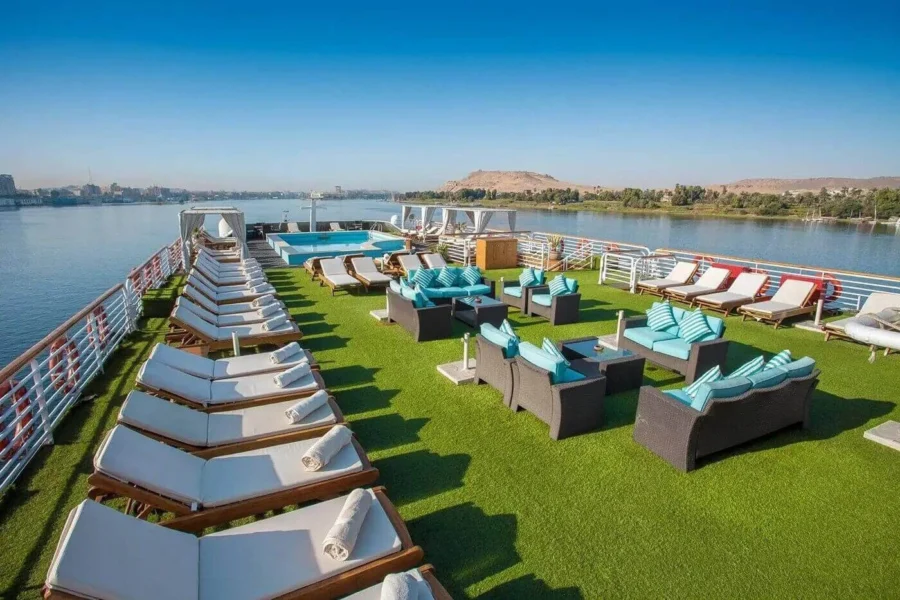
The middle deck is the safe choice: full-height windows, away from the engine and below the deck-chair noise. The upper deck has the best view and the most footfall overhead. The lower deck is cheapest and often has smaller windows near the waterline. On most ships the difference between decks is smaller than the difference between ships.
Book a middle-of-the-ship cabin on the upper deck. Upper decks get larger windows and more light; the middle of the hull is furthest from engine noise at the stern and anchor noise at the bow. Avoid the lowest deck, where windows sit close to the waterline and cannot open. The difference between the best and worst cabin on the same ship is usually $80 to $200 per person for four nights.
This is the cheapest upgrade available on a Nile cruise and the one most people do not know to ask for. It costs less than the balloon ride and affects every night of the trip.
Key takeaways
The middle deck is the safe choice — full-height windows, away from the engine.
The upper deck has the best view and footfall overhead.
The lower deck is cheapest, often with smaller windows near the waterline.
The difference between ships is bigger than the difference between decks.
How Nile cruise ships are laid out
Almost every vessel follows the same arrangement, which makes this easy to reason about.
Deck
What is there
Price
Sun deck
Pool, bar, loungers — no cabins
—
Upper deck
Best cabins, suites, lounge
Highest
Main deck
Standard cabins, restaurant, reception
Middle
Lower deck
Cheapest cabins, near waterline
Lowest
Three decks of cabins on most ships, four on the largest. The restaurant is usually on the main deck and the lounge on the upper, so a main-deck cabin means the shortest walk to dinner and a bit more corridor traffic outside your door.
A French balcony or a real one is the upgrade most people notice; the deck it sits on matters less.
Why the upper deck is worth it
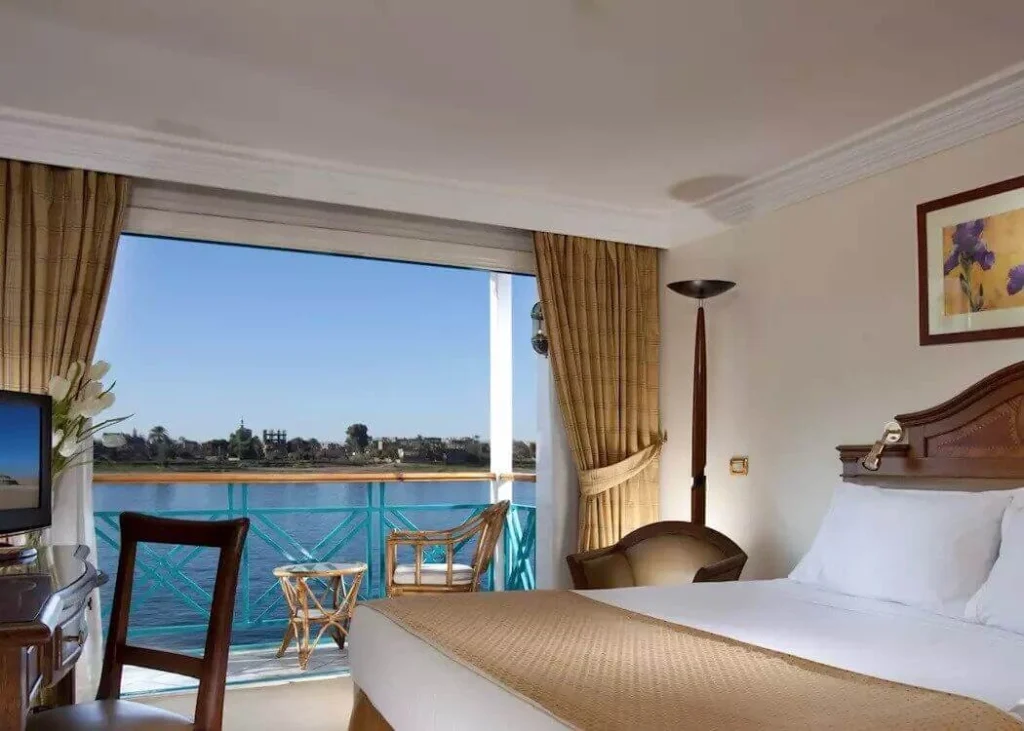
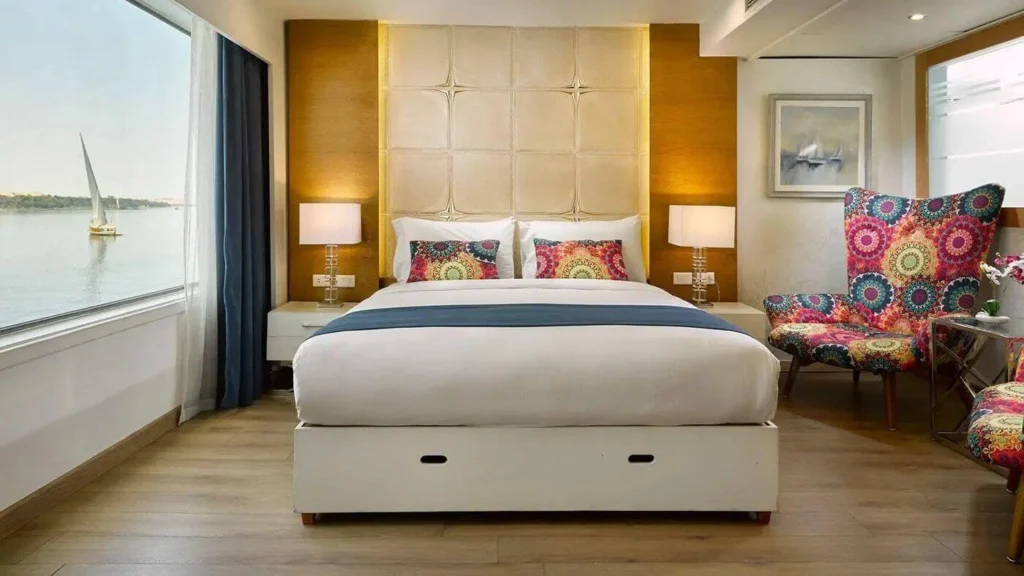
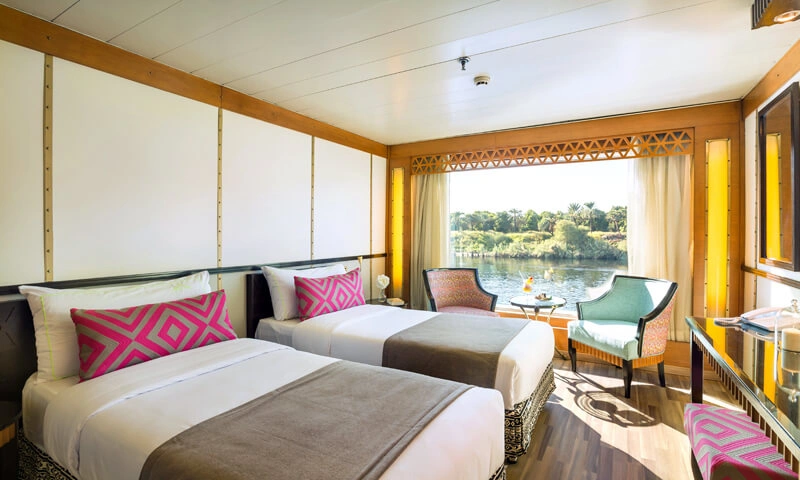
Bigger windows. This is the real difference. Upper-deck cabins typically have full picture windows, sometimes floor to ceiling. Lower-deck cabins have smaller, higher windows because they sit close to the water.
The view actually works. On the lower deck you are near river level, so a good deal of what you see is water and bank rather than landscape. On the upper deck you are looking across the fields.
Less engine. Engines are at the stern on the lower deck. Every deck you go up puts distance between you and the vibration, which matters because a fair amount of sailing happens overnight — including the Esna lock transit.
Closer to the sun deck. Where you will spend most of your afternoons.
Why the middle matters more than the deck
If you can only optimise one thing, optimise position along the hull rather than height.
Stern cabins sit over the engines. Vibration, and on some ships exhaust smell when moored with the generators running. These are the cabins that get discounted, and there is a reason.
Bow cabins are quieter under way but get anchor and mooring noise, which happens at unsociable hours — ships tie up and cast off in the early morning.
Midship cabins avoid both. They also pitch and roll least, which is largely academic on a flat river but does matter on a windy day at Aswan.
A midship cabin on the main deck beats a stern cabin on the upper deck. If you have to choose, choose position.
On a three-night cruise you will barely be in the cabin. Spend the upgrade money on the ship’s category before you spend it on the deck.
What is actually in the cabin
Setting expectations, because Nile cruise photography is generous.
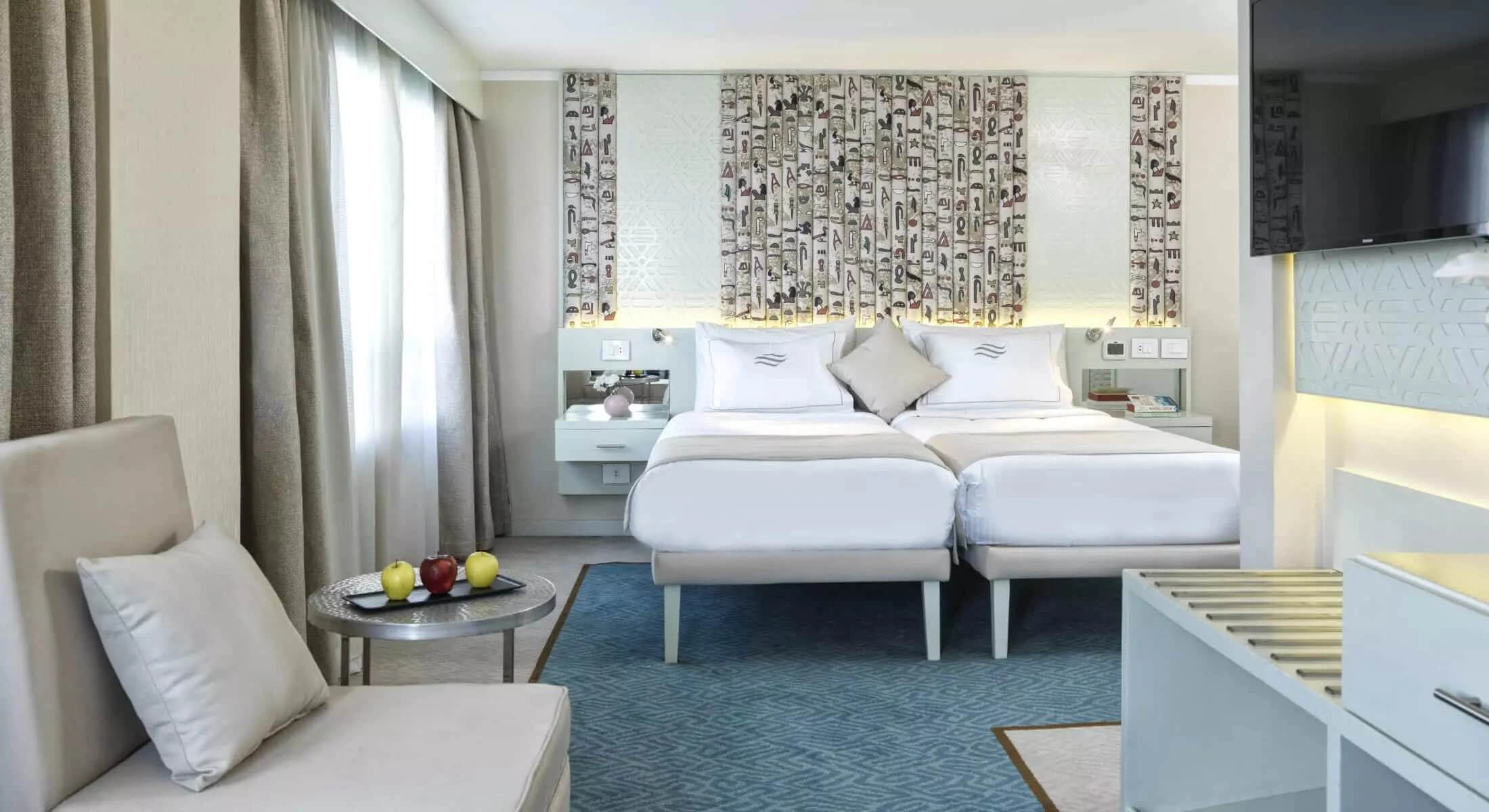
Standard cabin
Suite
Size
15–20 m²
25–40 m²
Bed
Double or twin
Double, sometimes king
Window
Fixed, does not open
Large, sometimes French balcony
Bathroom
Compact, shower
Larger, occasionally a bath
Storage
Narrow wardrobe
Proper wardrobe
Extras
Safe, hairdryer, AC control
Plus minibar, sitting area
Note the window: on the overwhelming majority of Nile ships, cabin windows are sealed. You cannot sleep with the river air coming in, which surprises people. Air conditioning is the only ventilation and it runs cold at night — another reason to pack a layer, as covered in what to wear on a Nile cruise.
Housekeeping services the cabin daily with an evening turndown. Towels change daily, linen usually every second day.
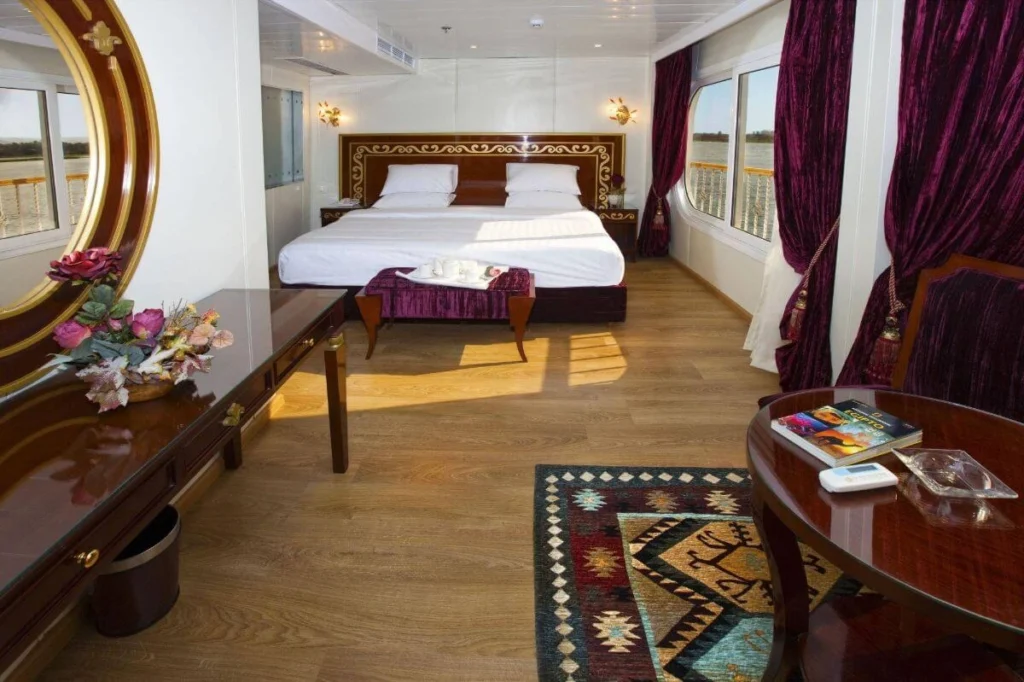
Suites buy floor space and a wider window. On a three-night cruise you will be in the cabin very little.
Are suites worth the money?
Usually not, and we will talk people out of them.
A suite typically costs 40 to 80 percent more than a standard cabin on the same ship. What you get is more square metres and sometimes a French balcony — a door that opens onto a railing rather than a usable balcony.
Here is the thing: you are barely in the cabin. Mornings are excursions, afternoons are the sun deck, evenings are the lounge. Four nights on a Nile cruise involves perhaps two waking hours a day in your room.
The better use of the same money is a standard cabin on a better ship. Moving from a mid-range vessel’s suite to a premium vessel’s standard cabin buys you better food, a smaller passenger count and a better guide ratio — all things you experience all day. Use compare ships to see the difference.
The exceptions: honeymoons, anyone with mobility difficulties who will spend more time aboard, and the 7-night round trip, where the extra space starts to earn its keep.
Noise, and where it comes from
Nile ships are quiet compared with sea-going cruise ships, but the noise that does exist is concentrated in predictable places.
Engines sit at the stern on the lower deck. Under way you get a low vibration rather than a roar; at anchor the generators run all night to keep the air conditioning going, and that is the sound stern cabins live with.
Mooring happens at unsociable hours. Ships tie up and cast off between four and six in the morning, and when boats moor abreast the hulls touch, with crews calling to each other across the gap. Bow cabins hear this most.
The lock at Esna is the one everybody notices, usually somewhere between midnight and four. Engines change note, the hull scrapes the wall, and the boat rises or drops about eight metres.
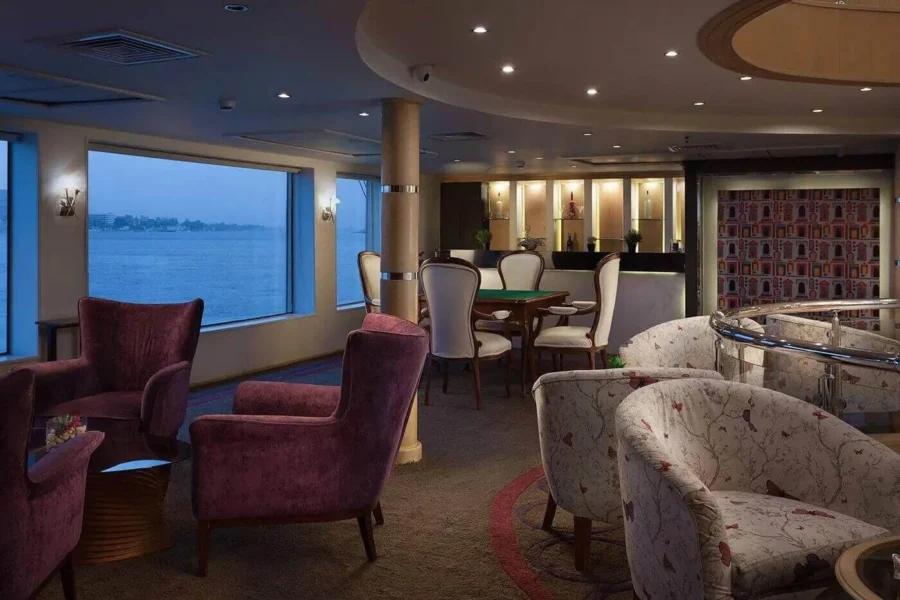
Public spaces. Cabins directly under the sun deck can hear chairs being dragged in the early morning; cabins next to the lounge hear the evening entertainment until about eleven. On a small ship there is often no cabin more than twenty metres from the bar.
None of it is severe. But if you sleep lightly, a midship cabin one deck below the lounge is the quietest place on the boat, and it is worth asking for by name.
Suites are usually on the upper deck, where the windows are largest — and where deck noise carries from above.
Solo travellers and single cabins
Cruise pricing assumes two people to a cabin. Alone, you pay a single supplement of typically 50 to 80 percent on top of the per-person rate.
Some ships have a handful of dedicated single cabins — smaller, usually on the lower deck, and priced far more sensibly than a supplement. They are not advertised much and they sell out early. Ask specifically; do not accept the supplement as the only option.
Supplements also soften in low season, sometimes dropping to 30 percent or being waived when boats need occupancy.
Families and connecting cabins
Most Nile cabins do not take a third and fourth bed comfortably. A rollaway in a 20 m² room with four people in it is a long four nights.
What to ask for instead: connecting cabins, which many ships have and few list online, or a genuine family cabin. Two connecting standards usually cost less than two separate doubles booked independently, and considerably less than a suite.
Our family package is built around ships that have these.
Main-deck cabins sit closest to the waterline, which is the steadiest place to sleep and the cheapest to book.
What to ask before you pay
Which deck, and where along the hull?
Is the cabin number confirmed, or just the category?
Does it face the river, or another ship when moored abreast?
What is the single supplement, or the child rate?
Are connecting cabins available on these dates?
That third question is the sneaky one. In busy season ships moor two, three or four abreast at Luxor and Edfu, so for part of the trip your window may look directly into somebody else’s cabin. Nothing can fully prevent it, but a higher deck reduces it considerably.
Full pricing context is in what a Nile cruise costs. Tell us your dates and we will tell you which cabins are actually free on the ship you are looking at — get in touch.
Frequently asked questions
Which deck is best on a Nile cruise?
The upper deck, midship. Bigger windows, better views, furthest from engine noise at the stern and mooring noise at the bow.
Are lower deck cabins bad?
Not bad, but noticeably worse. Windows are smaller and closer to the waterline, and you are nearest the engines. They are the cheapest cabins for a reason.
How much more does an upper deck cabin cost?
Usually $80 to $200 per person over four nights compared with the lowest deck on the same ship. It is the best-value upgrade on the boat.
Are Nile cruise suites worth it?
Rarely. You spend about two waking hours a day in the cabin. The same money spent on a better ship buys better food, fewer passengers and a better guide ratio.
Do Nile cruise cabin windows open?
Almost never. Windows are sealed and air conditioning is the only ventilation. It runs cold at night, so bring a layer.
How big is a standard Nile cruise cabin?
15 to 20 square metres with a double or twin bed, a narrow wardrobe, a compact shower room and a fixed picture window.
What is the single supplement on a Nile cruise?
Typically 50 to 80 percent on top of the per-person rate. Ask about dedicated single cabins instead — some ships have a few and they are priced far better.
Can four people share a cabin?
Technically on some ships, comfortably on very few. Ask for connecting cabins or a family cabin instead; two connecting standards usually cost less than two separate doubles.
Want help choosing a cabin?
Send us your dates and a rough budget — a specialist replies with three ships across categories, live availability and a written price. No online payment.
Written byMagdy Fattouh38 guides published on this site
Magdy Fattouh is a Cairo University history graduate and the writer behind the guides on this site. Over 13 years he has researched and written about Egypt's history, its monuments and how to travel to them — from the pharaohs and the temples to month-by-month planning, ship comparisons and day-by-day itineraries. He speaks English and Arabic, and reviews every guide here for accuracy before it is published.
Read more by Magdy Fattouh →
The tourist visa is $30 on arrival or online, valid 30 days. Bring clean US dollars in small denominations, and get Egyptian pounds for everything minor. Plus SIMs,…
We use essential cookies to make this site work. With your permission we also use Google Analytics cookies to understand how the site is used, so we can improve it. We never use cookies for advertising. Cookie Policy
Strictly necessaryRemember your cookie choice and keep the site secure. Always on.
Always on
Google Analytics: which pages are visited and how people find us. No personal profile, no advertising.


 Practical