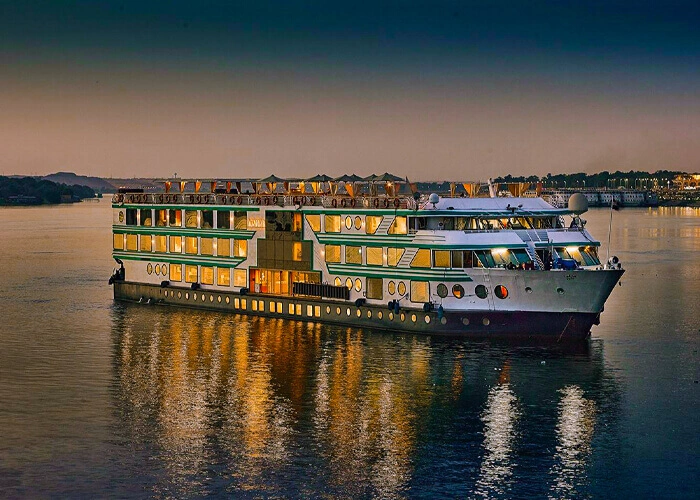
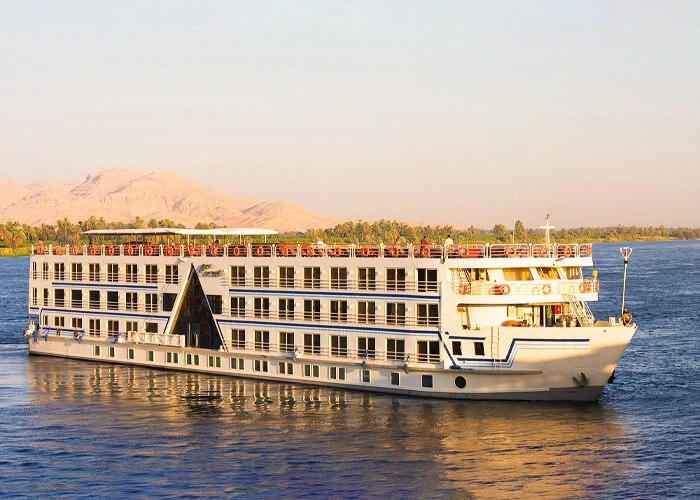
Expect a single supplement of 50 to 75 per cent of the double rate; some ships waive it in low season if you ask. Solo travel on this route is straightforward — excursions are in small guided groups, meals are sociable, and the corridor is heavily policed. Solo women travel it routinely.
A Nile cruise is one of the easier trips in the world to do alone — you are with the same small group each day, the guide knows who you are, and there is no evening logistics problem. The obstacle is money: single supplements run 50 to 80 percent on top of the per-person rate. Dedicated single cabins exist on some ships and are priced far better. Ask for them by name.
Luxor and Aswan are also, by a clear margin, the two easiest Egyptian cities to travel alone in — including for solo women.
Key takeaways
The single supplement is usually 50 to 75 per cent of the double rate.
Some ships waive it in low season if you ask.
Excursions run in small guided groups — you are never sent to a site alone.
Solo women travel this route routinely.
The single supplement, and three ways round it
Cruise pricing assumes two people to a cabin, because the cabin is the unit being sold rather than the bed. Travel alone and you cover most of the gap.
Option
What it costs
Availability
Standard cabin + supplement
+50% to +80%
Always
Dedicated single cabin
+10% to +25%
A few per ship, sell out early
Low-season supplement
+0% to +30%
May–September, often waived
Shared cabin match
No supplement
Rare, must ask directly
Dedicated single cabins are the answer most people never find. They are smaller, usually on the lower deck, and priced sensibly rather than punitively. Ships have two or three of them and they are almost never shown on booking sites. You have to ask.
Low season is transformative for solo travellers. When boats need occupancy, supplements soften or vanish entirely. A May or September sailing can cost a solo traveller less than a shared cabin in November. See cruising in summer and the full cost breakdown.
Cabin shares — pairing you with another same-sex solo traveller — are less common than they used to be but a few operators will still do it. It is worth asking directly rather than assuming.
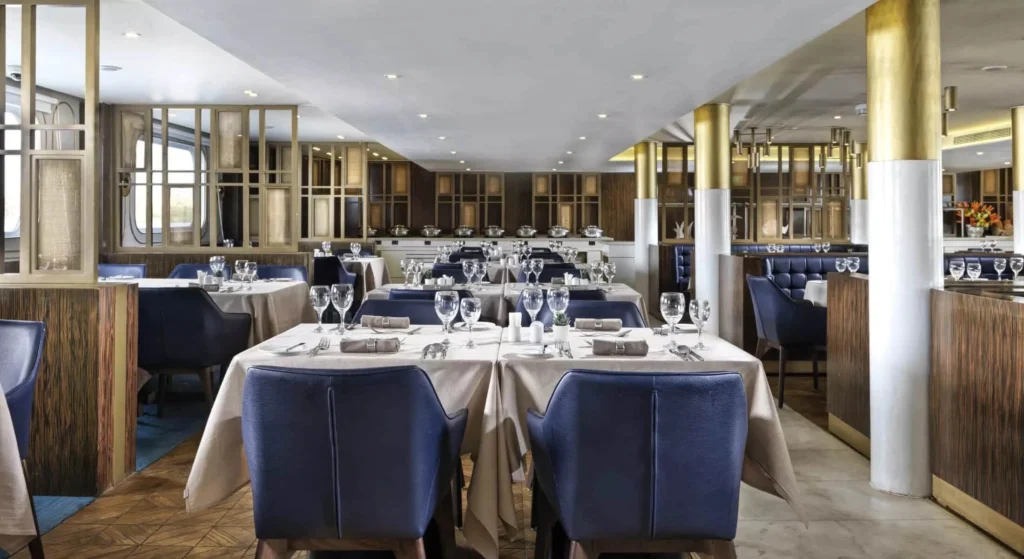
Single-sitting dining means a solo traveller is seated with the same faces each evening rather than alone.
Why a cruise suits solo travel
The structural things that make travelling alone tiring elsewhere are mostly absent here.
You are not eating alone in restaurants. Meals are buffets at shared tables. On a 60-cabin ship you will know faces by the second lunch without having to work at it.
There is no evening logistics problem. No deciding where to eat, no walking back to a hotel after dark, no negotiating a taxi. You are already home.
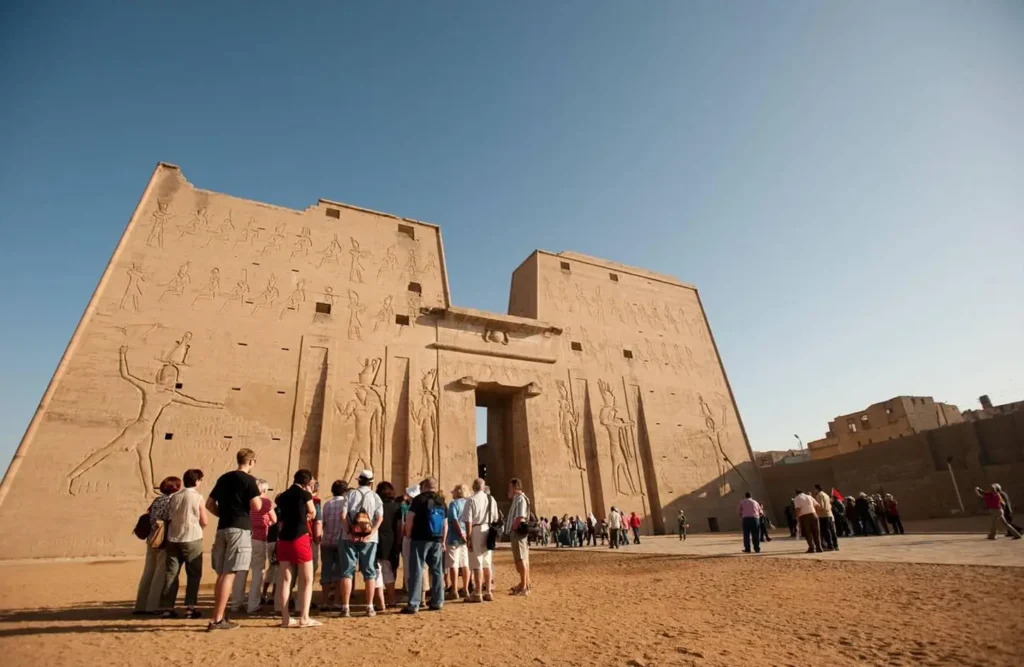
Excursions are group excursions. You are not standing at a temple gate arranging a guide, and you are not paying a private guide rate to see Edfu.
The staff notice you. On a small ship the crew learn who is travelling alone, and in our experience they look out for those passengers more than they do couples.
The honest downsides
It is a couples-heavy environment. Most passengers are travelling in twos, and the evening entertainment assumes it. You may be the only solo traveller aboard.
Table dynamics can be awkward. On some ships tables are assigned; on others it is open seating, and open seating is easier when alone. Ask which your ship uses.
Cabins are small. A 15 to 20 square metre room with a sealed window is fine when you are out all day and less fine if you want to retreat.
Nowhere to escape to. Four days with the same group and no exit. Most solo travellers find this the good part; a minority do not.
Ask about the supplement rather than assuming it. In May, June and September it is the first thing an operator will drop to fill a cabin.
Solo women specifically
Luxor and Aswan are consistently described by solo female travellers as the most comfortable cities in Egypt. Both are compact, heavily touristed, have tourist police at every major site, and have Uber and Careem operating.
The issue solo women actually report is unwanted attention and comments, not threat — persistent vendors, unsolicited conversation, occasional staring. It is tiring rather than frightening, and it drops off sharply once you are back on the ship.
What experienced travellers here do:
Dress modestly away from the ship. Shoulders and knees covered, a scarf to hand. It reduces attention noticeably — see what to wear on a Nile cruise.
Use Uber or Careem rather than street taxis, particularly after dark.
A ring on the left hand reduces unsolicited approaches, and mentioning a husband ends most conversations. Whether you find that acceptable or irritating is your call; it works.
Do not engage to explain. A firm la shukran without stopping works far better than politeness.
Book excursions through the ship rather than accepting offers at temple gates.
Excursions run in groups of about twenty with one Egyptologist — you are never sent to a site by yourself.
Which ship to pick alone
Different logic from a couple’s booking.
Smaller is better. On a 40-cabin ship you become part of a group. On a 150-cabin ship you can go four days without a proper conversation. This is the opposite of the usual advice about paying for space.
Deck matters less. If the choice is a single cabin on the lower deck or a supplement for the upper deck, take the single cabin. You are barely in it.
Ask about the passenger mix. Some ships take large tour groups from one country, which can leave a solo traveller outside the conversation. Operators know this and will tell you if you ask.
Consider a dahabiya. Eight to twenty guests eating at one table is the most sociable format on the river, and several dahabiya operators charge lower single supplements than the big ships.
Who else is on board
Worth knowing before you picture the trip, because the passenger mix on the Nile is fairly consistent.
Most ships carry a majority of couples in their forties to seventies, a smaller number of families in school holidays, and organised groups from a single country — often France, Spain, Italy, Germany or increasingly China. That last category matters for solo travellers: if 60 of the 90 passengers are one tour group speaking one language, the social atmosphere is different from a mixed boat.
Operators know their ships’ typical mix and will tell you if you ask. It is a reasonable question and not a rude one.
The other thing to know is that people are unusually easy to talk to here. Everyone is doing the same excursions on the same schedule, so there is a ready-made conversation at every meal, and by the second day the boat has sorted itself into loose groups. Solo travellers rarely stay solo at dinner unless they want to.
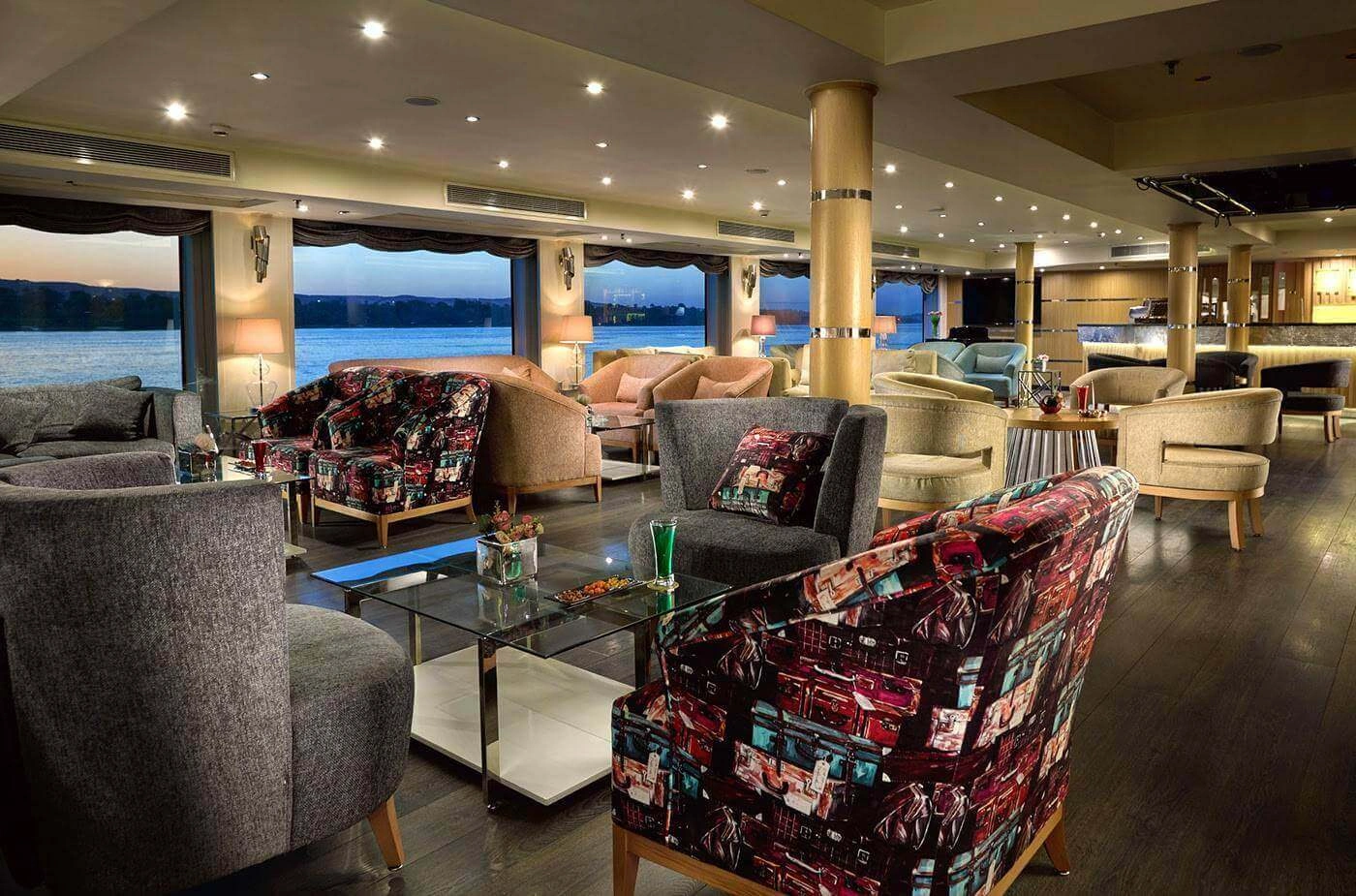
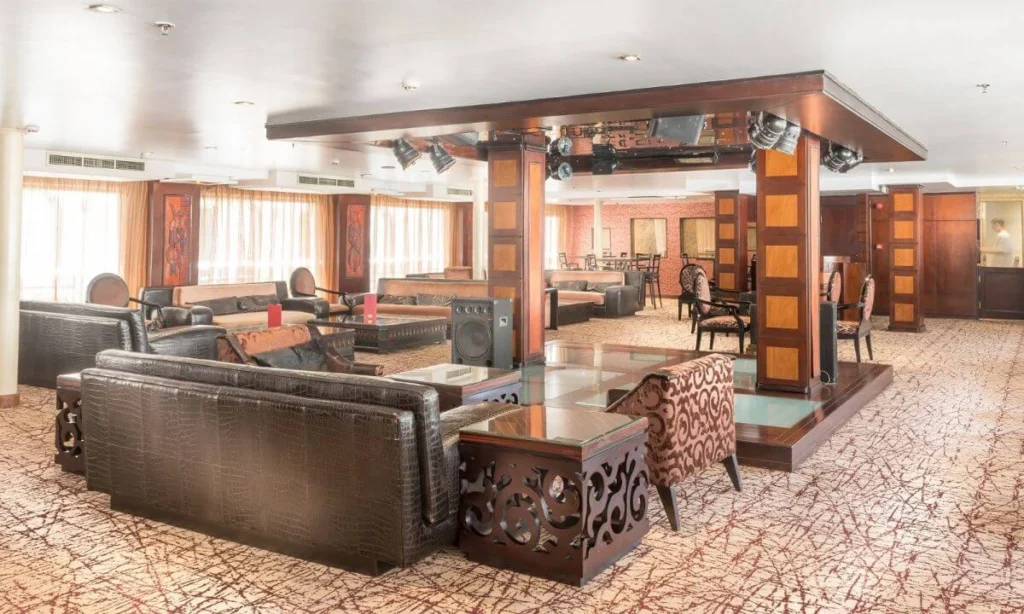
The lounge is where a solo trip stops feeling solo — it is the one space everyone passes through between excursions.
Making the most of travelling alone
A few things that only work when you are on your own.
Go back. The group has forty minutes at Kom Ombo; you can stay behind at the back and take ninety seconds in an empty corner while everyone walks to the coach. Nobody minds if you tell the guide.
Take the early option every time. Solo travellers can accept a 6am start without negotiating it with anyone. Over four days that is four hours of near-empty temples.
Eat ashore once. Aswan’s Nubian restaurants and Luxor’s corniche grills are easy alone, cheap, and the kind of evening that does not happen on a schedule.
Take the felucca. An hour under sail at sunset for a few dollars. It is the best thing in Aswan and it is better alone than in a group.
Practical notes
Tipping is the same per person whether you travel alone or not — roughly $45 to $65 over four nights. See the tipping guide.
Book the balloon and Abu Simbel through the ship. Both are shared excursions, so there is no solo penalty.
Bring a book. The sailing afternoons are long and that is the point.
Tell reception you are travelling alone at check-in. It changes how the crew treat you, in a good way.
If you want us to find which ships have genuine single cabins on your dates, tell us the dates — it is a question that takes us an afternoon and saves several hundred dollars.
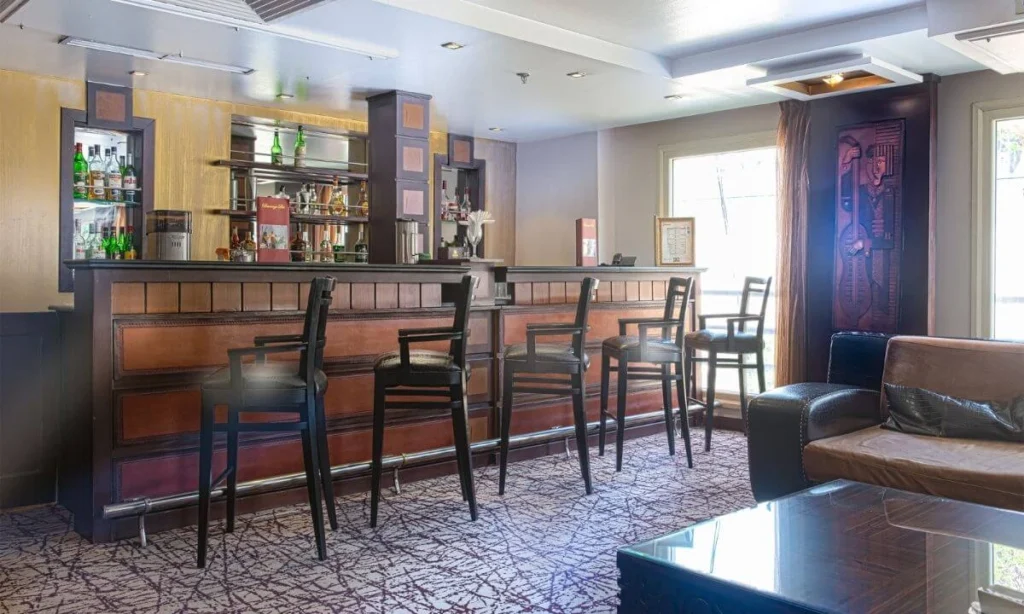
Bars on board keep a tab against your cabin number, so you are not carrying cash between decks.
Frequently asked questions
Can you do a Nile cruise alone?
Yes, and it is one of the easier solo trips available. Meals are shared, excursions are group-based, and there is no evening logistics problem.
What is the single supplement on a Nile cruise?
Typically 50 to 80 percent on top of the per-person rate. Dedicated single cabins, where a ship has them, cost only 10 to 25 percent more and are far better value.
How do I avoid the single supplement?
Ask specifically for a dedicated single cabin, travel in low season when supplements soften or are waived, or ask whether the operator will match you with another solo traveller.
Is Egypt safe for solo female travellers?
Luxor and Aswan are the most comfortable Egyptian cities for solo women. The issue is unwanted attention rather than danger — dressing modestly and using ride-hailing apps both help noticeably.
Will I be the only person travelling alone?
Possibly. Nile cruises skew heavily toward couples. A smaller ship or a dahabiya makes this far less isolating than a 150-cabin vessel.
Which ship is best for solo travellers?
A smaller one. Forty cabins means you become part of a group; 150 means you can go four days without a real conversation.
Do solo travellers pay more for excursions?
No. Abu Simbel, the balloon and the standard temple visits are all shared excursions priced per person.
Is a dahabiya good for solo travel?
Very. Eight to twenty guests at one table is the most sociable format on the river, and single supplements are often lower.
Travelling on your own?
Send us your dates and a rough budget — a specialist replies with three ships across categories, live availability and a written price. No online payment.
Written byMagdy Fattouh38 guides published on this site
Magdy Fattouh is a Cairo University history graduate and the writer behind the guides on this site. Over 13 years he has researched and written about Egypt's history, its monuments and how to travel to them — from the pharaohs and the temples to month-by-month planning, ship comparisons and day-by-day itineraries. He speaks English and Arabic, and reviews every guide here for accuracy before it is published.
Read more by Magdy Fattouh →
Ten to seventeen hours depending on your coast, and a seven to ten hour time shift. Why twelve days beats seven, how to sequence Cairo, and what Thanksgiving…
Five hours direct from London with a one-hour time difference. What ATOL does and does not cover on a direct booking, sterling costs, and why February half term…
We use essential cookies to make this site work. With your permission we also use Google Analytics cookies to understand how the site is used, so we can improve it. We never use cookies for advertising. Cookie Policy
Strictly necessaryRemember your cookie choice and keep the site secure. Always on.
Always on
Google Analytics: which pages are visited and how people find us. No personal profile, no advertising.


 Planning