A dahabiya carries 6 to 12 guests and sails, so it moors at places big ships cannot reach — El Kab, Gebel el Silsila — and the days are quiet. A cruise ship carries 80 to 150, has a pool, a bar and a lift, sails to a fixed schedule and costs roughly half as much per night. Neither is better; they are different holidays.
A dahabiya carries 8 to 20 guests under sail; a Nile cruise ship carries 100 to 300 under engine. The dahabiya costs roughly three times as much per night — around $1,400 versus $480 per person for a comparable trip — and buys you quiet, small moorings the big ships cannot reach, and a pace closer to how the river was travelled before engines. The cruise ship buys you facilities, a fixed schedule and a much lower price.
We sell both, and the honest position is that neither is better. They are different products that happen to follow the same river.
Key takeaways
A dahabiya carries 6 to 12 guests and sails; a cruise ship carries 80 to 150 and motors.
Dahabiyas moor at El Kab and Gebel el Silsila, which the big ships pass.
A cruise ship has a pool, a bar and a lift; a dahabiya has none of them.
Expect to pay roughly double per night for a dahabiya.
Side by side
Dahabiya
Cruise ship
Guests
8 – 20
100 – 300
Cabins
4 – 10
50 – 150
Propulsion
Sail, tug at night
Engine
Price, 4–5 days
From ~$1,400 pp
From ~$480 pp
Pool
Rarely
Always
Evening entertainment
None
Nightly
Meals
Cooked to order, set times
Buffet
Moorings
Islands, villages, sandbanks
Town docks, often abreast
Schedule
Flexible
Fixed
Typical length
5 – 8 nights
3 – 7 nights
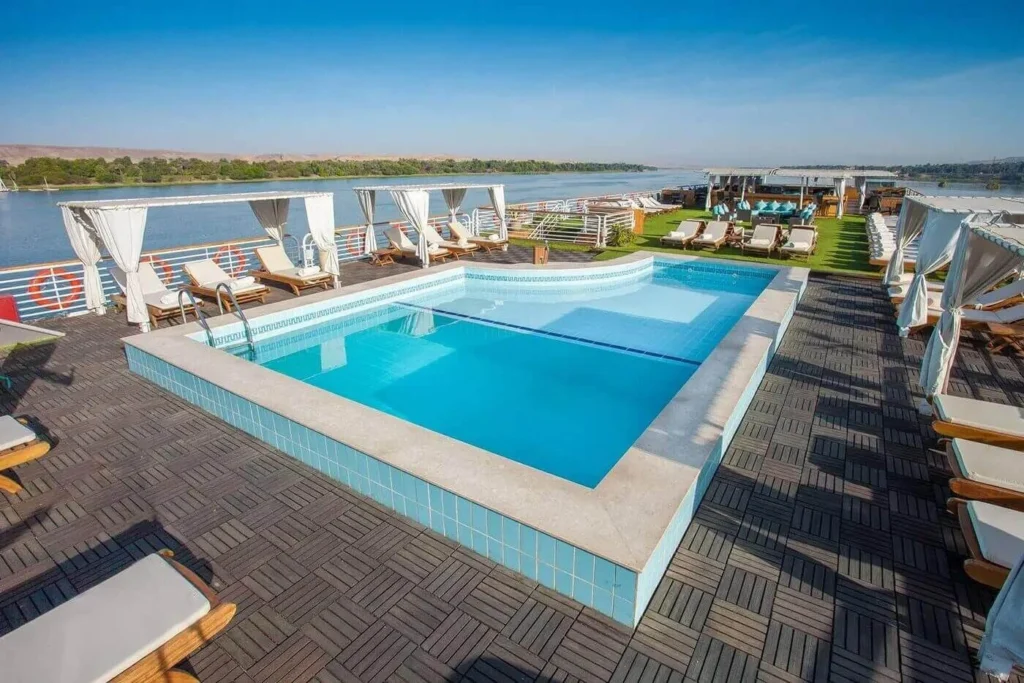
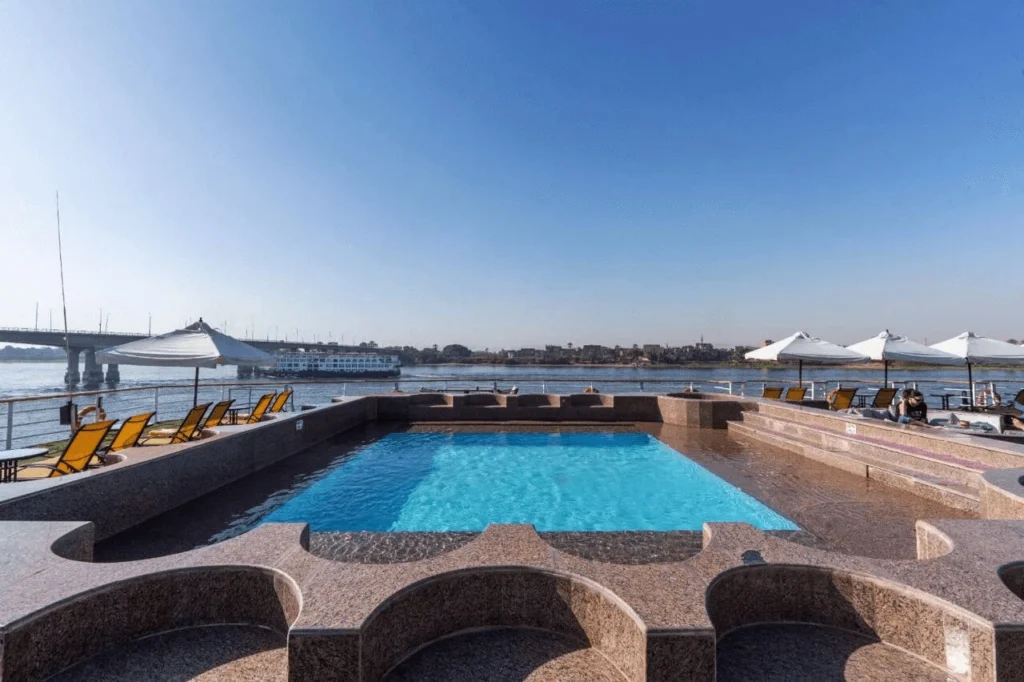
A pool deck is the clearest thing a dahabiya gives up — and the clearest thing a cruise ship offers.
What a dahabiya actually is
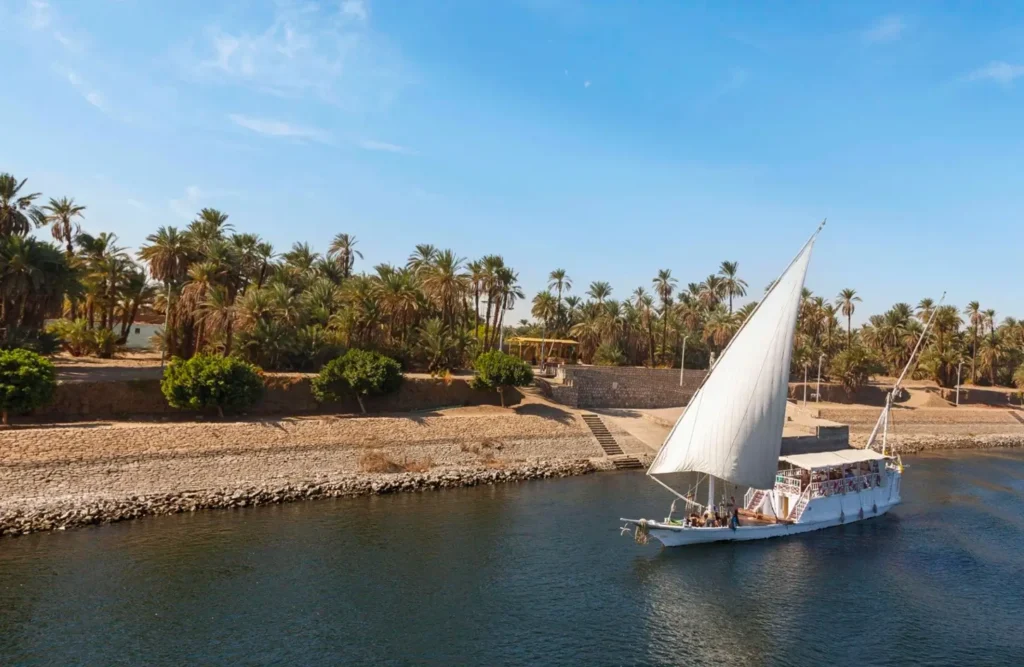
A flat-bottomed wooden sailing boat with two masts, the type that carried travellers up the Nile through the nineteenth century before steamers took over. The modern ones are new builds or restorations, but the hull shape and rig are the same.
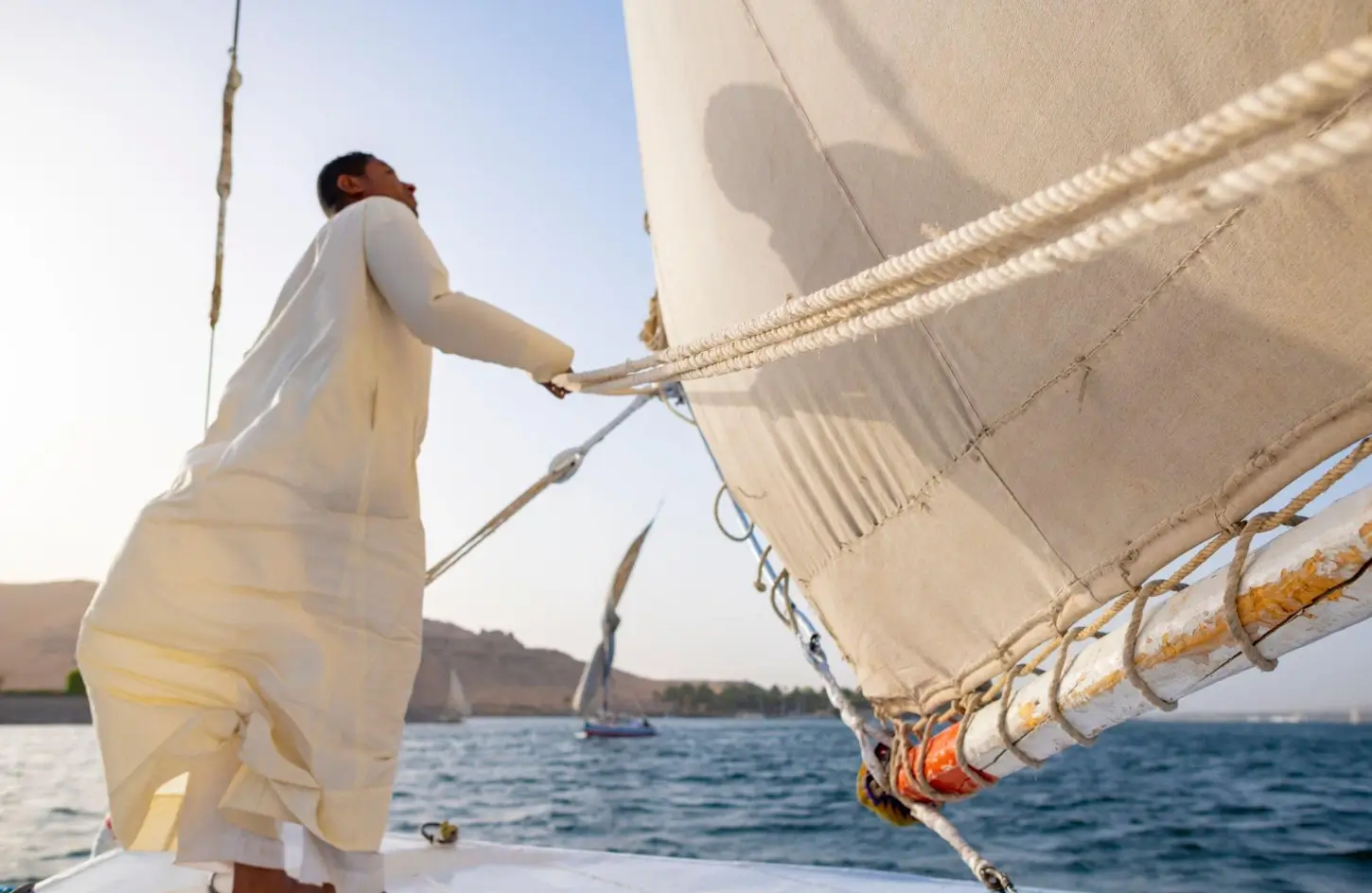
They sail when there is wind, which on the Nile means most afternoons, since the prevailing wind blows north to south against the current — the reason sail worked in both directions for four thousand years. A small tug assists in dead calm and usually tows overnight.
Four to ten cabins. No lift, no pool on most, no gym, no shop. A shaded deck with cushions, a dining area, and a crew of six or eight who will know your name by the second morning.
What the difference feels like
Moorings
This is the biggest practical gap and it is not obvious from a brochure.
Cruise ships have deep draught and need proper docks, so they tie up at Luxor, Esna, Edfu, Kom Ombo and Aswan — and in high season they moor two, three or four abreast, meaning your window can look into another ship’s cabin and you walk through someone else’s lobby to get ashore.
A dahabiya draws very little water. It anchors at sandbanks, islands and villages with no dock at all. You eat dinner on deck with nothing around you but the bank. That, more than the sailing, is what people who have done both talk about.
Crowds at the temples
A dahabiya of twelve people arrives at Edfu as twelve people. A cruise ship arrives as 150, alongside four other ships working to the same lock timings at Esna.
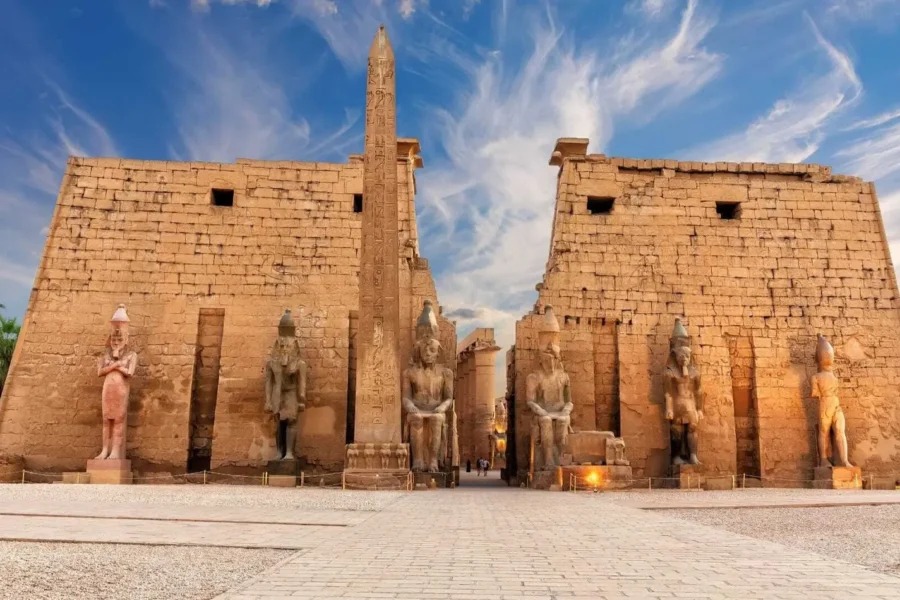
Dahabiyas also visit sites the big ships skip — El Kab, Gebel Silsila, smaller quarry sites — because they can moor there and they have the time.
Pace
Cruise ships run to a timetable set by lock slots and dock allocations. Dahabiyas can wait an extra hour if the light is good. That flexibility is the product.
It is also why dahabiya itineraries run longer — typically five to eight nights against three or four, because sailing is slower. Our 5-night dahabiya from Esna is the usual shape.
Evenings
On a cruise ship: galabeya night, a Nubian band, a belly dancer, a bar with thirty people in it.
On a dahabiya: dinner, then the deck, then bed. Some crews play music. There is no programme.
Whether that reads as peaceful or as boring is the whole decision.
Our rule of thumb: first visit with a week — a cruise ship. Second visit, a honeymoon, or anyone who wants quiet — a dahabiya.
The price gap, honestly
A four or five day dahabiya starts around $1,400 per person. A comparable large-ship cruise starts around $480. That is roughly three times, and on the higher-end dahabiyas the gap widens to four or five.
The reason is arithmetic rather than luxury markup. Eight crew serving twelve guests is a ratio no 150-passenger ship has to fund. The boat is wooden and needs constant maintenance. And there are only so many cabins to spread the cost across.
Worth knowing: many dahabiya operators include gratuities and soft drinks, which large ships almost never do. Compare total cost rather than headline — our cost breakdown covers what each includes, and the tipping guide shows what the extras come to.
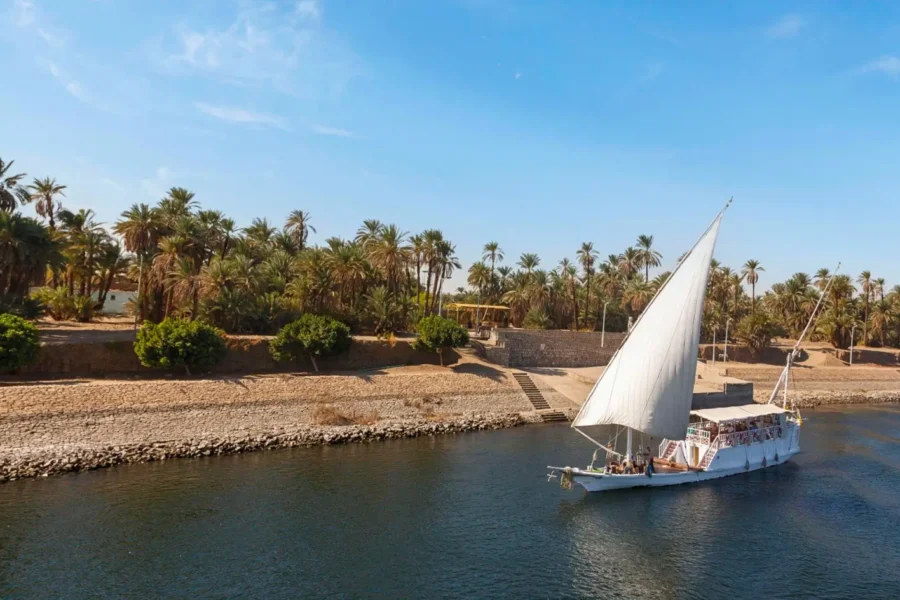
Under sail the boat moves at the river's pace, which is the whole argument for a dahabiya.
Which suits you
Take a dahabiya if
You have done a river cruise before and found the scale wearing
Quiet is what you are actually buying
You have five to eight nights available
You are travelling as a couple, or a group who could take the whole boat
The price difference does not change what else you can do on the trip
Take a cruise ship if
It is your first time in Egypt and you want the classic route done well
You have three or four nights, not seven
You want a pool, a bar and things happening in the evening
You are travelling with children who will be bored on a boat with twelve adults
Budget is a real constraint — and it usually is
What a day on a dahabiya looks like
Different enough from a cruise ship day that it is worth spelling out.
You wake when you wake. There is a wake-up call before a temple morning, but no fixed schedule otherwise, and breakfast is cooked when people appear rather than laid out between seven and nine.
Excursions happen with the whole boat — twelve people, one guide, no paddle held above anyone’s head. Because the group is small, you move through a site faster and can stay longer without holding up a coach.
Then you sail. This is the part that has no equivalent on a big ship: sails up, engine off, and the only sound is water and rigging. The boat makes perhaps five or six knots. Lunch is served on deck while it happens.
Late afternoon the crew look for a mooring — a sandbank, the lee of an island, a village landing. You can swim off the boat in most places, which nobody does from a cruise ship.
Dinner is cooked to order and eaten together at one long table. After that, the deck, and on most boats somebody in the crew produces a drum.
If reading that made you want to book it, book it. If it made you think you would run out of things to do by day three, take the cruise ship — that reaction is the answer, and it is not the wrong one.
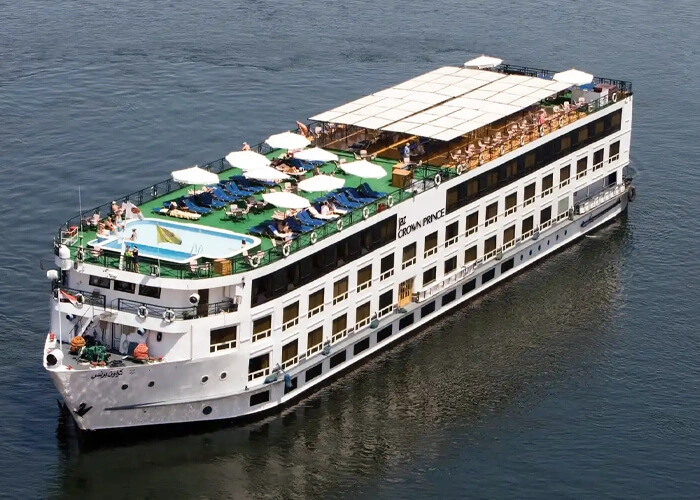
A motor ship carries 60 to 120 guests and moves to a fixed schedule; a dahabiya carries 8 to 24 and moors where it likes.
Two things people get wrong
“A dahabiya is a felucca.” It is not. A felucca is a small open sailing boat for a few hours or a rough overnight with mattresses on deck and no bathroom. A dahabiya has proper cabins, ensuite bathrooms and a kitchen. They look similar and cost very differently.
“Dahabiyas are for luxury travellers.” Some are, and some are simple wooden boats with basic cabins and excellent food. The defining feature is scale, not thread count. Ask what the cabins are actually like rather than assuming the price buys marble.
Direction and season
Almost all dahabiyas sail Aswan to Luxor, or Esna to Aswan — downstream, with the current, because that is the direction the boat wants to go. You rarely get a choice, which is fine given that direction matters less than people think.
Season matters more here than on a big ship. With no pool and less air conditioning on deck, a dahabiya in July is a harder proposition than a five-star cruise ship in July. November to March is the window.
Water levels also matter — before the annual release from the High Dam, some dahabiya itineraries shift. Ask when you book.
Pools, lifts and a spa are motor-ship features. A dahabiya trades all of them for quiet and shallow-water moorings.
Our recommendation
First trip to Egypt, three or four nights, want the temples done properly: take a good five-star cruise ship and spend the money you save on a better cabin and a private guide.
Been before, or you know that crowds are what spoil things for you, and you have the week: take the dahabiya. People who make that choice rarely go back to the big ships.
What is the difference between a dahabiya and a Nile cruise?
A dahabiya is a two-masted sailing boat carrying 8 to 20 guests; a Nile cruise ship is an engine-driven vessel carrying 100 to 300. The dahabiya costs about three times as much per night and moors where the big ships cannot.
Is a dahabiya worth the extra money?
If quiet and small-scale are what you are buying, yes. If you want a pool, evening entertainment and a lower price, no. The temples are identical either way.
How much does a dahabiya cost?
From around $1,400 per person for four or five days, rising to $3,500 and beyond. A comparable large-ship cruise starts around $480.
Does a dahabiya actually sail?
Yes, when there is wind — most afternoons. A small tug assists in calm conditions and usually tows overnight.
Is a dahabiya the same as a felucca?
No. A felucca is a small open boat with no cabins or bathrooms, used for a few hours or a basic overnight. A dahabiya has ensuite cabins, a kitchen and crew.
How long is a dahabiya cruise?
Usually five to eight nights, against three or four for a cruise ship, because sailing is slower and the itineraries include smaller sites.
Are dahabiyas good for families?
Less so. No pool, no other children, and evenings with no programme. Families are generally happier on a cruise ship with a proper pool deck.
Which direction do dahabiyas sail?
Nearly always Aswan to Luxor or Esna to Aswan — downstream, with the current. You rarely get a choice, and it makes little difference to what you see.
Dahabiya or cruise ship — still deciding?
Send us your dates and a rough budget — a specialist replies with three ships across categories, live availability and a written price. No online payment.
Written byMagdy Fattouh38 guides published on this site
Magdy Fattouh is a Cairo University history graduate and the writer behind the guides on this site. Over 13 years he has researched and written about Egypt's history, its monuments and how to travel to them — from the pharaohs and the temples to month-by-month planning, ship comparisons and day-by-day itineraries. He speaks English and Arabic, and reviews every guide here for accuracy before it is published.
Read more by Magdy Fattouh →
We use essential cookies to make this site work. With your permission we also use Google Analytics cookies to understand how the site is used, so we can improve it. We never use cookies for advertising. Cookie Policy
Strictly necessaryRemember your cookie choice and keep the site secure. Always on.
Always on
Google Analytics: which pages are visited and how people find us. No personal profile, no advertising.


 Cruises