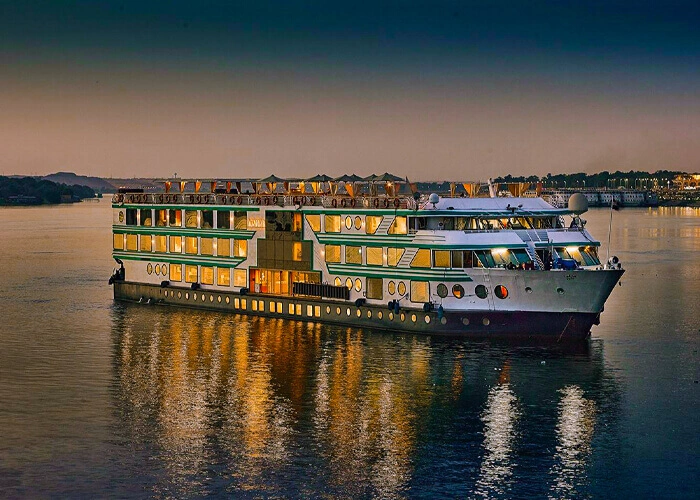
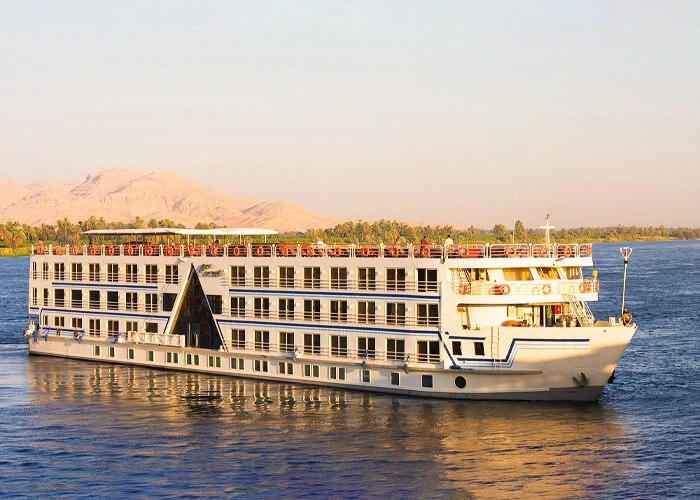
A Nile cruise works well from about age seven. The pool, the deck and the lock are what children remember; four temples in four days is the part to manage, so let them skip one. Most ships have connecting cabins and a children's menu, and infants under five usually travel free sharing with two adults.
A Nile cruise works well with children aged roughly six and up — the pool matters as much as the temples, and not repacking every two days matters more than parents expect. Most ships charge 50 percent for ages two to eleven sharing with two adults, and free under two. Four nights is the right length. Avoid June to August.
The honest framing: this is a trip built for adults that children can enjoy, not a family holiday with some history attached. Whether that works depends almost entirely on the ship you pick and how you pace the mornings.
Key takeaways
A cruise works well from about age seven.
The pool, the deck and the Esna lock are what children remember.
Four temples in four days is a lot — let them skip one.
Most ships have connecting cabins; infants under five usually travel free.
What it costs with children
Age
Typical rate
Under 2
Free or nominal
2 – 11 sharing with 2 adults
50% of adult rate
12 and over
Full adult rate
Child in own cabin
Full rate plus supplement
Some ships run the child rate to fourteen; a few charge full price from six. It varies enough between vessels to be worth asking before you fall for a particular boat.
A realistic total: two adults and two children aged eight and ten, four nights on a deluxe ship in one family cabin, comes to $2,600 to $3,400 including extras. The same family in two separate doubles is closer to $4,000 for an identical trip.
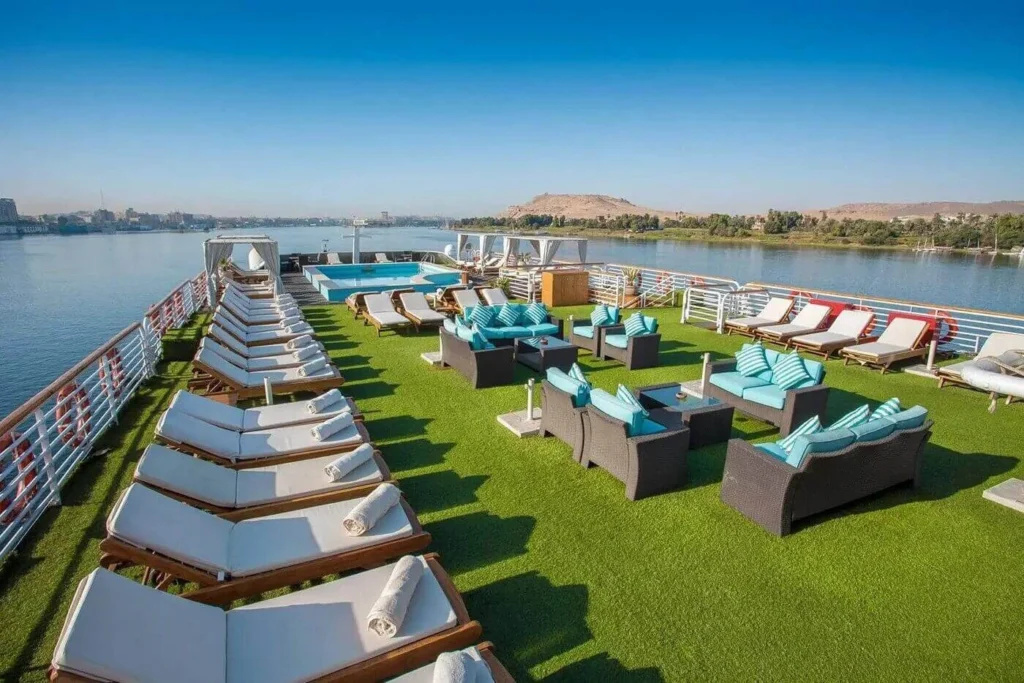
The deck does more for a family holiday than any excursion on the programme.
The cabin question, which decides everything
Nile cabins are small — 15 to 20 square metres. A rollaway bed in that space with four people in it is a long four nights, and this is where family trips go wrong.
What to ask for, in order of preference:
Connecting cabins. Many ships have them, few list them online. Two connecting standards usually cost less than two separate doubles and give everyone a door to close.
A genuine family cabin, where the ship has them — larger, with a proper third and fourth bed.
Two doubles on the same deck, ideally adjacent.
What to avoid: one cabin with a rollaway, and cabins on separate decks. More on layout in which deck to book.
What children actually enjoy
Predicting this is easier than parents think, and it is rarely the thing you expect.
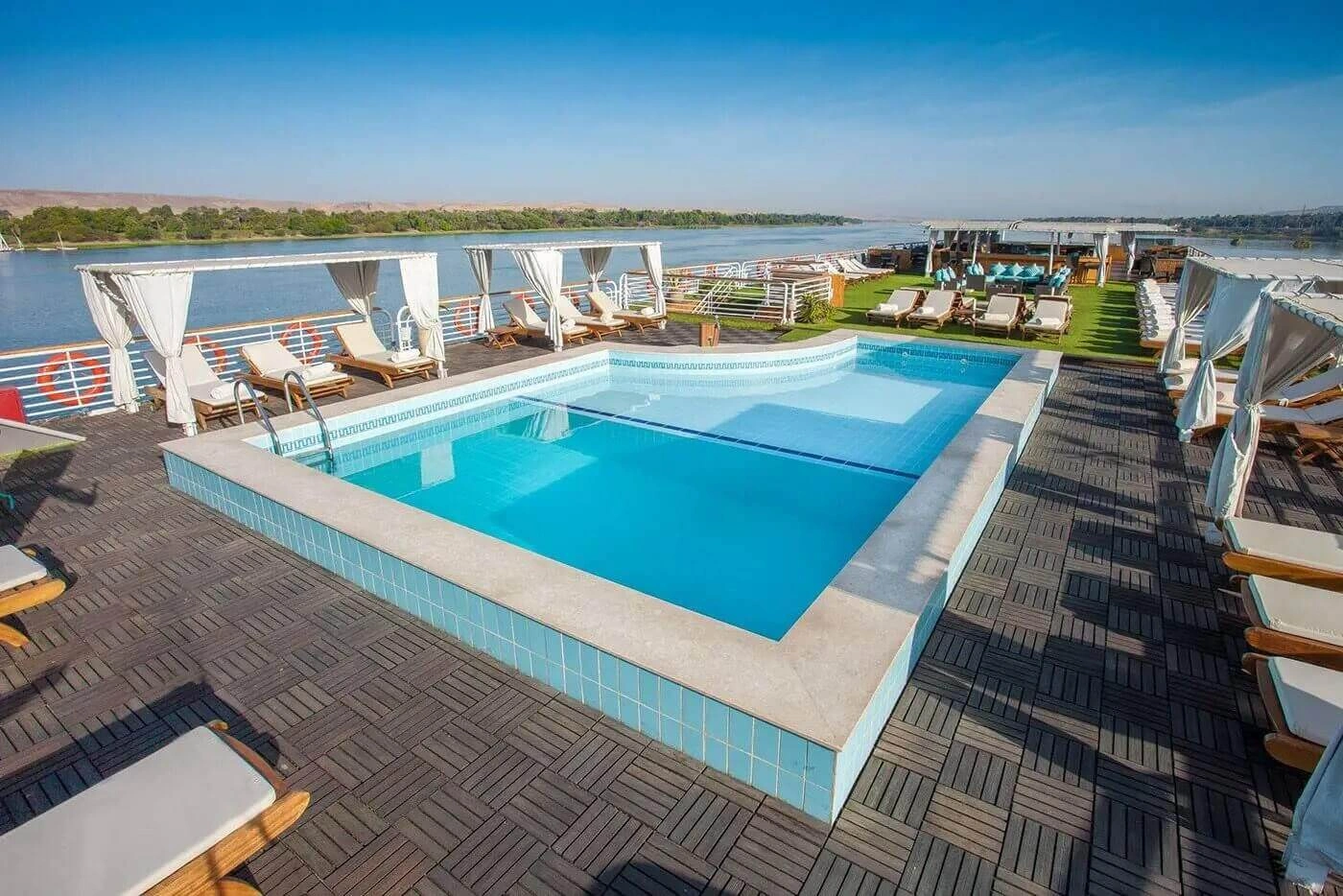
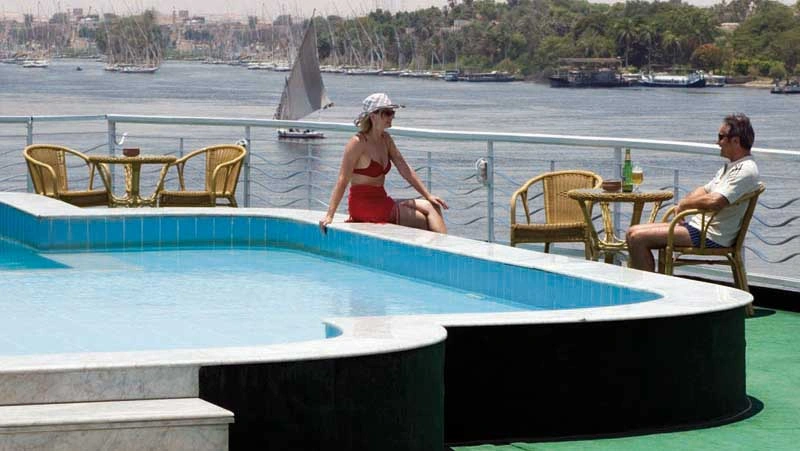
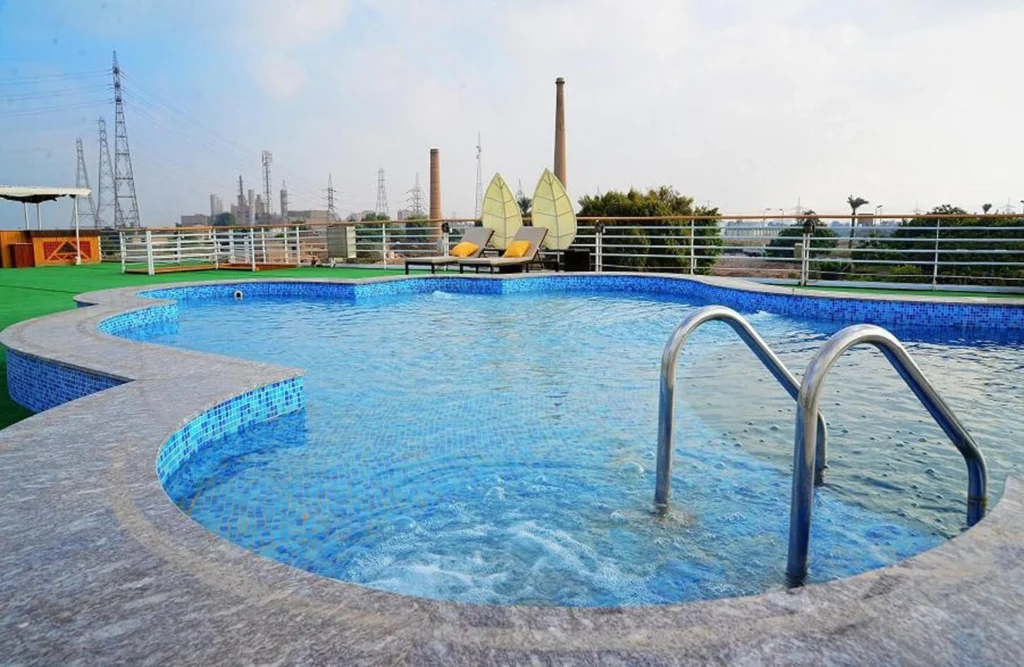
The pool. Not a footnote. It is where the afternoons happen and it is the single biggest factor in whether a child has a good week. Ships vary enormously here — some have a proper deck pool, some have a plunge pool with four loungers round it. Ask to see a photograph of the sun deck, not the cabin.
The Valley of the Kings. Tombs are dark tunnels with painted walls and, in three cases, an actual mummy. This is the one children talk about afterwards.
The crocodile museum at Kom Ombo. Forty mummified crocodiles, some enormous. Fifteen minutes, and reliably a hit.
The felucca at Aswan. An hour under sail, usually with a crew happy to let a child hold the tiller.
Galabeya night. The crew produce traditional dress and children are usually the first to join in.
The bank going past. Water buffalo, donkeys, kids waving from the shore. Younger children will watch this for longer than they will look at a temple.
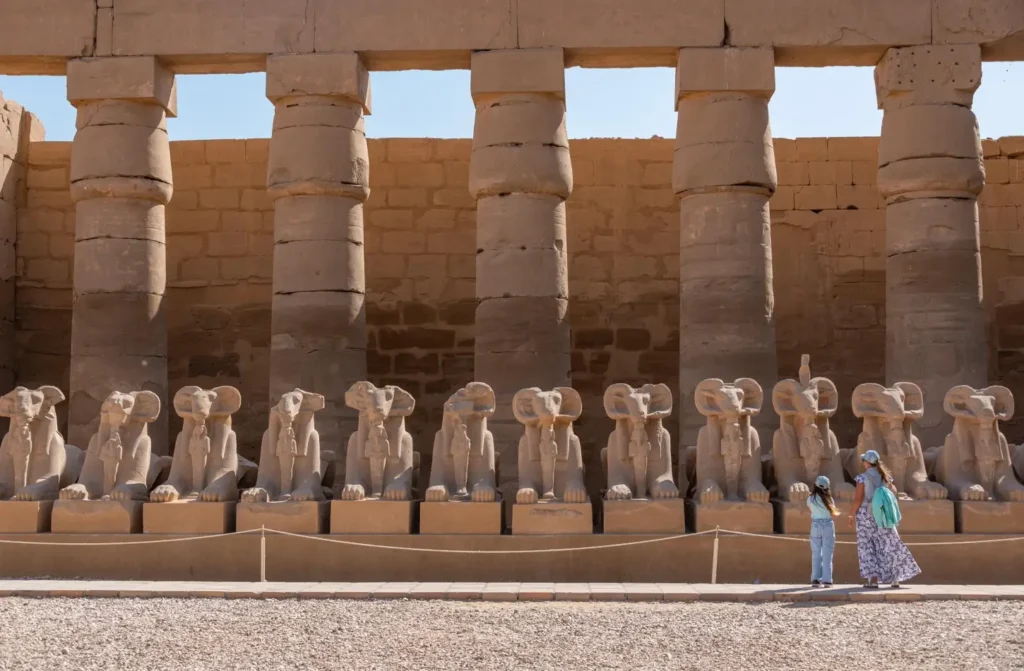
Start at Karnak, not the tombs. It is open, enormous and full of things to climb on; the Valley of the Kings is dim corridors and queues.
What they will not enjoy
Worth planning around rather than discovering.
Karnak in full. Two hours of columns. Do the Hypostyle Hall and the sacred lake, then let them sit in the shade while you finish.
The 6:30am wake-up calls, and in summer the 4:45 ones.
Hatshepsut’s courtyard. No shade, a lot of stone, nothing to touch.
Long guided explanation. Twenty minutes is the ceiling for most children. A good guide adjusts to that; ask for one who is used to families, because it is a genuinely different skill.
Karnak holds children's attention longer than the tombs — start there rather than in the Valley.
Practical arrangements
Skip excursions freely. Nobody minds and the ship stays staffed. One parent taking a morning off by the pool with a tired six-year-old is a normal and sensible thing to do.
There is no kids’ club. No Nile cruise has one, no ship provides childcare, and evening entertainment is aimed at adults. If you were expecting a sea-cruise family product, adjust now.
Pools have no lifeguard. Supervision is entirely yours.
Bring entertainment. Wi-Fi is patchy between towns — see the practical notes in what’s included. Download things before you sail.
Food is easy. Buffets mean fussy eaters find something, and there is always pasta, rice, chips and fruit. Detail in Nile cruise food.
Health and heat
The genuine risks with children here are heat and stomach upsets, in that order.
Do not travel June to August with young children. 41 to 42°C with a 4:45 start is not a holiday for a six-year-old. See cruising in summer for the full picture.
Water, constantly. Children dehydrate faster and complain later.
Bottled water only, including for teeth.
Sun protection is not optional. Wide-brim hats, long sleeves, high factor. Covering up is cooler than bare skin here — see what to wear.
Bring children’s stomach medication from home in the doses you know.
A note that surprises some families: Egyptians are warm toward children to a degree that can overwhelm a shy child. Expect your kids to be greeted, patted on the head, photographed and offered sweets constantly. It is entirely friendly. Prepare a child who dislikes attention.
The pool is the reason the afternoon sailing stretch works with children — it is unsupervised, so it is your watch.
What age works
Under 4: hard. No cots on most ships, no childcare, cabins too small, and nothing at a temple for them. Possible, rarely enjoyable.
5 to 8: works if you pace it. Mummies, crocodiles, the pool and the boat carry the trip. Cut temple time ruthlessly.
9 to 13: the sweet spot. Old enough for the history to land, young enough to be excited by tombs, and the pool still does its job.
Teenagers: depends on the teenager. The evening entertainment is aimed at their grandparents and there may be no other teenagers on board. Warn them, and make sure the Wi-Fi situation is understood before you sail.
How to run a temple morning with children
The difference between a good family cruise and a miserable one is usually four or five small decisions made before eight in the morning.
Brief them the night before. Ten minutes on what they are going to see, with the story rather than the dates. Tutankhamun died at nineteen and nobody is sure why. Hatshepsut was a woman who ruled as king and her stepson tried to erase her name from the walls afterwards. Children arrive interested rather than being told to be interested.
Then, in order:
Go first, not last. Ask the guide to take you at opening. Cooler, emptier, and children have their best hour early.
Give them a job. Find the cartouche. Count the columns. Spot the crocodile. It converts looking into searching.
Set a finish line. “Two tombs, then we go back and swim.” Children cope with anything that has a visible end.
Carry more water than you think. Then double it.
Leave before they crack, not after. The half hour you gain by pushing on costs the whole afternoon.
A good guide does most of this without being asked, which is why asking for one who is used to families matters more than the ship’s star rating.
Most ship pools have a shallow ledge rather than a graded shallow end; there is no lifeguard on any of them.
Length and season
Four nights. Three is rushed with children in the mix; seven repeats itself and boredom sets in around day five.
Travel in November, March or early December. Warm enough for the pool, cool enough that a temple morning is not an ordeal. Full month-by-month in best time for a Nile cruise.
Yes for children roughly six and up, provided you choose a ship with a proper pool deck, take four nights rather than three, and travel outside June to August.
How much do children pay on a Nile cruise?
Usually 50 percent of the adult rate for ages two to eleven sharing with two adults, free under two, and full rate from twelve. Some ships extend the child rate to fourteen.
Can four people share one cabin?
Technically on some ships, comfortably on very few. Ask for connecting cabins or a genuine family cabin instead — usually cheaper than two separate doubles.
Is there a kids’ club on Nile cruises?
No. No Nile cruise ship offers childcare or a kids’ club, and evening entertainment is aimed at adults.
What age is best for a Nile cruise?
Nine to thirteen. Old enough for the history to mean something, young enough to be thrilled by tombs and mummies.
Will my children be bored at the temples?
At Karnak and Hatshepsut, probably. At the Valley of the Kings and the Kom Ombo crocodile museum, no. Cut the long sites short and skip excursions freely — nobody minds.
Is it safe for children?
Yes, with normal care. The real risks are heat, dehydration and stomach upsets rather than anything else. Ship pools have no lifeguard.
Which month should we travel with kids?
November, March or the first three weeks of December. Avoid June to August entirely — 42°C with pre-dawn starts does not work with young children.
Travelling with children?
Send us your dates and a rough budget — a specialist replies with three ships across categories, live availability and a written price. No online payment.
Written byMagdy Fattouh38 guides published on this site
Magdy Fattouh is a Cairo University history graduate and the writer behind the guides on this site. Over 13 years he has researched and written about Egypt's history, its monuments and how to travel to them — from the pharaohs and the temples to month-by-month planning, ship comparisons and day-by-day itineraries. He speaks English and Arabic, and reviews every guide here for accuracy before it is published.
Read more by Magdy Fattouh →
Ten to seventeen hours depending on your coast, and a seven to ten hour time shift. Why twelve days beats seven, how to sequence Cairo, and what Thanksgiving…
Five hours direct from London with a one-hour time difference. What ATOL does and does not cover on a direct booking, sterling costs, and why February half term…
We use essential cookies to make this site work. With your permission we also use Google Analytics cookies to understand how the site is used, so we can improve it. We never use cookies for advertising. Cookie Policy
Strictly necessaryRemember your cookie choice and keep the site secure. Always on.
Always on
Google Analytics: which pages are visited and how people find us. No personal profile, no advertising.


 Planning