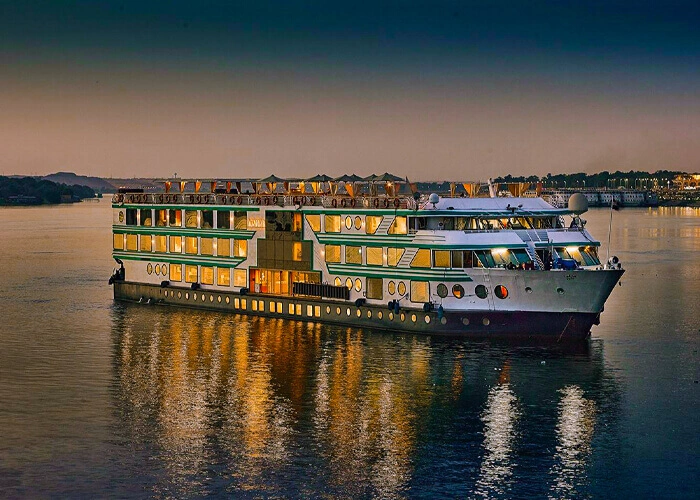
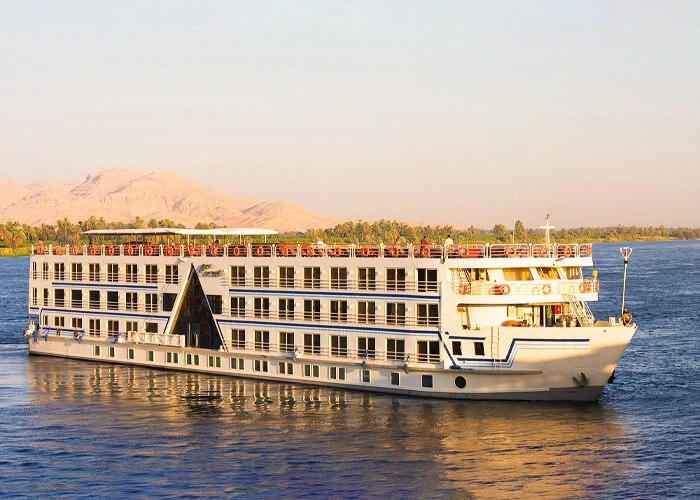
For a first visit to Upper Egypt, yes. A cruise moves you between the temples while you sleep, unpacks once, and puts a licensed Egyptologist with you at every site. It suits you less if you want to choose your own hours, spend more than a day in Luxor, or dislike a fixed group schedule.
For most first-time visitors to Egypt, yes — a Nile cruise is the most efficient and most enjoyable way to see the temples between Luxor and Aswan. You unpack once, the transport is the accommodation, and the sites are on the bank. It is a poor choice if you want independence, a fast-paced trip, or a ship you can escape from.
We sell these cruises, so treat our “yes” with appropriate suspicion and read the section on who should not book one. We would rather turn away a booking than take one from someone who will spend four days wishing they had hired a car.
Key takeaways
You unpack once and the ship moves between the temples while you sleep.
A licensed Egyptologist is with you at every site, included in the fare.
Riverside temples are reached at hours a road tour cannot manage.
It suits you less if you want to set your own schedule.
The case for it
You unpack once
This sounds minor and it is not. The alternative is Luxor for two nights, then a three-hour drive or a train to Aswan, then another hotel, with the packing and checking in and out that goes with it. On a cruise your room follows you.
The temples are genuinely on the river
This is not a marketing convenience. Kom Ombo is twenty metres from where the ship ties up. Edfu is fifteen minutes inland. Philae is a short boat ride. The ancient Egyptians built along the Nile because the Nile was the road, and travelling the way they did is not a gimmick — it is the reason the geography makes sense when you see it from the water.
The sailing hours are the point
Most people book a cruise for the temples and come home talking about the afternoons. Mud-brick villages, buffalo in the shallows, children running along the bank, the light going gold at five o’clock. You cannot buy that on a land tour, and it is the single most common thing our travellers mention afterwards.
It removes the logistics
Egypt is not difficult to travel independently, but it is effortful. Tickets, drivers, guides, timing, negotiating each of those things fresh every morning. A cruise collapses it into one arrangement — see what’s included for the full list.
Unpacking once and waking up at the next temple is the argument for a cruise in one sentence.
The case against it
Now the honest half.
You are on a schedule
The ship leaves when it leaves. If you fall in love with Edfu you cannot stay another hour, because the vessel has a lock slot at Esna. Independent travellers find this genuinely constraining and some never stop resenting it.
The group is fixed
Four days with the same 150 people, the same buffet rotation and the same evening entertainment. Most people enjoy it. If you are someone who needs to be able to walk away from a social environment, a 60-cabin boat does not offer many exits.
Temple time is finite
Ninety minutes to two hours per site, on the ship’s timetable. That is enough for the great majority of visitors and not enough for anyone with a serious interest in the period. The day-by-day itinerary shows exactly how long you get where.
You see the same stretch as everyone else
Every ship follows the same 210 kilometres and stops at the same places. There is no route where you discover something the others missed.
The food gets repetitive
Buffets, four days, same kitchen. It is decent and it is not varied. Seven nights is where people start to notice.
Who a Nile cruise suits
You will probably love it if
You will probably not if
It is your first trip to Egypt
You have already done the standard route
You want the sites without the logistics
You enjoy arranging your own travel
You value downtime between sightseeing
You want to move fast and see more
You are travelling as a couple or family
You need solitude to enjoy a holiday
Heat management matters to you
You want to linger at each site
You are short on time and want it handled
You are on a tight budget and comfortable improvising
The honest test: if you would rather choose your own hours than be moved between five temples on a timetable, take a land tour instead.
Is it worth the money?
A four-nightdeluxe cruise runs $600 to $1,200 per person including full board, temple entries and a licensed Egyptologist. Break that down and it is roughly $150 to $300 a night for accommodation, three meals, transport between cities, entrance fees and a private guide.
Doing the same route independently — two hotels, a driver, tickets, a freelance guide, meals — lands in a similar range unless you travel very cheaply indeed. The cruise is not a premium you pay for convenience; at the mid-range it is close to cost-neutral.
Where the maths changes is at the extremes. Budget travellers who are happy on the sleeper train and in $30 hotels will genuinely spend less on land. And luxury cruising at $1,600 to $3,500 per person is a comfort purchase, not an efficiency one. Full figures are in how much a Nile cruise costs.
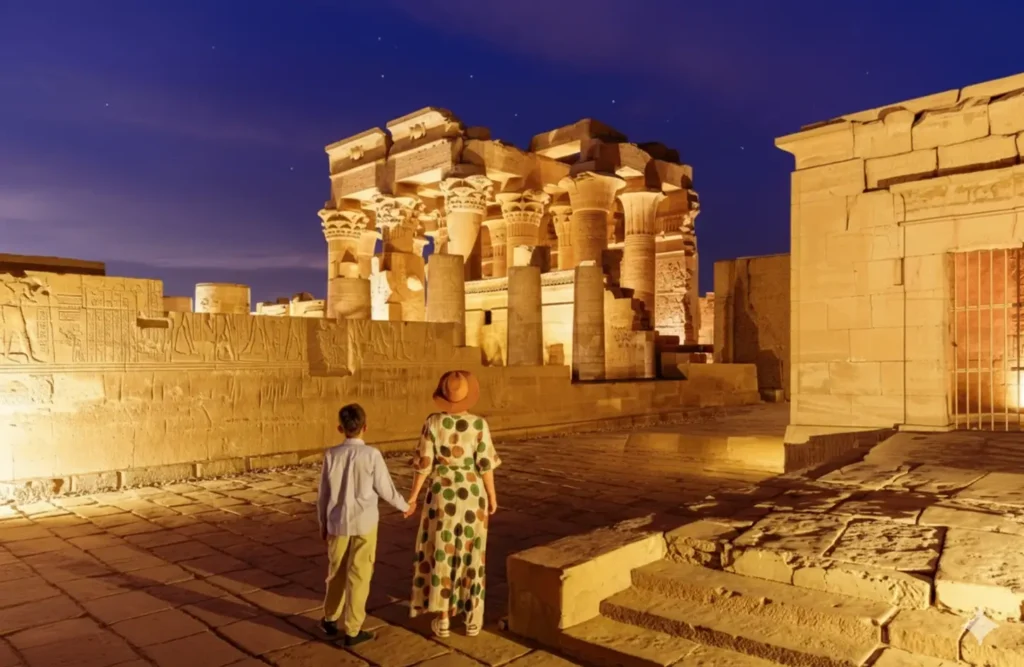
Kom Ombo lit at night. Ships moor beside it; a land tour arrives in the middle of the day.
What people say afterwards
Worth separating the complaints that come up repeatedly from the ones that do not, because the pattern is informative.
What almost nobody complains about: the temples, the sailing hours, the crew, safety, or the amount of walking. These are the things people worry about beforehand and rarely mention afterwards.
What comes up again and again: the buffet by day four, the early wake-up calls, the volume of the evening entertainment, being moored alongside three other ships at Edfu, and shopping pressure from vendors at the temple exits.
None of those are dealbreakers and all of them are predictable. The point is that the disappointments cluster around the ship experience rather than the Egypt experience — which is why the ship you choose matters more than the itinerary you choose, and why we spend more time on that conversation than on any other.
The one genuine regret we hear: people who took three nights and wished they had taken four.
The three things that decide whether you enjoy it
After fifteen years of running these, the pattern is consistent. It is almost never the itinerary that determines how someone feels afterwards.
Your guide. A good Egyptologist makes Kom Ombo land. A bad one turns four temples into four car parks. This is the single largest variable and it is worth asking about before you book.
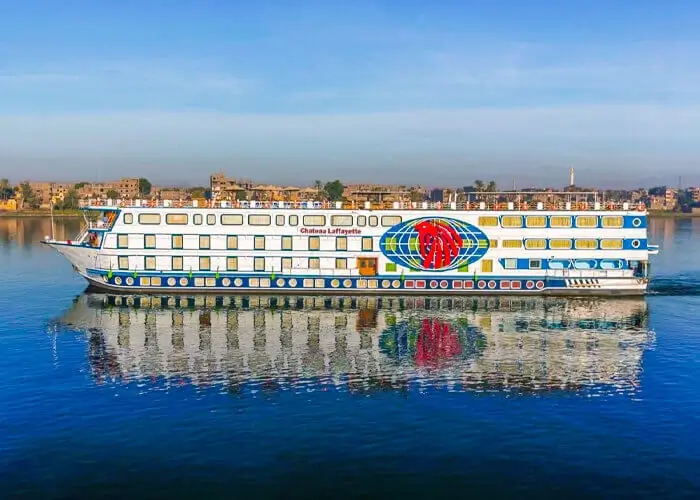
The ship’s condition and size. Not the star rating on paper. A well-run 40-cabin boat beats a tired 80-cabin one at the same price.
Whether you expected a cruise or a tour. People who booked expecting relentless sightseeing feel short-changed by the sailing afternoons. People who understood what they were buying describe those afternoons as the best part.
Four nights on the river covers five major temple sites without a single hotel change.
If a cruise is not right, what else?
Land touring. Fly to Luxor, base yourself there for three nights, day-trip to Dendera and Abydos, then move to Aswan. More flexible, more effort, and you can spend as long as you like at any site.
A dahabiya. Eight to twenty guests under sail, mooring at islands and villages the big ships cannot reach. It solves the crowding and the fixed-group problems, and costs considerably more.
A shorter cruise plus land time. Our most-recommended compromise: take the 3-night Aswan to Luxor, then stay two more nights in Luxor independently. You get the river and the freedom.
Our honest verdict
If this is your first trip to Egypt and you want to see the temples of Upper Egypt without spending the week solving logistics, book it. Take four nights rather than three if you can afford the difference, travel in November or March, and spend your money on the ship and the guide rather than the cabin deck.
If you have done Egypt before, or you travel to get away from other people, or you want to sit in a tomb for two hours — a cruise will frustrate you, and there are better ways to spend the same money.
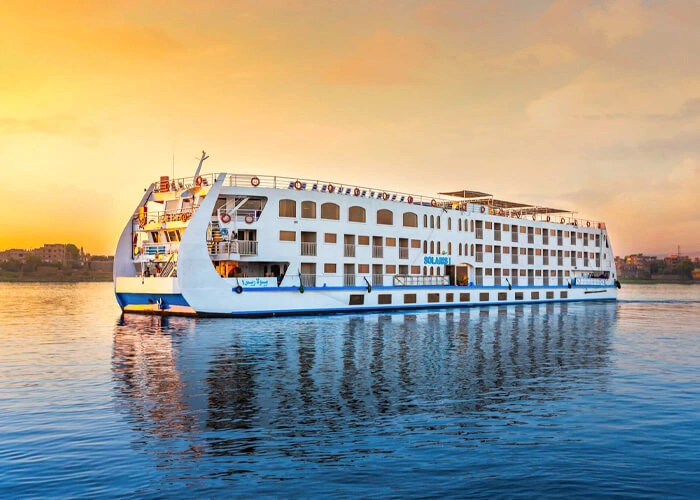
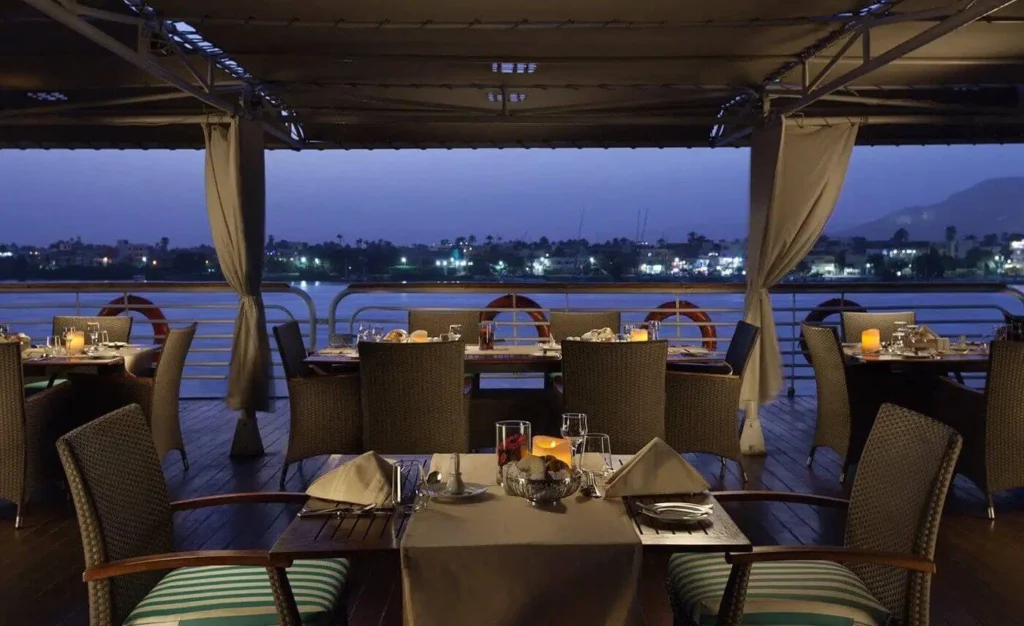
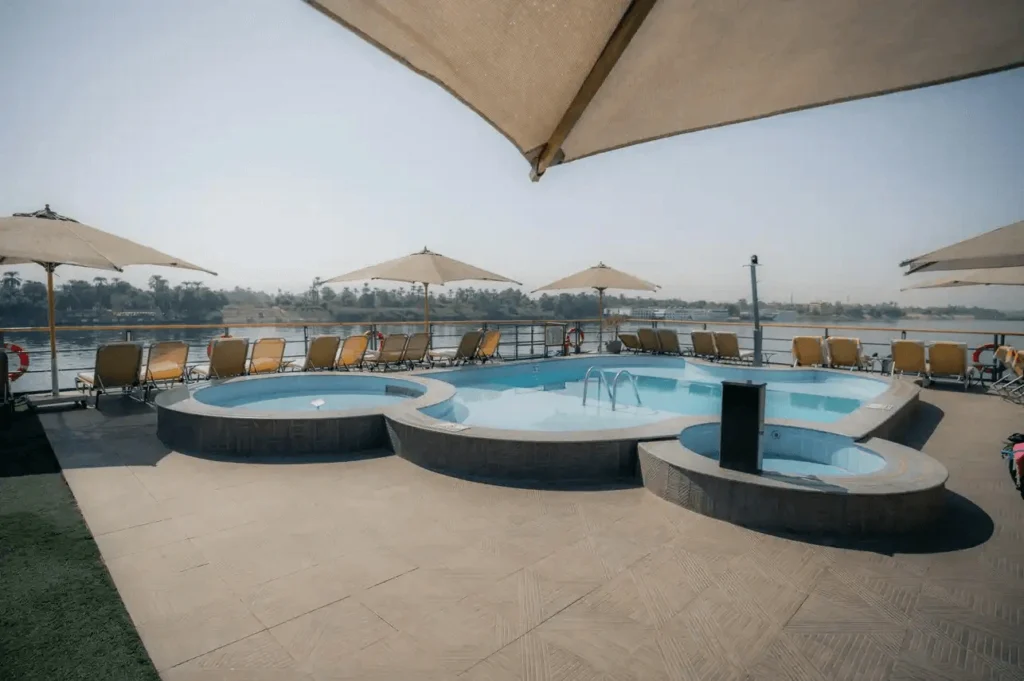
The honest answer depends on how you feel about the hours between sites — this is what they look like.
Frequently asked questions
Is a Nile cruise worth it?
For most first-time visitors, yes. You unpack once, the temples are on the bank, and the logistics are handled. It suits people who want downtime between sightseeing and frustrates people who want to move at their own pace.
Is a Nile cruise boring?
Roughly four hours a day is guided sightseeing; the rest is sailing, deck and pool. If that sounds like too little structure, take a land tour instead — but most people find the sailing hours the best part.
Is a Nile cruise better than staying in hotels?
At mid-range prices the cost is similar and the cruise removes the transfers between cities. Land touring is cheaper at the budget end and more flexible at any price.
How many nights should I do?
Four if you can. Three covers every major temple but leaves little unstructured time. Seven retraces its own route and some travellers find the second half slow.
Is a Nile cruise good for a second visit to Egypt?
Less so. Every ship follows the same route and stops at the same sites. A dahabiya, or land touring with Dendera and Abydos added, gives a returning visitor more.
What ruins a Nile cruise?
A weak guide, a ship below four stars with unreliable air conditioning, and travelling in June or July if you dislike heat. Those three account for almost every disappointment we hear about.
Is it worth paying for a luxury ship?
It depends entirely on how much crowding bothers you. The temples and schedule are identical; what you buy is a smaller group, more space and better food.
Can I get off the ship and explore on my own?
At moorings, sometimes, and always at your own risk of missing the departure. This is not a trip built around independent wandering, and that is the honest limitation.
Think it is for you?
Send us your dates and a rough budget — a specialist replies with three ships across categories, live availability and a written price. No online payment.
Written byMagdy Fattouh38 guides published on this site
Magdy Fattouh is a Cairo University history graduate and the writer behind the guides on this site. Over 13 years he has researched and written about Egypt's history, its monuments and how to travel to them — from the pharaohs and the temples to month-by-month planning, ship comparisons and day-by-day itineraries. He speaks English and Arabic, and reviews every guide here for accuracy before it is published.
Read more by Magdy Fattouh →
Ten to seventeen hours depending on your coast, and a seven to ten hour time shift. Why twelve days beats seven, how to sequence Cairo, and what Thanksgiving…
Five hours direct from London with a one-hour time difference. What ATOL does and does not cover on a direct booking, sterling costs, and why February half term…
We use essential cookies to make this site work. With your permission we also use Google Analytics cookies to understand how the site is used, so we can improve it. We never use cookies for advertising. Cookie Policy
Strictly necessaryRemember your cookie choice and keep the site secure. Always on.
Always on
Google Analytics: which pages are visited and how people find us. No personal profile, no advertising.


 Planning